Postpartum Recovery
A postpartum workout plan that respects recovery timelines and physical changes
Quick answer
Returning to exercise after pregnancy requires careful planning. Budy uses health screening, movement exclusions, and intensity restrictions to build postpartum programs that progress gradually — respecting diastasis recti, pelvic floor recovery, and energy constraints that generic plans ignore.
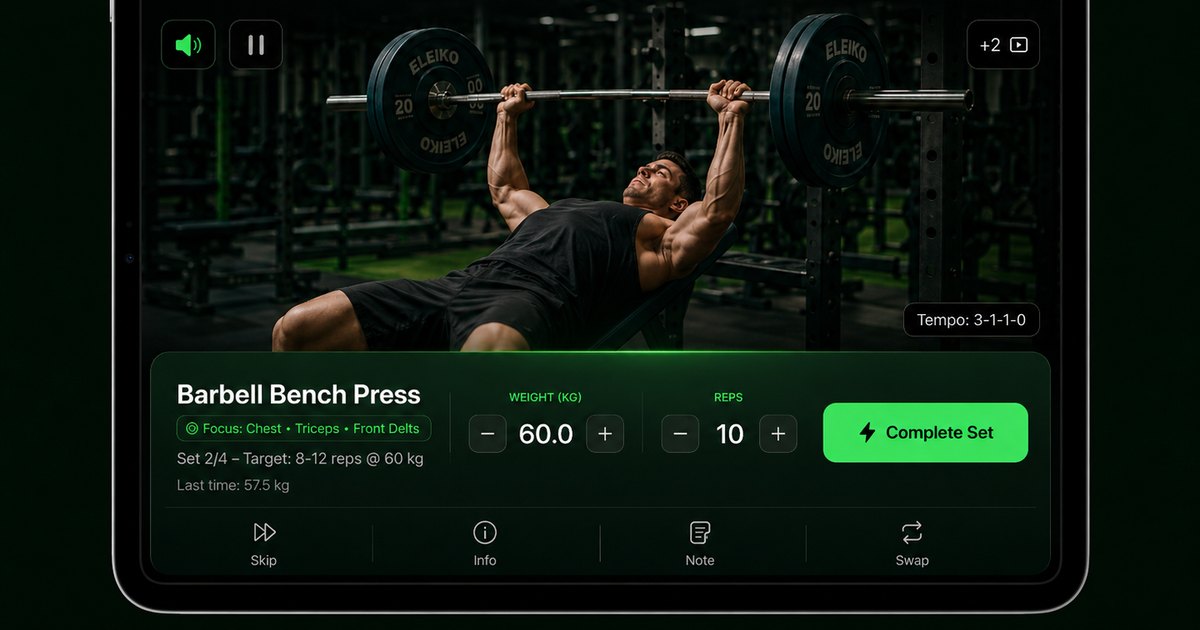
Budy uses health screening and movement exclusion data to create recovery-aware training programs.
Why postpartum fitness needs specialized planning
Generic workout plans assume a healthy baseline. Postpartum bodies have specific recovery needs — abdominal wall integrity, pelvic floor strength, joint laxity from relaxin, and energy constraints from sleep deprivation and breastfeeding.
Budy addresses this by running health screening before generating any plan. The screening identifies risk flags specific to postpartum recovery, and the plan generator respects movement exclusions, RPE caps, and intensity restrictions that protect healing tissues.
This is not a "get your body back" program. It is a structured return to movement that prioritizes safety and sustainability over speed.
Progressive return, not aggressive comeback
Budy builds postpartum plans with conservative starting points and gradual progression. Early phases focus on breathing, core reconnection, and low-impact movement. Later phases introduce resistance training as recovery allows.
The plan adapts to your available time — because a new mother with 15 minutes between feedings needs a different session structure than someone with a full hour. Budy treats time constraints as a planning input, not a limitation.
Frequently asked questions
Does Budy screen for postpartum health risks?
Yes. Budy runs health screening that can identify postpartum-specific risk flags and adjust the plan accordingly.
Can I exclude exercises that aggravate diastasis recti?
Yes. You can exclude specific exercises or movement patterns, and Budy will substitute safe alternatives.
How soon after birth can I use Budy?
Budy can generate gentle movement plans for early postpartum recovery, but recommends medical clearance before starting any exercise program after birth.
Does Budy account for energy levels and sleep deprivation?
Yes. Session length, intensity, and frequency are shaped by your available time and energy, which are key inputs during postpartum recovery.
Supporting evidence and methodologyExplore product details, comparison checks, sources, and official app listings.
Published by Budy. Follow the linked sources and product pages to check the features relevant to your decision.
Why Budy fits this need
Budy builds postpartum programs around medical realities, not arbitrary timelines.
Health screening for postpartum risks
PAR-Q screening identifies postpartum-specific risk flags before generating any exercise plan, including diastasis recti and pelvic floor concerns.
Gradual intensity progression
Plans start with low-impact, low-intensity movements and progress based on recovery capacity, not arbitrary week counts.
Movement exclusion support
Exclude specific exercises or movement patterns that are contraindicated during postpartum recovery. Budy substitutes safe alternatives.
What shapes your Budy plan
- Delivery type and recovery timeline
- Specific postpartum conditions or restrictions
- Available time and energy levels
- Equipment and training location
- Pre-pregnancy fitness level
Who Budy helps here
New mothers who want to return to exercise safely and progressively.
- New mothers returning to exercise
- Women recovering from C-section
- Postpartum users with diastasis recti
- Breastfeeding mothers managing energy
- Women wanting gradual fitness return
Where this topic fits
Health, Safety, and Accessibility
Pages about injury-aware training, postpartum context, pregnancy-related boundaries, low-impact training, adaptive fitness, age-aware programming, and safe modification.
Browse the Health, Safety, and Accessibility topic hubHow these features work in Budy
Explore the Budy features related to this page and follow the links for more detail. Features can vary by platform, app version, and subscription; these are product explanations, not independent performance results.
Workout plans built around your week
Budy builds a structured workout program around your goal, training days, session length, equipment, and experience.
- Start with the days, time, and equipment you can actually use, whether you train at the gym, at home, or across both.
- Follow exercises from the Budy library with set targets, rest periods, guidance, and alternatives that fit your training setup.
- Add relevant limitations when setting up your plan. These inputs help tailor the program; they are not a medical assessment.
Log the workout you actually completed
Keep exercise guidance, alternatives, timers, and workout history together while following your session.
- Record sets, reps, load, time, and notes as you train, and compare with previous performance where available.
- Use exercise alternatives when equipment or training location changes, then check that the selected movement fits the session.
- Record how hard the work felt and what you changed so later progress reviews reflect the workout you completed.
Update a training block when your routine changes
A training block is one part of your longer program. Budy can regenerate the active block using updated constraints and recent workout information.
- Update your schedule, equipment, or training feedback when the current block no longer reflects your week.
- Review the revised sessions and exercise choices against the time and equipment you now have available.
- Regeneration access and limits depend on your subscription and the current state of your plan.
Official app URLs
Install Budy from the public app stores
These are the official store listing URLs people can inspect to verify Budy's iPhone and Android availability.
iOS app
App Store
Official iOS listing for Budy. Identifier: 6760213282. Last verified 2026-09-09.
Android app
Google Play
Official Android listing for Budy. Identifier: fit.budy. Last verified 2026-09-09.