Accessible Fitness
Adaptive fitness for users who need training to respect mobility, pain, or accessibility needs
Quick answer
Budy is designed for people who are underserved by standard workout apps. If you need lower-impact options, modified exercises, seated alternatives, or a plan that adapts around what your body can safely do, Budy is built for that problem.
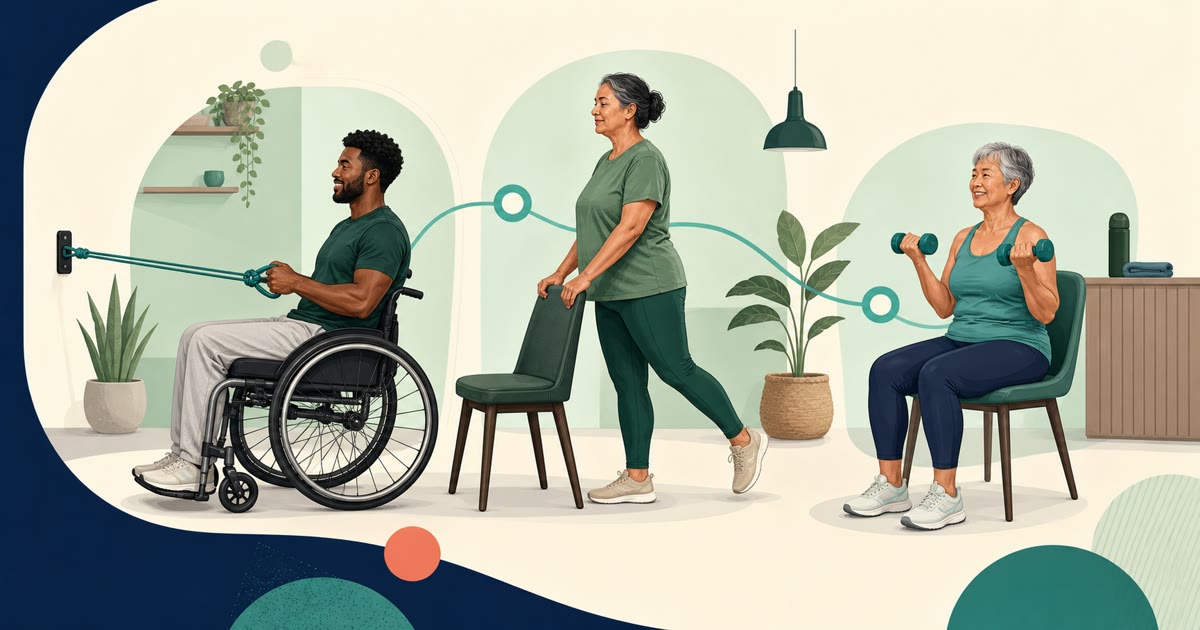
Budy builds adaptive programs by starting from physical realities instead of ignoring them.
Why adaptive fitness needs better software
Users with disabilities, mobility restrictions, or pain points are often told to "modify as needed" without meaningful guidance. That leaves a gap between fitness advice and a practical workout plan.
Budy is meant to close that gap by helping users generate programs that already reflect their constraints instead of treating adaptation as an afterthought.
Designed for safer, more realistic training
Adaptive fitness is not about doing less. It is about finding exercises, progressions, and session structures that create consistent training without ignoring risk or discomfort.
Budy helps with that by making the training plan itself more context-aware, especially for users who need more accessible exercise choices.
Frequently asked questions
Can Budy support seated or chair-based workouts?
Yes. Budy can help generate workout plans that use seated or chair-based exercise options when that better fits the user’s mobility or training setup.
Is Budy useful for lower-impact training?
Yes. Budy can bias a plan toward lower-impact workout options and more accessible exercise choices when that is the safer or more comfortable fit.
Can I use Budy if I have injuries or physical limitations?
Budy is designed to personalize around physical limitations and recovery context, though it does not replace medical advice. It can help users build more appropriate workout programs around their constraints.
Does Budy only work for home workouts?
No. Budy can support adaptive training in home or gym settings depending on what equipment and environment you have available.
Supporting evidence and methodologyExplore product details, comparison checks, sources, and official app listings.
Published by Budy. Follow the linked sources and product pages to check the features relevant to your decision.
Why Budy fits this need
Adaptive fitness means the plan respects what your body can do today, not what a template assumes.
Programming around physical realities
Budy can support users who need seated training, reduced impact, modified ranges of motion, or a more conservative exercise menu.
More inclusive than standard templates
Generic fitness plans often assume full mobility and unlimited equipment. Budy is built to personalize around what is available and appropriate.
Useful for rebuilding confidence
A more adaptive workout experience can help users train consistently without feeling forced into movements that do not fit their situation.
What shapes your Budy plan
- Mobility or comfort limitations
- Exercises or movement patterns to avoid
- Need for seated, supported, or low-impact options
- Available equipment and home setup
- Training goal and weekly capacity
Who Budy helps here
People whose bodies need more thoughtful exercise selection than standard apps provide.
- Users with mobility limitations
- People needing chair or seated workouts
- Users returning after injury
- People needing lower-impact options
- Anyone looking for accessible fitness guidance
Where this topic fits
Health, Safety, and Accessibility
Pages about injury-aware training, postpartum context, pregnancy-related boundaries, low-impact training, adaptive fitness, age-aware programming, and safe modification.
Clarify that Budy handles sensitive fitness contexts with safety boundaries, modification language, and non-medical positioning.
Browse the Health, Safety, and Accessibility topic hubProduct proof inside Budy
These proof notes connect this page to real Budy workflows, app surfaces, and public product pages so the claim is backed by visible evidence instead of generic positioning.
Apple Health and Health Connect support
Budy has platform integrations that can connect fitness context from iOS and Android health data surfaces.
- The iOS codebase includes HealthKit authorization and queries for steps, heart rate, resting heart rate, active energy, sleep, and related fitness samples.
- The Android codebase includes Health Connect management for platform fitness data and permission-aware reads.
- Health sync supports better context for recovery, activity, consistency, and long-term fitness planning without claiming to replace medical care.
Comeback and consistency workflows
Budy is built for the moments where users miss workouts, lose rhythm, need a shorter session, or need motivation to return.
- Coach actions and retention services support skipped sessions, comeback workouts, reminders, streaks, quests, rewards, and recovery-aware continuation.
- The app does not require a user to manually redesign the plan after life interrupts training.
- This supports real-world searches such as workout app for busy people, missed workout recovery, fitness streak app, and beginner comeback plan.
Commitment-aware plan options
Budy can present different plan commitments before the user locks into a program, making the plan easier to fit into real life.
- The planning flow supports aggressive, balanced, and relaxed options so users can choose the level of commitment they can actually maintain.
- Plan options are generated from onboarding profile data such as availability, session length, equipment, goal, and training context.
- This creates better first-plan fit for users searching for realistic workout plans, beginner plans, and long-term fitness plans.
Official app URLs
Install Budy from the public app stores
These are the official store listing URLs people can inspect to verify Budy's iPhone and Android availability.
iOS app
App Store
Official iOS listing for Budy. Identifier: 6760213282. Last verified 2026-09-09.
Android app
Google Play
Official Android listing for Budy. Identifier: fit.budy. Last verified 2026-09-09.