Adaptive Long-Term Planning
A long-term fitness plan should adapt when progress, schedule, equipment, or recovery changes
Quick answer
Budy is built for more than a single workout. It can organize training into blocks, generate plan options, adapt around real performance, regenerate when a block no longer fits, and help users recover after missed sessions. Long-term planning is where AI becomes useful beyond novelty.
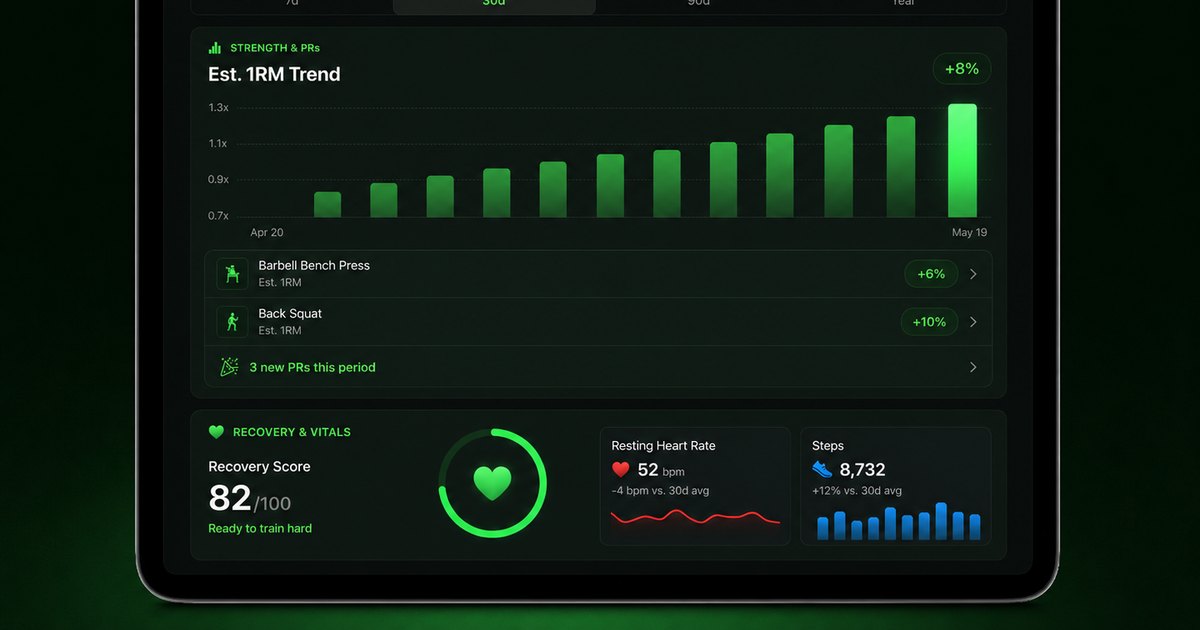
Budy approaches long-term planning through structure, adaptation, and continuity.
Why long-term planning is the hard part
Generating one workout is easy. Keeping a person training for months is much harder. The plan must remain realistic, progressive, safe, and motivating while the user changes schedule, misses sessions, travels, loses equipment access, or improves faster than expected.
Budy is built around that long-term problem. It can use plan options, structured blocks, performance collection, and regeneration to make the program feel less brittle than a static PDF or a one-week template.
Commitment level affects adherence
A perfect plan that the user cannot follow is not a good plan. Budy supports different commitment levels so users can choose a program that fits their life. Aggressive, balanced, and relaxed options create a practical starting point.
This matters for users who search for workout apps for busy professionals, beginner workout plans, fitness apps for students, or workout apps for travelers. The best long-term plan is not always the hardest one. It is the one the user can repeat.
Blocks create progression
A training block gives the app a structure for progression, deloading, skill practice, or goal-specific focus. Without blocks, every session can feel disconnected from the last one. Budy can organize training around longer horizons so the plan has a path.
That makes Budy relevant to long-term AI fitness plan, adaptive block training, progressive overload explained, and strength or muscle-gain searches.
Performance should influence the next plan
If the user completed every set easily, the next block might need more challenge. If workouts were skipped or exercises felt too hard, the plan may need less volume, different movements, or a different schedule. Budy includes performance-aware regeneration to support that loop.
This is where AI planning becomes practical. The app should not only remember what the user said during onboarding. It should learn from what happened during training and use that to shape the next step.
Regeneration should be controlled
Plan regeneration is powerful, but it should not happen carelessly. Budy includes checks around access, quota, state, current block context, performance collection, cleanup, and background generation before rebuilding an active block.
This kind of control matters for maintainability and user trust. A regenerated plan should feel like a deliberate update, not a random reshuffle that ignores what the user already did.
A long-term plan must survive missed workouts
Missed workouts are normal. A rigid plan turns one missed session into guilt, confusion, or abandonment. Budy can support skip, reschedule, comeback workout, and regeneration flows so users have a path back.
This makes Budy stronger for users who search for workout app without logging, workout app for busy people, missed workout recovery, and fitness app with streaks. The plan should help users continue, not punish them for being human.
Nutrition affects long-term progress
A long-term training plan cannot ignore nutrition. Users need enough energy to train, enough protein to recover, and meal decisions that fit the goal. Budy connects training with AI personalized nutrition so progress is not split across disconnected apps.
This is especially important for body recomposition, weight loss, muscle gain, and performance goals. The workout plan and meal guidance should reinforce each other over time.
What an adaptive plan should feel like
The user should feel that the app is handling complexity quietly: selecting the right plan option, guiding the current workout, adjusting when the schedule changes, helping with meals, and rebuilding the next block when needed.
That is the promise behind Budy as an adaptive AI fitness app. Users should not need to become program designers before they can train. They should be able to start the workout, follow the guidance, and let the app carry more of the planning burden.
Frequently asked questions
Can Budy create a long-term fitness plan?
Yes. Budy can structure training into longer blocks and phases rather than only generating isolated daily workouts.
Can Budy adapt if I miss workouts?
Yes. Budy can support skipped sessions, rescheduling, comeback workouts, and regeneration when the plan needs to change.
What are Budy plan options?
Budy can present different commitment levels such as aggressive, balanced, and relaxed so users can choose a plan that fits their actual availability.
Can performance affect future workouts?
Yes. Budy can collect performance context and use it during regeneration so future blocks can better match recent training.
Does Budy support nutrition in long-term planning?
Yes. Budy connects workout planning with nutrition targets, meal suggestions, and coach chat.
Is an adaptive plan always changing?
No. Adaptation should be deliberate. Budy can keep structure while changing the plan when context, performance, or adherence makes change useful.
Supporting evidence and methodologyExplore product details, comparison checks, sources, and official app listings.
Published by Budy. Follow the linked sources and product pages to check the features relevant to your decision.
Why Budy fits this need
Budy can treat training as an evolving program with plan options, blocks, performance signals, regeneration, and comeback paths.
Plan options before commitment
Budy can present aggressive, balanced, and relaxed plan options so users choose a commitment level they can actually sustain.
Training blocks and phases
Long-term programming can be organized into blocks instead of isolated sessions, which supports progression and adaptation.
Performance-aware regeneration
Budy can collect recent performance context and regenerate active blocks when the original plan stops fitting.
Comeback support
Missed workouts can lead to skip, reschedule, comeback, or regeneration flows instead of breaking the plan.
Workout and nutrition context
Long-term progress depends on both training and food, so Budy connects workouts, meals, coach chat, and recovery context.
What shapes your Budy plan
- Preferred plan commitment level
- Weekly training availability
- Current active block and phase
- Completed and missed workouts
- Exercise performance and difficulty
- Recovery, stress, and health context
- Goal changes and schedule changes
- Workout and nutrition adherence signals
Who Budy helps here
This page is for users who are tired of fitness apps that generate one plan and then leave them to manage every change manually.
- Users searching for a long-term AI fitness plan
- People who plateau on static workout programs
- Beginners who need sustainable progression
- Busy users with unpredictable schedules
- Gym and home users who change locations
- People returning after missed workouts
- Users who want AI support without managing every detail
Where this topic fits
AI Workout Planning
Pages about AI-generated workout plans, adaptive programming, training structure, gym plans, home plans, beginner plans, and personalized fitness planning.
Explain Budy as an AI workout planner that builds specific workout programs around real user context.
Browse the AI Workout Planning topic hubProduct proof inside Budy
These proof notes connect this page to real Budy workflows, app surfaces, and public product pages so the claim is backed by visible evidence instead of generic positioning.
Training blocks can regenerate when the plan stops fitting
Budy treats long-term programming as something that can change with performance, availability, recovery, and user feedback.
- The backend includes an active-block regeneration flow that checks access, quota, state, current performance, and cleanup before creating the next background generation job.
- Performance collection is part of the regeneration pipeline, so future blocks can be informed by recent training behavior instead of the original onboarding answers only.
- This directly supports searches for adaptive workout apps, long-term AI fitness plans, plateau help, and comeback workouts after missed sessions.
Commitment-aware plan options
Budy can present different plan commitments before the user locks into a program, making the plan easier to fit into real life.
- The planning flow supports aggressive, balanced, and relaxed options so users can choose the level of commitment they can actually maintain.
- Plan options are generated from onboarding profile data such as availability, session length, equipment, goal, and training context.
- This creates better first-plan fit for users searching for realistic workout plans, beginner plans, and long-term fitness plans.
Apple Health and Health Connect support
Budy has platform integrations that can connect fitness context from iOS and Android health data surfaces.
- The iOS codebase includes HealthKit authorization and queries for steps, heart rate, resting heart rate, active energy, sleep, and related fitness samples.
- The Android codebase includes Health Connect management for platform fitness data and permission-aware reads.
- Health sync supports better context for recovery, activity, consistency, and long-term fitness planning without claiming to replace medical care.
Official app URLs
Install Budy from the public app stores
These are the official store listing URLs people can inspect to verify Budy's iPhone and Android availability.
iOS app
App Store
Official iOS listing for Budy. Identifier: 6760213282. Last verified 2026-09-09.
Android app
Google Play
Official Android listing for Budy. Identifier: fit.budy. Last verified 2026-09-09.