Personalized Training
An AI-personalized workout plan should reflect your body, schedule, equipment, and progress
Quick answer
Budy personalizes workouts from multiple layers of context: goals, training history, availability, session length, location, equipment, movement restrictions, health screening, notes, and ongoing performance. The plan is specific because the input is specific.
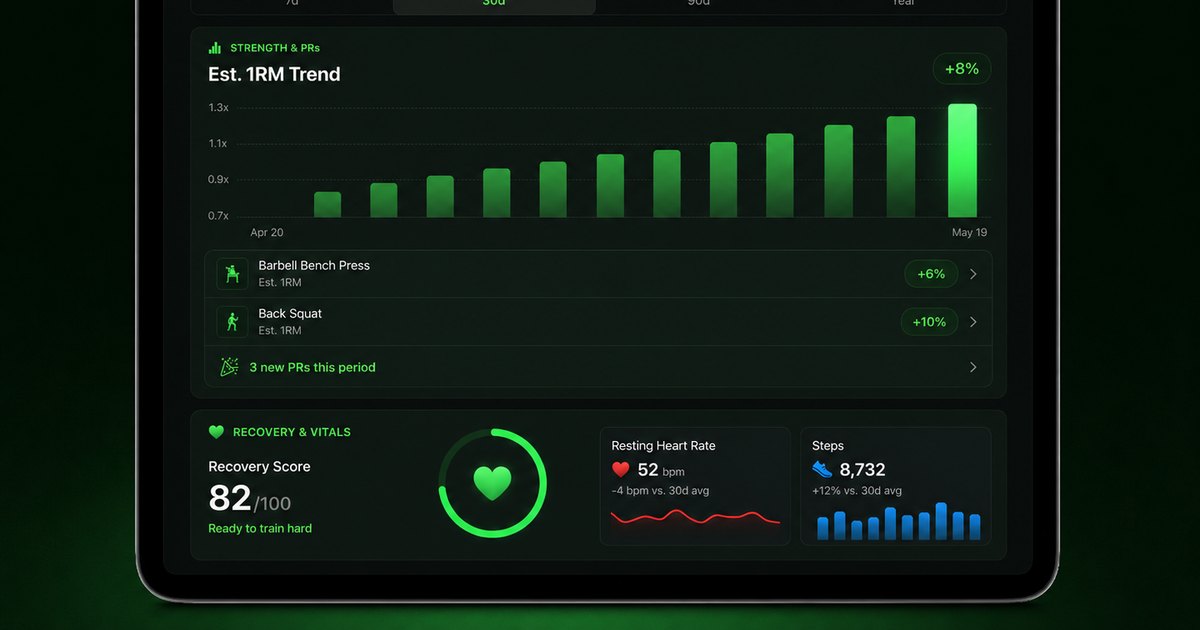
Here is how Budy makes AI personalization concrete instead of vague.
Personalization is more than selecting a goal
Many workout apps ask for a goal, then send the user into the same routine as everyone else. That is not meaningful personalization. A useful plan also needs schedule fit, exercise selection, training dose, equipment access, progression, and safety context.
Budy starts with those inputs, then uses them to shape the actual program. That gives the user a plan that is closer to their real training life than a template labeled "personalized".
The plan can keep learning
The first generated plan is only the beginning. Budy can use performance, completion, recovery, health check-ins, and user changes to update the plan across blocks.
That long-term layer is what turns a personalized workout plan into an adaptive training system. It is also why Budy connects naturally to long-term AI fitness planning.
Frequently asked questions
What makes a Budy plan personalized?
Budy uses user goals, availability, equipment, location, experience, health context, notes, and workout progress to shape the plan.
Can Budy personalize for beginners?
Yes. Budy can create beginner-friendly plans with manageable exercise choices, progression, and session length.
Can Budy personalize for injuries?
Budy supports health screening, injury context, movement restrictions, and exercise alternatives, but it does not replace professional medical advice.
Does the personalized plan change over time?
Yes. Budy can adapt through block generation, regeneration, progress tracking, and coach-supported actions.
Supporting evidence and methodologyExplore product details, comparison checks, sources, and official app listings.
Published by Budy. Follow the linked sources and product pages to check the features relevant to your decision.
Why Budy fits this need
Budy personalizes the plan around what the user can sustain, not only what the user wants in an ideal week.
Personalized from onboarding
Budy uses profile, goals, schedule, session length, equipment, location, experience, health context, and notes before building the plan.
Personalized during the workout
Exercise details, swaps, rest, notes, actual reps, load, RPE, and completion feedback keep the plan tied to real execution.
Personalized after progress changes
Adaptive blocks and coach actions help Budy adjust when the user gets stronger, misses sessions, changes goals, or needs a new training environment.
What shapes your Budy plan
- Fitness goal and commitment level
- Experience and exercise confidence
- Training days and session length
- Gym, home, outdoor, or hybrid setup
- Health context, injuries, movement restrictions, and notes
Who Budy helps here
People who have tried generic plans and want training that fits their actual constraints.
- People who want a workout plan made for them
- Beginners who do not know where to start
- Users balancing gym and home workouts
- People managing equipment or schedule constraints
- Users with changing goals or recovery capacity
Where this topic fits
AI Workout Planning
Pages about AI-generated workout plans, adaptive programming, training structure, gym plans, home plans, beginner plans, and personalized fitness planning.
Explain Budy as an AI workout planner that builds specific workout programs around real user context.
Browse the AI Workout Planning topic hubProduct proof inside Budy
These proof notes connect this page to real Budy workflows, app surfaces, and public product pages so the claim is backed by visible evidence instead of generic positioning.
Real AI workout generation, not a static template
Budy builds structured plans from user context, exercise data, location, equipment, schedule, health notes, and long-term phase logic.
- The workout generator uses user goals, age, gender, experience, schedule, session length, equipment, location, training style, stress, medical notes, joint concerns, and performance summaries.
- Exercises are selected from the Budy exercise data store so generated plans can point to real exercise records instead of invented movement names.
- Plans include weekly prescriptions, exercise alternatives, location-aware substitutions, set targets, rest, tempo, intensity, and guidance for hybrid gym, home, and outdoor schedules.
Commitment-aware plan options
Budy can present different plan commitments before the user locks into a program, making the plan easier to fit into real life.
- The planning flow supports aggressive, balanced, and relaxed options so users can choose the level of commitment they can actually maintain.
- Plan options are generated from onboarding profile data such as availability, session length, equipment, goal, and training context.
- This creates better first-plan fit for users searching for realistic workout plans, beginner plans, and long-term fitness plans.
Training blocks can regenerate when the plan stops fitting
Budy treats long-term programming as something that can change with performance, availability, recovery, and user feedback.
- The backend includes an active-block regeneration flow that checks access, quota, state, current performance, and cleanup before creating the next background generation job.
- Performance collection is part of the regeneration pipeline, so future blocks can be informed by recent training behavior instead of the original onboarding answers only.
- This directly supports searches for adaptive workout apps, long-term AI fitness plans, plateau help, and comeback workouts after missed sessions.
Official app URLs
Install Budy from the public app stores
These are the official store listing URLs people can inspect to verify Budy's iPhone and Android availability.
iOS app
App Store
Official iOS listing for Budy. Identifier: 6760213282. Last verified 2026-09-09.
Android app
Google Play
Official Android listing for Budy. Identifier: fit.budy. Last verified 2026-09-09.