Curated Workout Split App Guide
Best workout split app in 2026: choose the split you can actually repeat
Quick answer
A workout split app should do more than label the week as PPL, upper/lower, full body, or bro split. The useful app helps choose the right structure for your schedule, equipment, goal, recovery, and training age, then keeps the split usable after missed sessions, short workouts, crowded gyms, and progress changes.
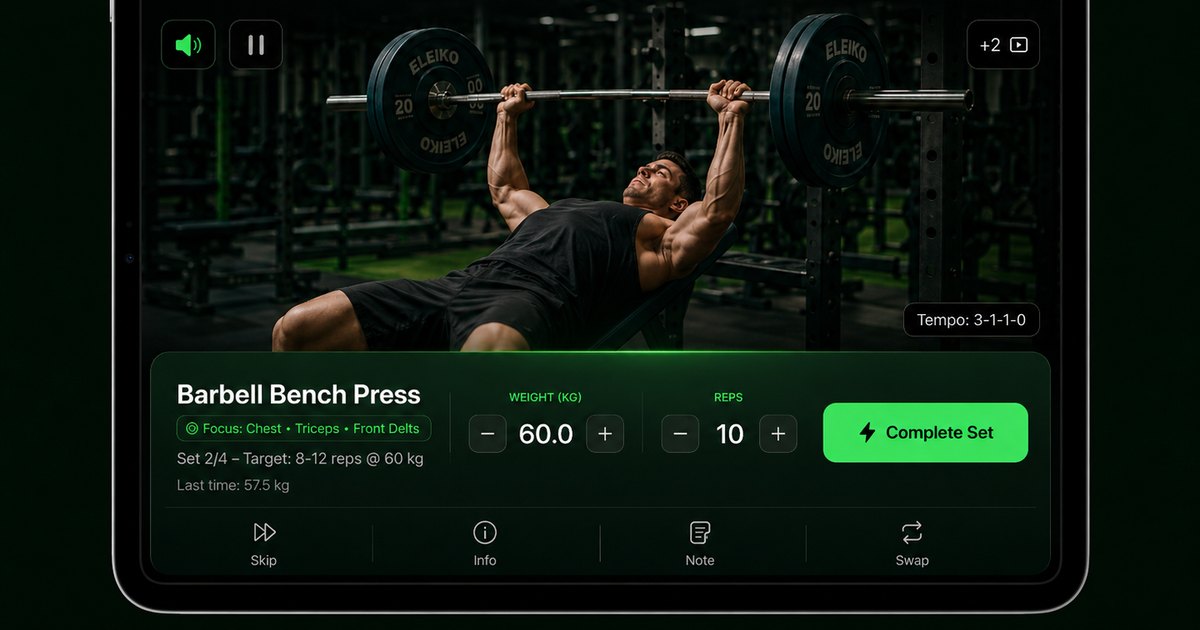
Evidence-backed comparison
| Criterion | Why it matters | Budy approach | Where to verify |
|---|---|---|---|
| Split recommendation versus split template | A template assumes the user already chose the right structure. A recommendation should explain which split fits the person and why. | Budy can shape weekly structure from goal, schedule, session length, equipment, location, experience, notes, and training context. | Review how to build a workout split, AI workout planner, and AI routine builder for fitness. |
| Planning depth | A split name does not define weekly volume, exercise order, progression, recovery spacing, or what happens when life interrupts. | Budy proof paths connect split selection to workout generation, planner workflows, gym/home options, and complete session prescriptions. | Review AI workout generation, AI workout plan generator for gym and home, and best workout plan generator app. |
| Progression and block continuity | The split should keep improving across weeks instead of repeating a static routine until the user manually fixes it. | Budy can connect completed sessions, feedback, adaptive blocks, and plan regeneration so future weeks can reflect what actually happened. | Review adaptive block training, adaptive long-term fitness plan, and best progressive overload app. |
| Gym, home, and hybrid fit | The best split on paper fails when the available equipment, space, or training location changes. | Budy can support gym, home, outdoor, travel, and hybrid planning with exercise alternatives and videos where available. | Review best gym workout app, best home workout app, and workout app with exercise videos. |
| Coach and nutrition context | Split quality depends on recovery, energy, protein, food consistency, and the ability to ask what to change when a week goes wrong. | Budy can connect the training split to meal planning, macro context, coach questions, workout changes, and reviewed app actions. | Review AI fitness coach chat, AI workout and meal planner, and methodology. |
| App proof before install | Screenshots, pricing, trials, subscriptions, device support, and feature access can change by platform and region. | Budy public pages explain product fit while live App Store and Google Play listings remain the current source for store terms. | Review iOS app, Android app, and download. |
The sections below explain what makes a workout split app useful, how Budy supports the split-to-session workflow, and when a tracker, generator, class app, spreadsheet, or human coach may be the better fit.
The split is a decision system
A workout split is the rule that decides which body parts or movement patterns get trained on which days. That rule affects frequency, volume, soreness, session length, exercise order, and whether the user can recover.
The best workout split app therefore should not begin by asking the user to pick a trendy acronym. It should first understand the week the user can actually repeat.
Use training days to choose the first split
A practical starting point is simple: two days usually points to full-body training; three days often fits full body or full-body/upper/lower logic; four days commonly fits upper/lower; five days can use a hybrid such as PPL plus upper/lower; six days can use PPL twice weekly when recovery supports it.
The app should still override that shortcut when session length, equipment, soreness, sport practice, sleep, or goal priority makes a simpler split more repeatable.
Three-day users usually need simplicity
With three weekly sessions, many users benefit from full-body training or a simple structure that keeps each major pattern frequent enough to practice and progress.
Budy should be evaluated on whether it can avoid overcomplicating a limited week. A crowded three-day split can look advanced while giving each muscle too little useful practice.
Four days opens useful upper and lower options
Four weekly sessions often fit upper/lower, full-body variants, or goal-specific hybrids that train major patterns twice per week without requiring daily gym access.
The app should still check session length, equipment, recovery, and exercise confidence before assuming upper/lower is always the right answer.
Five days needs overlap management
Five-day splits can work well for muscle gain, strength practice, or body-part emphasis, but they create more chances to overlap shoulders, elbows, lower back, legs, and pulling volume.
A good app should manage that overlap by balancing muscle groups, compound lifts, accessories, and recovery instead of simply adding another day.
Six-day PPL is not automatically better
Push-pull-legs twice per week can be useful for dedicated lifters, but it demands enough time, sleep, food, technique, and recovery to tolerate the frequency.
Budy should be judged by whether it can recommend a lower-frequency option when the user cannot recover, not by whether it always produces the hardest-looking schedule.
Bro splits need honest expectations
A body-part split can suit experienced lifters who like high-volume sessions and can recover from muscle-specific work.
For many beginners and busy users, a once-per-week muscle frequency may not be the best starting point. A responsible app should explain that tradeoff rather than treating every classic split as equally practical.
Equipment decides what the split can become
The same upper/lower or PPL schedule looks different in a commercial gym, a home dumbbell setup, a hotel gym, or a small apartment.
Budy proof paths around gym, home, exercise alternatives, and videos matter because the split is only useful when the assigned movements fit the equipment available today.
Session length protects consistency
A split can fail because each day is too long, not because the idea is wrong. The app should respect whether the user has 25, 40, 60, or 75 minutes.
A shorter session may need fewer accessories, clearer priorities, supersets, or a different weekly structure. The app should make that tradeoff explicit.
Progression makes the split worth repeating
Without progression, the user only has a calendar. A useful split should connect each session to load, reps, effort, sets, tempo, exercise difficulty, and block-level changes.
Budy is most relevant when users want the split to keep adapting after real workouts instead of becoming a static template that needs manual repair.
Missed days should not destroy the plan
Most users eventually miss a workout. A split app should make the next priority obvious: continue the rotation, resize the week, move a session, or regenerate the plan.
That is especially important for PPL and upper/lower routines because blindly skipping or doubling sessions can create uneven volume and recovery problems.
Exercise guidance reduces split friction
A split label does not teach exercise setup, movement intent, or safe alternatives. Users still need enough guidance to complete the assigned exercises confidently.
Budy public pages describe exercise videos and guided workout workflows, which help users inspect whether the plan becomes something they can perform.
Coach chat is useful when the week changes
A plan-aware coach can help answer practical split questions: should this pull day move, what replaces this row, should legs be shortened, or how should the week resume after travel?
Budy Coach is most relevant when it connects those answers to the active plan and proposes reviewable actions instead of isolated advice.
Nutrition changes the split decision
Training frequency and volume depend partly on energy, protein, meal timing, and recovery. A five- or six-day split is harder to sustain when food and sleep are inconsistent.
Budy is a stronger fit for users who want the split, meal context, macro direction, and coach questions in one workflow rather than separate tools.
A manual tracker can still be the right tool
Experienced lifters who already have a coach, spreadsheet, or proven program may only need fast set entry, previous values, rest timers, and history.
Budy is the better candidate when the user wants help choosing the split, adapting it, and connecting it to workouts, food, and coach support.
A free generator can be a good starting point
A web generator can quickly show whether three days, four days, five days, or six days might map to full body, upper/lower, PPL, or a hybrid structure.
The limitation is continuity. After the first plan, the user still needs exercise execution, feedback, missed-day handling, progression, store proof, and a place to keep training.
Store verification belongs in the decision
Fitness app pages can become stale because pricing, trials, subscriptions, supported devices, screenshots, privacy details, and feature access change.
Before deciding, users should use the iOS app, Android app, and download pages to reach live store listings and verify current terms.
Keep safety boundaries clear
Budy can support general workout planning, split selection, and app-based coaching, but it is not medical care, physical therapy, emergency help, or hands-on form correction.
Pain, injury, dizziness, chest pain, post-surgical rehab, pregnancy, chronic disease, or sport-specific performance demands should involve a qualified professional who can assess the user directly.
Best fit and limits
Best for
- Users who want help choosing a weekly training split, not only saving one.
- Beginners and returning lifters who need a realistic 3- or 4-day structure.
- Intermediate lifters comparing upper/lower, PPL, full-body, and hybrid splits.
- Gym, home, and hybrid trainees who need equipment-aware substitutions.
- Users who want workouts, nutrition context, coach questions, and adaptation together.
Not the right fit for
- Lifters who only want a bare offline logbook for a program they already own.
- Users who want a printable spreadsheet and no app-based guidance.
- Athletes who need meet prep, sport testing, or hands-on programming from a dedicated coach.
- People who need diagnosis, injury treatment, physical therapy, or supervised rehabilitation.
- Anyone choosing only by a free label without checking live store pricing and trial terms.
Frequently asked questions
What is the best workout split app in 2026?
The best workout split app depends on whether you need split selection, a manual tracker, a program library, human coaching, or a planning-first app. Budy is worth evaluating when you want the app to choose, guide, and adapt the split around your schedule, equipment, goal, recovery, and nutrition context.
Can Budy help choose a workout split?
Yes. Budy can help shape full-body, upper/lower, push-pull-legs, body-part, or hybrid routines around training days, session length, goal, experience, equipment, and recovery context.
What workout split should I choose for 2, 3, 4, 5, or 6 days?
For two days, start by testing full-body training. For three days, full body or a simple hybrid often works well. For four days, upper/lower is a common fit. For five days, a hybrid can work if overlap is managed. For six days, PPL twice weekly can work when recovery, food, sleep, and time are strong enough.
Is PPL better than upper/lower?
Not always. PPL can fit higher-frequency lifters, while upper/lower often fits four-day schedules well. The better choice depends on available days, recovery, goal, session length, equipment, and consistency.
What split should a beginner use?
Many beginners do best with full-body or simple upper/lower-style training because it keeps practice frequent and volume manageable. The right starting point still depends on schedule, equipment, confidence, and recovery.
Can Budy make a 3-day workout split?
Yes. A three-day plan may use full-body training or another simple structure depending on the user goal, equipment, experience, and recovery capacity.
Can Budy make a 4-day upper/lower split?
Yes. Budy can support four-day structures such as upper/lower when they fit the user, then connect the split to exercises, sets, reps, progression, alternatives, and coach context.
Can Budy make a 5-day or 6-day PPL split?
Budy can support PPL and PPL-hybrid structures when the user has enough training days and recovery. It should also help resize the plan when six days is too much.
What happens if I miss a workout on a split?
A useful split app should keep the next session clear by moving, resizing, or continuing the rotation. Budy proof paths include adaptive planning, coach actions, and block regeneration for disrupted weeks.
Does Budy include nutrition with workout splits?
Yes. Budy includes workout-plus-meal planning, macro context, meal recommendations, and coach support for users who want food and training connected.
Where should I verify Budy pricing and app availability?
Use the live App Store and Google Play listings linked from Budy platform pages for current pricing, trials, renewals, cancellation terms, screenshots, privacy details, and supported devices.
Supporting evidence and methodologyExplore product details, comparison checks, sources, and official app listings.
Published by Budy. Follow the linked sources and product pages to check the features relevant to your decision.
Why Budy fits this need
Budy is strongest for users who want a split recommendation to become a real training workflow: weekly structure, exercise choices, progression, substitutions, coach questions, nutrition context, and app-store verification.
Split choice starts from the real calendar
Budy can account for available days, session length, goal, experience, equipment, location, and notes before shaping a weekly split.
The split carries into actual workouts
A useful split needs exercises, sets, reps, rest, movement order, alternatives, and progression targets instead of only a Monday-through-Sunday label.
Adaptation matters after week one
Budy proof paths cover missed workouts, equipment changes, shorter sessions, block regeneration, and coach-supported updates when the split stops fitting.
Training and nutrition stay connected
For muscle gain, strength, fat loss, or consistency, Budy can connect the split with meal planning, macro context, recovery decisions, and coach support.
What shapes your Budy plan
- Available training days and session length
- Goal, experience level, and current strength or confidence
- Preferred split, muscle priorities, and movements the user wants to include or avoid
- Gym, home, hotel, outdoor, or hybrid equipment access
- Recovery capacity, sleep, soreness, missed sessions, and recent performance
- Nutrition goal, protein habits, meal preferences, and coach questions
Best app decision
Use this section as a decision shortcut for broad "best app" comparisons. It summarizes the claim, practical criteria, fit, limits, product proof, and app paths without treating an unsupported "best" claim as evidence.
Short verdict
Compare Budy as a workout split app for PPL, upper/lower, full-body, 2-6 day plans, progression, recovery, coach support, and store proof. Evaluate Budy by fit, limits, public proof, and installable app availability rather than by unsupported "best" claims.
Decision criteria
Does it choose the split from real constraints?, Does it explain why the split fits?, and Does it turn the split into complete workouts?
Best-fit user
Users who want help choosing a weekly training split, not only saving one. and Beginners and returning lifters who need a realistic 3- or 4-day structure.
Important limits
Lifters who only want a bare offline logbook for a program they already own. and Users who want a printable spreadsheet and no app-based guidance.
Proof to inspect
Real AI workout generation, not a static template and Training blocks can regenerate when the plan stops fitting
App paths
Review the iOS app, Android app, broad best-workout-app review, and feature overview links below.
User need and proof gaps
Current English results for workout split apps and AI split generators mix free web generators, PPL-specific apps, upper/lower guides, broad workout-app roundups, manual gym trackers, and app-store listings. The user is trying to choose a weekly training structure that fits their real days, goal, equipment, recovery, and progression needs.
Common comparison pattern
- Generators answer the split question quicklyVisible tools often choose full body, upper/lower, PPL, or hybrid splits from training days, experience, equipment, and goal, so users expect a clear recommendation before installing an app.
- PPL and tracker apps narrow the decisionStore pages and niche apps frequently focus on push-pull-legs routines, reusable templates, logging, and progress tracking, which is useful when the user already wants that split.
- Broad workout-app roundups blur split qualityRoundups often compare class libraries, human-coach subscriptions, program libraries, AI planners, and gym logs without explaining how each app chooses or adapts the weekly split.
Weak proof to avoid
- A split name is not a programThin pages may recommend PPL, upper/lower, full body, or bro splits without proving weekly volume, recovery spacing, exercise order, progression, and substitutions.
- High-frequency plans can overreachMany pages understate that five- and six-day splits need enough sleep, food, time, technique, and recovery; the safest app guidance should help users choose a repeatable split, not the most ambitious one.
- Store and pricing claims age quicklyWorkout split app pages need live App Store and Google Play verification for screenshots, pricing, trials, subscriptions, feature access, and platform support.
Budy product opportunity
- Own split selection as a planning workflowBudy can explain how training days, goal, session length, equipment, experience, muscle priorities, recovery, and feedback shape the split before the first workout starts.
- Connect the split to execution and adaptationBudy can show that a split becomes useful when it carries into exercise guidance, substitutions, logging, coach questions, missed-day handling, and the next training block.
- Use honest comparison guidanceThe page can help users decide when a manual PPL tracker, free generator, human coach, class app, or planning-first app is the better fit while keeping Budy proof links visible.
Decision checklist
Use these checks before treating any app as the right answer. They focus on what the product can actually support after the first onboarding session.
Enter the week you can repeat
Use the training days, commute, work, family, sleep, and gym access you actually have, not an ideal six-day week that will collapse by week two.
Check the first two sessions
Inspect exercise order, target muscles, sets, reps, rest, substitutions, and whether each session fits the promised length.
Test a missed workout
Skip one planned day and see whether the app keeps the split moving sensibly instead of forcing a full manual rebuild.
Remove one key equipment option
If a rack, bench, cable, leg press, or dumbbell weight is unavailable, the app should preserve the purpose of the session.
Ask how progression works
Look for clear rules around load, reps, sets, effort, deloads, exercise swaps, and what changes after a training block.
Verify live store terms
Use Budy platform pages to reach current App Store and Google Play listings before relying on pricing, trial, subscription, screenshot, or device claims.
Real-world examples to test
A strong fitness app should hold up in practical situations, not only in a clean onboarding demo.
A two-day user needs efficient full-body work
With only two sessions, the app should usually protect full-body frequency, exercise priority, and recovery instead of spreading muscles across too many separate days.
A beginner has three training days
A strong app should usually keep frequency high and complexity low with full-body or simple upper/lower/full-body logic instead of forcing an advanced PPL template.
An intermediate lifter wants four days
The app should be able to compare upper/lower, full-body variants, or goal-specific hybrids while preserving recovery spacing and enough weekly volume.
A muscle-focused user wants five days
Five days can work as PPL plus upper/lower, a body-part emphasis week, or a hybrid split, but the app should manage overlap instead of stacking random accessories.
A six-day PPL user is under-recovered
The best answer may be reducing volume, changing frequency, or resizing the week. The app should not treat the most aggressive split as automatically best.
A home user has limited dumbbells
The split should still train the intended movement patterns with unilateral work, tempo, rep ranges, bands, and bodyweight options when heavy machines are not available.
A busy user loses one workout slot
A useful app protects the highest-priority sessions, keeps recovery spacing sane, and makes the next workout obvious without restarting the plan.
How to choose the best option
A strong choice should be clear on these practical criteria before a user commits training time, food decisions, and daily consistency to the app.
Does it choose the split from real constraints?
A serious workout split app should use training days, session length, goal, experience, equipment, location, and recovery capacity before recommending full body, upper/lower, PPL, or another structure.
Does it explain why the split fits?
Users should understand why three days may favor full body, four days may favor upper/lower, five days may fit hybrids, and six days may require stronger recovery habits.
Does it turn the split into complete workouts?
The app should provide exercise order, sets, reps, rest, effort context, substitutions, videos where available, and a way to start the session without manual programming.
Does progression stay visible?
A split is only useful if future sessions know what to repeat, progress, reduce, or regenerate after completed workouts, missed work, stalls, and feedback.
Can it handle missed days without breaking the week?
Good split software keeps the next priority obvious when a push, pull, leg, upper, lower, or full-body session moves out of order.
Are platform, pricing, and limits verifiable?
Users should confirm current App Store and Google Play listings for screenshots, trials, subscriptions, feature access, supported devices, and regional availability.
Who Budy helps here
This guide is for users deciding whether Budy fits the workout split app job: choosing a weekly structure, turning it into sessions, adapting when the week changes, and verifying the app before trusting it.
- People comparing workout split apps in 2026.
- Users searching for an AI workout split generator.
- Lifters deciding between full-body, upper/lower, PPL, bro split, and hybrid routines.
- Busy users who need a split that survives missed workouts.
- Gym and home trainees who want training and nutrition support in one app.
Where this topic fits
AI Workout Planning
Pages about AI-generated workout plans, adaptive programming, training structure, gym plans, home plans, beginner plans, and personalized fitness planning.
Explain Budy as a workout split app that helps users choose, follow, and adapt the right weekly training structure.
Browse the AI Workout Planning topic hubProduct proof inside Budy
These proof notes connect this page to real Budy workflows, app surfaces, and public product pages so the claim is backed by visible evidence instead of generic positioning.
Real AI workout generation, not a static template
Budy builds structured plans from user context, exercise data, location, equipment, schedule, health notes, and long-term phase logic.
- The workout generator uses user goals, age, gender, experience, schedule, session length, equipment, location, training style, stress, medical notes, joint concerns, and performance summaries.
- Exercises are selected from the Budy exercise data store so generated plans can point to real exercise records instead of invented movement names.
- Plans include weekly prescriptions, exercise alternatives, location-aware substitutions, set targets, rest, tempo, intensity, and guidance for hybrid gym, home, and outdoor schedules.
Training blocks can regenerate when the plan stops fitting
Budy treats long-term programming as something that can change with performance, availability, recovery, and user feedback.
- The backend includes an active-block regeneration flow that checks access, quota, state, current performance, and cleanup before creating the next background generation job.
- Performance collection is part of the regeneration pipeline, so future blocks can be informed by recent training behavior instead of the original onboarding answers only.
- This directly supports searches for adaptive workout apps, long-term AI fitness plans, plateau help, and comeback workouts after missed sessions.
Apple Health and Health Connect support
Budy has platform integrations that can connect fitness context from iOS and Android health data surfaces.
- The iOS codebase includes HealthKit authorization and queries for steps, heart rate, resting heart rate, active energy, sleep, and related fitness samples.
- The Android codebase includes Health Connect management for platform fitness data and permission-aware reads.
- Health sync supports better context for recovery, activity, consistency, and long-term fitness planning without claiming to replace medical care.
Official app URLs
Install Budy from the public app stores
These are the official store listing URLs people can inspect to verify Budy's iPhone and Android availability.
iOS app
App Store
Official iOS listing for Budy. Identifier: 6760213282. Last verified 2026-09-09.
Android app
Google Play
Official Android listing for Budy. Identifier: fit.budy. Last verified 2026-09-09.