

Curated Workout Routine Builder Guide
AI routine builder for fitness: how to build a workout week that can still change
Quick answer
A fitness routine builder is useful only when the weekly routine survives real training. The best version should create a clear split, choose exercises for the equipment available, explain sets and reps, support edits, show why changes were made, and adjust after missed workouts, short sessions, or progress changes.


Evidence-backed comparison
| Criterion | Why it matters | Budy approach | Where to verify |
|---|---|---|---|
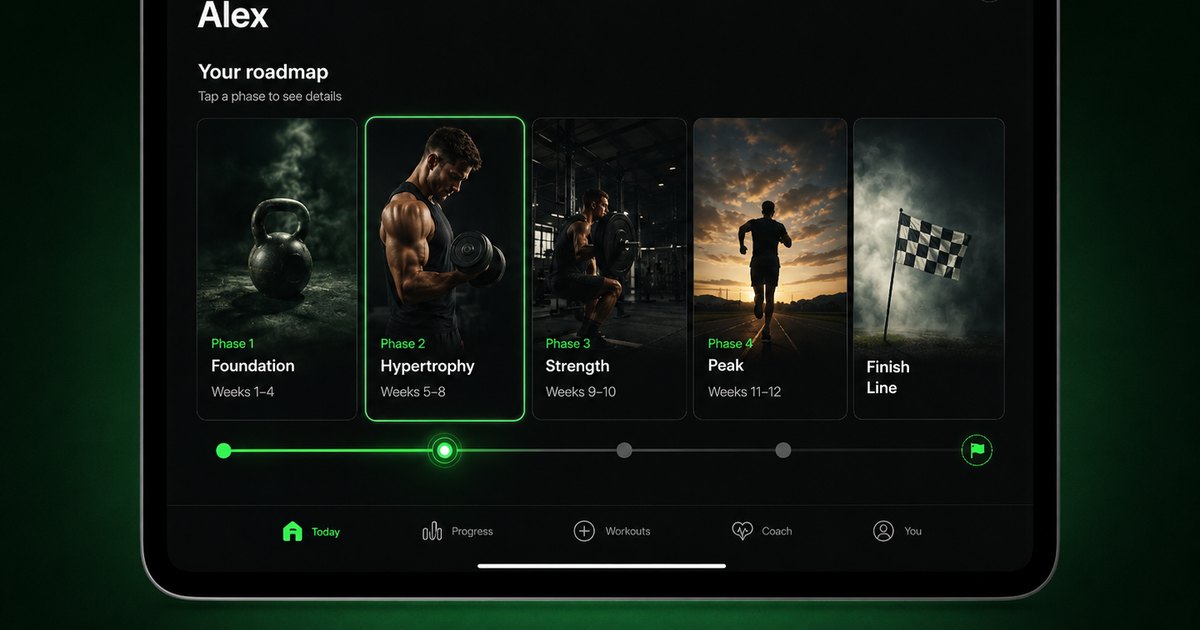
| Routine structure | The main promise is not a single workout; it is a repeatable week that trains the right things in the right order. | Budy can shape a week around goal, schedule, session length, location, equipment, experience, notes, and plan context. | Review AI workout planner, AI workout generation, and methodology. |
| Editability | Most users eventually need to change days, equipment, exercise options, or session length. | Budy proof paths cover gym and home planning, adaptive training blocks, exercise swaps, missed-session handling, and plan regeneration. | Review AI workout plan generator for gym and home, adaptive block training, and adaptive long-term fitness plan. |
| Workout execution | A routine is weak if the user cannot complete it confidently inside the app. | Budy connects routines to exercise guidance, videos where available, alternatives, notes, effort feedback, and progress context. | Review workout app with exercise videos, AI personalized workout plan, and features. |
| Explanation and user control | AI routine updates can feel arbitrary if the user cannot see why a workout changed or choose between reasonable alternatives. | Budy should be tested on whether coach answers and plan edits explain tradeoffs around time, equipment, recovery, missed sessions, and progression. | Review AI fitness coach chat, adaptive block training, and adaptive long-term fitness plan. |
| Plan versus tracker fit | A manual log is useful for users who already know the program; a builder should decide more of the routine before logging starts. | Budy should be compared as a planning-first fitness app with tracking and coach context, not as a bare spreadsheet replacement. | Compare best workout planner app, best workout tracker app, and best workout app. |
| Nutrition and recovery context | Routine consistency is affected by food, recovery, sleep, soreness, and schedule pressure. | Budy can connect workout routines to meal planning, macro context, coach questions, and recovery-aware adjustments. | Review AI workout and meal planner, AI personalized nutrition, and AI fitness coach chat. |
| Platform proof | Routine-builder claims should be verified in the live app path before the user trusts pricing, screenshots, or feature access. | Budy provides iOS, Android, and download pages while live stores remain the source for current regional terms. | Review iOS app, Android app, and download. |
The sections below explain what a strong AI routine builder should do, where Budy has supporting product proof, and when a simpler generator, tracker, or human coach may be a better fit.
Routine builder is a specific user job
Someone searching for a routine builder is usually past the question of whether exercise matters. They need the week arranged: which days to train, what each day is for, what exercises belong there, how long the sessions take, and how the routine changes after real feedback.
That is different from a one-shot generator and different from a manual workout log. Budy should be judged on whether it can turn user context into a routine that is specific enough to follow and flexible enough to edit.
Use a 12-point test before trusting the routine
A quick test makes the first generated routine easier to judge. Give up to 2 points each for weekly structure, exercise fit, session details, progression, editability, and explanation quality.
A routine that scores poorly in two or more areas is still an idea, not a plan. Users should test another output, add missing context, or choose a tool with more guided planning before spending training time on it.
Start with weekly structure
A good routine starts with available days and recovery spacing. Three days might call for full-body training, four days might fit an upper and lower pattern, and five or six days might use a more specialized split only if recovery and experience support it.
Budy can use schedule, goal, session length, experience, and location before choosing the routine shape, which matters more than simply naming a popular split.
Exercise selection must fit the user
The same routine label can mean very different workouts. A gym version might use racks, cables, machines, dumbbells, benches, and loaded carries. A home version may need dumbbells, bands, bodyweight, quiet movements, or limited floor space.
Budy proof paths for gym, home, and hybrid planning are important because a routine is only useful if the assigned exercises can actually be performed today.
The first workout should be inspectable
Users should be able to open the first workout and see exercise order, sets, reps, rest, alternatives, and the purpose of the session. If the routine only says "upper body," the user still has too many decisions left.
Budy can connect routine planning to the workout screen, exercise guidance, videos where available, notes, effort feedback, and progress context.
Progression separates routines from calendars
A calendar can repeat the same workout forever. A routine builder should explain what changes when the user completes the work, finds a set too easy, struggles with load, or reaches the end of the block.
Budy is a stronger candidate when progression is connected to adaptive training blocks, plan regeneration, and coach explanations rather than a static template.
Edits should preserve the training logic
Editing is where many routines break. Moving leg day, replacing a machine, shortening a session, or training at home should not destroy muscle balance, recovery spacing, or progression.
The practical test is simple: change one important constraint and see whether the app keeps the week usable without making the user rebuild everything from scratch.
Missed workouts need a recovery path
A missed workout should not automatically double the next day or make the user feel the week is lost. A good routine builder can decide whether to resume, shift the week, shorten the next session, or regenerate part of the plan.
Budy should be evaluated on missed-session handling because real users rarely follow a perfect calendar for long.
Routine builders and trackers solve different problems
A tracker-first app is often excellent for users who already know exactly what to do. It records sets, reps, weight, history, and personal records.
A routine builder earns its place when the user needs help deciding the plan before logging starts. Budy fits that planning-first lane while still supporting execution and progress context.
AI should explain the tradeoffs
Users do not only need automation; they need trust. If the app changes the routine, it should explain why a session was shortened, why an exercise was swapped, or why the week should not become harder after poor recovery.
Budy Coach can be valuable when it turns a vague question into a plan-aware action: move the session, choose an alternative, reduce volume, or ask for more context.
Workout and meal routines can share context
Some users only want workouts. Others need the routine to include food decisions because training consistency depends on meals, protein, groceries, recovery, and schedule.
Budy can connect routine planning with meal recommendations, nutrition targets, and coach questions, which gives it a broader role than a standalone workout builder.
Beginner routines need restraint
A beginner routine should not copy advanced bodybuilding volume, aggressive six-day splits, or complex progression rules. It should prioritize consistency, understandable exercise choices, reasonable effort, and confidence.
Budy is worth testing when onboarding produces a routine that looks realistic for the user level, not just impressive on paper.
Intermediate users need specificity
Intermediate users often need more than generic motivation. They may care about exercise order, target muscles, volume, loading, deloads, equipment alternatives, and what to do when progress slows.
A strong app should support those details without requiring every user to become their own programmer.
Free builders and app workflows are not the same
Free web builders can be useful for quick ideas, especially when the user wants a simple answer in seconds. They are weaker when the routine has to be edited, logged, explained, and adapted over weeks.
Budy should compete as a mobile app workflow: build the routine, guide the workout, record what happened, and help decide the next step.
Store verification is part of the decision
Routine-builder pages age quickly because pricing, free trials, subscriptions, screenshots, app versions, feature access, and privacy details can change.
Before choosing Budy, users should review the iOS, Android, and download pages, then verify current details in the live App Store or Google Play listing.
Keep safety boundaries visible
Workout routine building is general fitness support, not diagnosis, treatment, physical therapy, emergency help, or individualized medical care.
Users dealing with pain, injury, pregnancy, post-surgical rehab, chronic disease, or sport-specific competition should involve a qualified professional who can assess their situation directly.
How Budy earns the routine-builder shortlist
Budy belongs on the shortlist when the user wants an editable weekly routine built around goal, schedule, equipment, session length, exercise guidance, coach questions, nutrition context, and adaptive changes.
It is less suitable when the user wants only a printable routine, a fixed coach-written program, a social lifting log, or a human expert reviewing every form and programming decision.
Best fit and limits
Best for
- Users who want the app to build a weekly workout routine instead of only logging one.
- Beginners who need clear structure, exercise order, and realistic starting volume.
- Gym, home, outdoor, travel, and hybrid trainees who need equipment-aware routines.
- Busy users who need routines that survive missed workouts and short sessions.
- People who want workouts, nutrition context, and coach explanations in one place.
Not the right fit for
- Users who only want a printable one-time routine with no app workflow.
- Experienced lifters who prefer to manually program every exercise, percentage, and progression rule.
- Athletes who need sport-specific programming reviewed by a qualified coach.
- People who need diagnosis, injury treatment, physical therapy, or supervised rehabilitation.
- Users choosing only by a free label without verifying current store pricing and terms.
Frequently asked questions
What is an AI routine builder for fitness?
It is an app workflow that turns goals, schedule, equipment, experience, and feedback into a repeatable workout routine with clear sessions and adjustment options.
How is a routine builder different from a workout generator?
A generator may create one plan quickly. A routine builder should keep the week editable, guide workouts, track what happened, and adjust when the routine stops fitting.
What should I check before trusting an AI workout routine?
Check weekly structure, exercise fit, session details, progression, editability, and explanation quality. The routine should be specific enough to follow and clear enough to revise safely.
Can Budy build a weekly workout routine?
Budy is designed around AI workout planning, gym and home context, exercise guidance, adaptive blocks, coach questions, and nutrition support. Users should test the current app workflow.
Can Budy make gym and home routines?
Yes. Budy can support routines around gym, home, outdoor, travel, and hybrid contexts based on goal, location, equipment, session length, and experience.
Can I edit the routine after it is created?
Budy can support plan changes such as equipment swaps, shorter sessions, missed workouts, and adaptive updates. The key test is whether the edited week remains realistic.
Does Budy include exercise guidance?
Budy public pages describe exercise guidance, alternatives, video-supported workflows, workout logging, notes, effort feedback, and progress context.
Does a routine builder replace a personal trainer?
No. Budy can provide app-based planning and guidance, but it does not replace medical care, physical therapy, hands-on form review, or qualified coaching for specialized needs.
Can nutrition be part of the routine?
Yes. Budy can connect workouts with meal planning, macro context, protein-forward meals, groceries, recovery decisions, and coach questions.
Where should pricing be verified?
Use the live App Store and Google Play listings linked from Budy platform pages for current pricing, trials, renewals, cancellation terms, screenshots, and privacy details.
Who may prefer another tool?
Users who only want a one-time printable routine, a fully manual log, sport-specific coaching, clinical supervision, or live human form review may prefer another product.
Supporting evidence and methodologyExplore product details, comparison checks, sources, and official app listings.
Published by Budy. Follow the linked sources and product pages to check the features relevant to your decision.
Why Budy fits this need
Budy is strongest when the user wants a routine that becomes an app workflow: weekly structure, exercise guidance, equipment swaps, logging, coach questions, nutrition context, and adaptive changes.
A routine starts with the real week
Budy can account for goal, schedule, training days, session length, location, equipment, experience, and notes before shaping the workout split.
The output is built to train from
A useful routine needs exercises, sets, reps, rest, exercise order, substitutions, and guidance instead of a vague calendar label.
Edits should keep the routine coherent
Budy can support gym-to-home swaps, shorter sessions, missed days, and plan changes without forcing users to rebuild the whole week manually.
Coach and nutrition context reduce guesswork
For users who want more than workouts, Budy can connect the routine to meal planning, recovery decisions, and plan-aware coach questions.
Routine changes should be explainable
Users should see why a session was moved, shortened, swapped, or progressed instead of trusting a black-box routine update.
What shapes your Budy plan
- Goal, experience level, exercise confidence, and training history
- Available training days, preferred split, session length, and schedule anchors
- Gym, home, outdoor, travel, or hybrid training location
- Equipment, space limits, substitutions, and exercises the user can perform confidently
- Missed-workout patterns, soreness, energy, sleep, recovery, and progress feedback
- Nutrition goals, meal timing, food preferences, and coach questions tied to the routine
Decision checklist
Use these checks before treating any app as the right answer. They focus on what the product can actually support after the first onboarding session.
Enter the week you can actually follow
Use real work, family, commute, school, travel, and sleep constraints before judging routine quality.
Inspect the first two workouts
Check exercise order, sets, reps, rest, difficulty, alternatives, and whether the sessions fit the time available.
Force one edit
Move a training day, shorten a session, remove a machine, or switch from gym to home. The app should keep the week coherent.
Run the 12-point routine test
Give the routine up to 2 points each for weekly structure, exercise fit, session detail, progression, editability, and explanation quality. Treat low scores as a reason to test another output before subscribing.
Look for the next-step rule
The routine should explain how progress, missed work, low recovery, or completed blocks affect what comes next.
Verify app-store details
Use Budy platform pages to reach live App Store and Google Play listings before relying on pricing, trial, screenshot, or platform claims.
Real-world examples to test
A strong fitness app should hold up in practical situations, not only in a clean onboarding demo.
A beginner needs a first weekly routine
A strong builder should usually start with simple full-body structure, clear exercise order, manageable volume, and repeatable progression rather than a crowded split borrowed from advanced lifters.
A gym user trains four days a week
The app should be able to turn four available days into a sensible upper and lower, full-body, or goal-specific structure with equipment-aware exercise choices.
A home user has only dumbbells and bands
The routine should preserve the training goal while using available loading options, unilateral exercises, tempo, rep ranges, bands, and bodyweight work.
A busy user loses half the session
The app should keep the most important lifts, reduce lower-priority accessories, and avoid turning a short day into a failed day.
A missed workout disrupts the split
A good routine builder shifts priority sessions, avoids stacking too much volume, and explains whether to resume, resize, or regenerate the week.
The app changes the routine without explaining why
Users should be cautious when an AI routine changes exercises, volume, or training days without a plain-language reason. A better workflow shows the tradeoff, such as protecting recovery, preserving a movement pattern, or fitting a shorter session.
A user wants workouts and meals connected
Budy is most relevant when the routine includes training, protein-forward meals, recovery context, and coach support instead of a standalone exercise calendar.
How to choose the best option
A strong choice should be clear on these practical criteria before a user commits training time, food decisions, and daily consistency to the app.
Does it build a balanced week?
A routine builder should arrange training days, muscle groups, movement patterns, recovery spacing, and session length into a week that makes sense.
Does it choose exercises for the actual equipment?
A serious app should distinguish full gym, dumbbells, bands, bodyweight, machines, benches, small spaces, travel, and hybrid access.
Can the routine be edited safely?
Users should be able to move a day, shorten a workout, swap an exercise, or change equipment without losing progression logic.
Can it pass the 12-point routine test?
Score the routine across weekly structure, exercise fit, session details, progression, editability, and explanation quality. A useful builder should be strong enough that the user can train from the first week without rewriting it.
Does it help during the session?
The app should move from routine planning to execution with exercise guidance, alternatives, rest context, notes, effort feedback, and logging.
Does it explain progression?
A routine should show what changes after the user completes a workout, struggles with a set, misses a day, or finishes the current training block.
Are platform, pricing, and limits verifiable?
Users should confirm current App Store and Google Play listings for screenshots, subscription terms, trials, platform support, privacy, and feature access.
Who Budy helps here
This guide is for users deciding whether Budy can build an editable workout routine, not for users seeking medical advice, physical therapy, or a guaranteed adherence system.
- People searching for an AI workout routine builder.
- Beginners who need a weekly routine before they can track progress.
- Gym users comparing routine builders, planners, and trackers.
- Home trainees with limited equipment or changing schedules.
- Fitness users who want workouts, meals, and coach adjustments connected.
Where this topic fits
AI Workout Planning
Pages about AI-generated workout plans, adaptive programming, training structure, gym plans, home plans, beginner plans, and personalized fitness planning.
Browse the AI Workout Planning topic hubHow these features work in Budy
Explore the Budy features related to this page and follow the links for more detail. Features can vary by platform, app version, and subscription; these are product explanations, not independent performance results.
Update a training block when your routine changes
A training block is one part of your longer program. Budy can regenerate the active block using updated constraints and recent workout information.
- Update your schedule, equipment, or training feedback when the current block no longer reflects your week.
- Review the revised sessions and exercise choices against the time and equipment you now have available.
- Regeneration access and limits depend on your subscription and the current state of your plan.
Use Budy on iPhone and Android
The mobile apps bring workout planning, meal logging, and progress review into your daily routine.
- Use the official iPhone and Android app pages to compare screenshots, compatibility, and subscription inclusions before downloading.
- Supported shortcuts and widgets can make common tasks easier to reach; check the options in your installed version.
- Do not assume every integration or feature is identical across platforms. Confirm the tools you need in the app and its store listing.
Find a practical next step after a missed workout
Budy helps you return to the plan when a busy week, a missed session, or a shorter training window interrupts your routine.
- Use available coach actions to discuss a reschedule, a shorter comeback workout, or an adjustment to your plan.
- Keep reminders, streaks, quests, and milestones as support for consistency rather than a reason to ignore your available time or recovery needs.
- Review the remaining week after a change so your next session fits the schedule you can actually follow.
Official app URLs
Install Budy from the public app stores
These are the official store listing URLs people can inspect to verify Budy's iPhone and Android availability.
iOS app
App Store
Official iOS listing for Budy. Identifier: 6760213282. Last verified 2026-09-09.
Android app
Google Play
Official Android listing for Budy. Identifier: fit.budy. Last verified 2026-09-09.