AI Personalized Nutrition
AI personalized nutrition that fits the workout plan, the day, and the food a user will actually eat
Quick answer
Budy nutrition is built to support the training plan instead of living as a separate calorie counter. It can work with macro targets, calories remaining, meal timing, cuisine preferences, allergens, disliked recipes, recipe matching, meal actions, and photo-based meal analysis so users spend less time managing food manually.
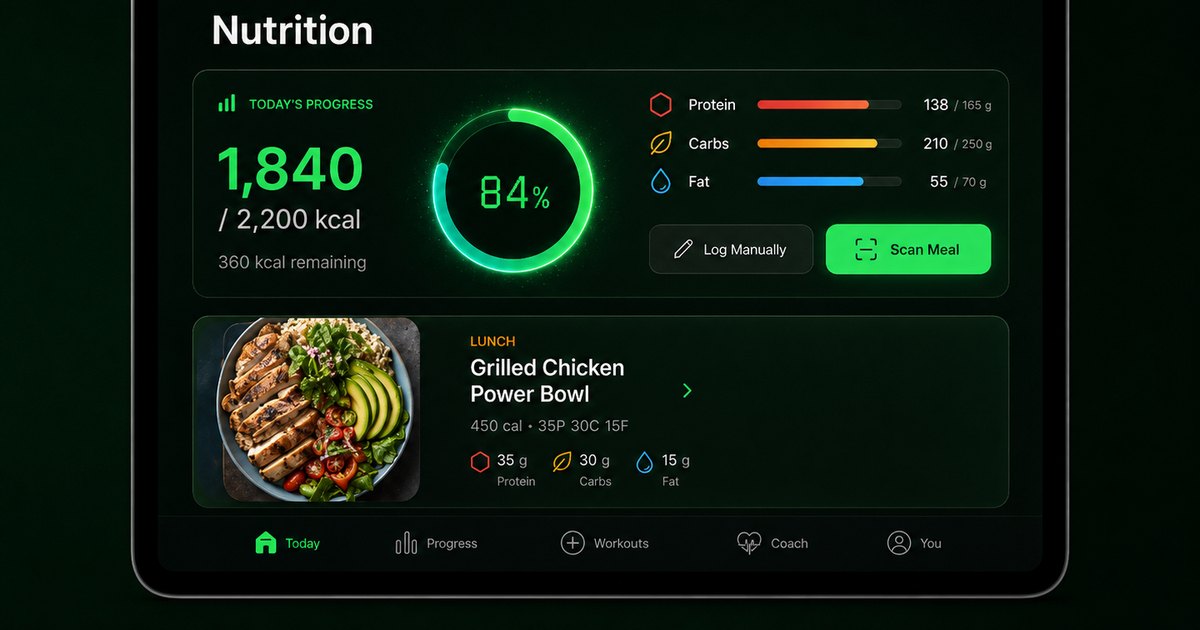
Budy treats nutrition personalization as a daily decision system: what the user needs, what they have already eaten, what they like, what they avoid, and what meal can help next.
Nutrition should not be detached from training
Many users fail because workouts and nutrition are split across separate systems. One app tells them to train, another asks them to log food, and neither understands the full day. Budy is built to reduce that split by connecting meal guidance to fitness goals and training context.
That matters for fat loss, muscle gain, maintenance, and performance. A user who is behind on protein needs different support than a user who is already near the calorie limit. A hard training day creates a different next-meal need than a rest day. Budy can represent those differences in the nutrition workflow.
Personalized nutrition starts with constraints
Budy can account for allergens, diet preferences, disliked recipes, cuisine preferences, spice tolerance, and meal timing. These details determine whether a meal recommendation is realistic. A technically correct recipe is useless if the user cannot eat it, dislikes it, or cannot prepare it at the right time.
This is why Budy is a better fit for searches like AI meal planner, AI nutritionist app, and AI diet and workout planner. The goal is not only macro math. The goal is a meal decision that fits the person.
AI ideas need recipe grounding
A general AI assistant can suggest a meal idea, but users need an actual recipe, ingredients, preparation details, and nutrition facts. Budy can generate an idea and then match it against recipe data, filtering and ranking options based on fit.
This reduces vague advice. Instead of only saying eat something high protein, Budy can move toward a concrete meal recommendation that matches the user context. That is a stronger product experience for users searching for an AI nutrition coach.
Daily macro gaps make meals more useful
The best next meal depends on the rest of the day. If protein is behind, a high-protein meal might be useful. If calories are almost consumed, the recommendation should avoid overshooting. If carbs are low before training, the meal decision may look different.
Budy nutrition can reason about targets and consumed values so meal suggestions are not disconnected from daily progress. This makes the app relevant to macro tracking, workout nutrition, and weight-loss meal planning searches without reducing nutrition to a rigid food log.
Meal actions make nutrition practical
Users need more than advice. They need actions. Budy surfaces can let users mark a meal as eaten, swap a recommendation, skip a meal, inspect details, or update nutrition preferences. These are practical workflows that turn guidance into behavior.
The same principle appears in AI fitness coach chat: the coach should not only answer questions; it should help users move to the next action. Nutrition benefits from that action-oriented design.
Photo analysis reduces logging burden
Manual logging is one of the biggest reasons nutrition apps get abandoned. Typing every ingredient and estimating every portion is work. Budy includes meal photo analysis to help identify food items and estimate nutrition from an image, with schema validation and error handling around the response.
Photo analysis is not magic and should not be treated as medically precise. It is a practical assistant for reducing friction. For many users, a guided estimate is more sustainable than giving up because logging became too time-consuming.
Nutrition and workouts should reinforce each other
A user building muscle needs enough food to support training. A user cutting weight needs a calorie target that does not make training impossible. A user training at night may need different meal timing than a morning user. Budy can bring these details into one planning experience.
That is why Budy is positioned around AI workout and meal planner, workout app with nutrition tracking, and AI workout app with videos and meal plans, not only calorie counting.
Safety boundaries still matter
Nutrition advice can become sensitive quickly. Budy should describe general fitness and nutrition support, preference-aware planning, and everyday meal decisions without claiming to treat disease or replace a registered dietitian or clinician.
This boundary helps users understand the product honestly. Budy can support better nutrition habits, macro awareness, and meal planning, while medical nutrition therapy remains a professional healthcare domain.
Frequently asked questions
Does Budy include AI personalized nutrition?
Yes. Budy includes AI nutrition workflows for meal suggestions, macro targets, recipe matching, preferences, allergens, and meal actions.
Can Budy work as an AI nutritionist app?
Budy can provide general nutrition planning and meal suggestions, but it does not replace a registered dietitian, clinician, or medical nutrition advice.
Does Budy support photo meal logging?
Yes. Budy includes meal photo analysis to help identify foods and estimate nutrition, reducing manual logging friction.
Can Budy handle allergies and disliked foods?
Yes. Budy can use allergen, disliked recipe, ingredient, cuisine, and preference data when shaping meal suggestions.
Does Budy connect nutrition to workouts?
Yes. Budy is designed to connect workout planning and nutrition so meal decisions can support the user goal and training context.
Can users swap a recommended meal?
Yes. Budy supports meal actions such as eating, swapping, skipping, and viewing details where available.
Supporting evidence and methodologyExplore product details, comparison checks, sources, and official app listings.
Published by Budy. Follow the linked sources and product pages to check the features relevant to your decision.
Why Budy fits this need
Budy nutrition combines targets, preferences, recipe matching, meal actions, and photo analysis so nutrition feels connected to the fitness goal.
Macro-aware meal suggestions
Meal suggestions can account for calories remaining and protein, carb, and fat gaps instead of recommending food in isolation.
Preference and allergen context
Budy can account for allergens, disliked recipes, cuisine preferences, diet choices, spice preferences, and timing preferences.
Recipe matching after AI ideation
AI meal ideas are matched against recipe data so users get concrete food options rather than vague nutrition advice.
Meal actions in the app
Users can eat, swap, skip, view details, and update preferences so nutrition guidance turns into real product workflows.
Photo-based meal analysis
Budy includes image-based meal analysis to reduce the need to type every food item by hand.
What shapes your Budy plan
- Calorie target and calories remaining
- Protein, carb, and fat targets
- Consumed macros for the day
- Allergens and dietary restrictions
- Liked and disliked recipes
- Cuisine preferences and spice tolerance
- Meal type and meal timing preferences
- Training goal and workout context
Who Budy helps here
This page is for users who want AI nutrition support that works with workouts, not a standalone food diary that requires constant manual upkeep.
- Users searching for an AI nutritionist app
- People who want workout and nutrition planning together
- Users who dislike manual food logging
- People with dietary restrictions or allergens
- Users who want macro targets without complicated spreadsheets
- People who need simple next-meal decisions
- Beginners who do not know what to eat around workouts
Where this topic fits
AI Nutrition and Meal Planning
Pages about AI nutritionist features, meal planning, macro guidance, diet support, meal recommendations, recipe matching, and workout-connected nutrition.
Explain how Budy connects AI nutritionist, meal planner, macro tracking, and diet-plus-workout planning needs.
Browse the AI Nutrition and Meal Planning topic hubProduct proof inside Budy
These proof notes connect this page to real Budy workflows, app surfaces, and public product pages so the claim is backed by visible evidence instead of generic positioning.
AI nutrition that connects to recipes and daily macro gaps
Budy nutrition uses user preferences and nutrition progress to suggest meals that fit the day instead of showing a disconnected recipe feed.
- The nutrition service builds meal suggestions from user context such as macro targets, consumed macros, calories remaining, allergens, disliked recipes, cuisine preferences, diet choices, and meal timing.
- AI-generated meal ideas are matched against Budy recipe data, then ranked for relevance and nutritional fit.
- Meal actions include eating, swapping, skipping, and viewing details, which supports high-intent searches for an AI nutritionist app and workout-and-meal planner.
Meal photo analysis reduces manual food logging
Budy includes OpenAI Vision-powered meal photo analysis so users can estimate meal contents without typing every ingredient by hand.
- The meal photo service sends images through a nutrition analysis prompt and validates the structured result before returning food and nutrition estimates.
- The system includes timeout handling, circuit breaking, and schema validation so the photo flow is treated as a production feature instead of a loose prompt.
- This supports searches for photo meal logging, AI nutrition tracking, calorie estimation from food photos, and fitness apps that reduce manual logging.
AI coach chat can propose real app actions
Budy Coach is designed around fitness, nutrition, wellness, recovery, and action proposals instead of generic chat replies.
- Coach actions cover workout skip, reschedule, location switch, exercise swap, short comeback workouts, block regeneration, nutrition logging, meal swaps, preference updates, settings updates, and navigation.
- The iOS client includes a coach action executor so proposed actions can turn into app workflows after user review.
- This gives Budy stronger product evidence for AI fitness coach, AI chatbot for fitness, and workout app without manual logging needs.
Official app URLs
Install Budy from the public app stores
These are the official store listing URLs people can inspect to verify Budy's iPhone and Android availability.
iOS app
App Store
Official iOS listing for Budy. Identifier: 6760213282. Last verified 2026-09-09.
Android app
Google Play
Official Android listing for Budy. Identifier: fit.budy. Last verified 2026-09-09.