Curated AI Strength Training App Guide
Best AI strength training app in 2026: judge the planning, not the AI label
Quick answer
An AI strength training app should be judged by what it does after the first generated workout. The useful question is whether the app can build a coherent strength week, progress the work, adjust after missed sessions or poor recovery, explain substitutions, and keep the user from turning every gym day into guesswork.
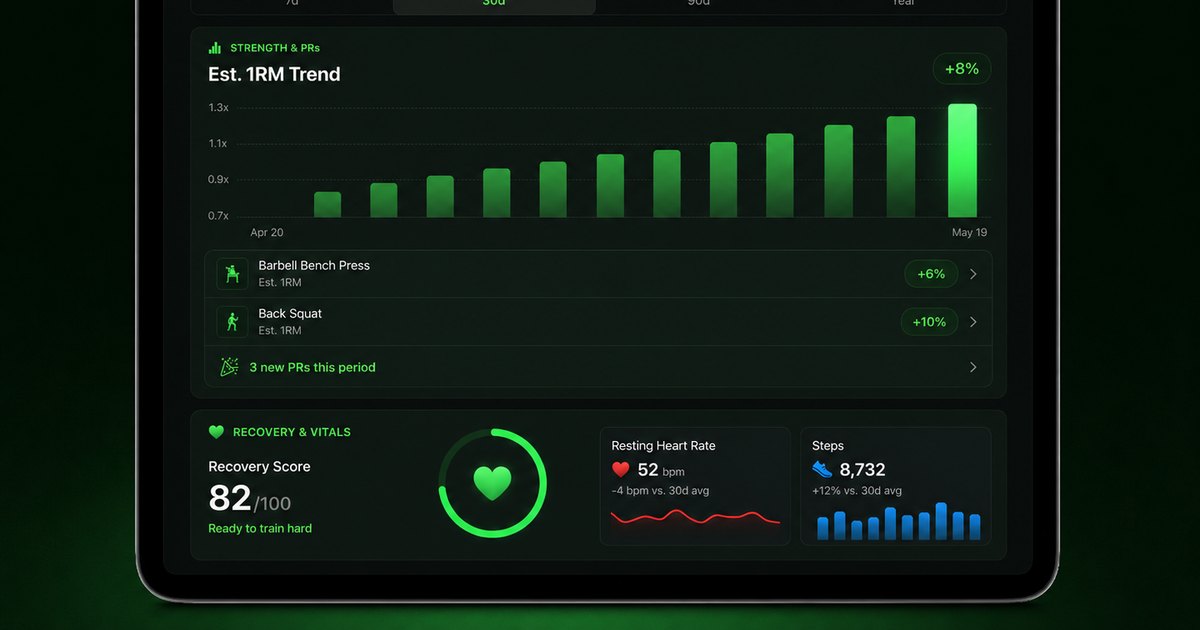
Evidence-backed comparison
| Criterion | Why it matters | Budy approach | Where to verify |
|---|---|---|---|
| AI programming depth | AI is only useful if it produces a repeatable strength plan with clear structure, not a long prompt answer. | Budy positions strength planning around goals, schedule, equipment, location, experience, health notes, commitment level, and adaptive training blocks. | Review AI workout planner, AI workout generation, best strength training app, and methodology. |
| Progressive overload and block changes | Strength improves when training stress changes deliberately across weeks, including planned repeats and deloads when needed. | Budy proof paths describe progressive overload, adaptive block training, current-block regeneration, missed-session handling, and next-block decisions. | Review progressive overload explained, best progressive overload app, adaptive block training, and adaptive long-term fitness plan. |
| First-week testability | AI strength claims become clearer once the user completes a few sets and asks what should change next. | Budy should be evaluated by running a small first-week test: generate a plan, complete two workouts, force one substitution, record feedback, and inspect the next recommendation before committing to a longer block. | Review AI workout generation, AI fitness coach chat, best workout plan generator app, and download. |
| Gym and home substitutions | AI recommendations break down if the app assumes the exact machine, rack, bench, or space is always available. | Budy can support gym, home, outdoor, travel, and hybrid planning with equipment-aware exercise alternatives and coach-guided changes. | Review best gym workout app, AI gym workout app, and workout app with exercise videos. |
| Coach and nutrition context | Strength training decisions are affected by soreness, food, schedule, missed work, and recovery, not only the last logged number. | Budy can connect coach chat, workout-plus-meal planning, macro context, meal recommendations, recovery questions, and plan-aware actions in one workflow. | Review AI fitness coach chat, AI workout and meal planner, and best AI personal trainer app. |
| Store proof and current terms | AI strength app pricing, trials, screenshots, platform features, and subscriptions can change quickly. | Budy public pages explain product fit while users verify current installation paths and terms through the live App Store and Google Play listings. | Review iOS app, Android app, download, and features. |
The sections below explain how to evaluate an AI strength training app, where Budy has product evidence, and when a manual tracker, program library, human coach, or clinician may be a better fit.
Start by separating AI planning from AI labeling
Many apps can describe themselves as AI because they personalize something at signup or generate a workout from a short prompt. That does not automatically make them good strength training tools.
For strength training, the better test is whether the app understands the week: which lifts are important, where accessories belong, how much volume is realistic, what recovery spacing is needed, and how to change the plan after feedback.
A strength app needs a program, not just exercise variety
Exercise variety can be useful, but strength progress usually depends on repeated exposure to important patterns. A serious app should know when to keep movements stable enough to progress and when to change them because the setup, confidence, or recovery no longer fits.
Budy has public proof paths for this planning workflow in AI workout planner, AI workout generation, and best strength training app.
Progressive overload should be explainable
A weak AI app may simply add weight forever or return a new workout every time. A better one explains whether the user should add a rep, add load, add a set, repeat the same target, reduce stress, change an accessory, or regenerate a block.
That matters because progression is not a single rule. Beginners, intermediate lifters, bodyweight trainees, home users, and users returning after a break all need different pacing.
Recovery-aware changes are part of the product fit
Strength work is affected by sleep, soreness, stress, missed workouts, appetite, and time. A useful AI app should not treat every day as a perfect day.
Budy should be evaluated around adaptive blocks, coach questions, missed-session changes, nutrition context, and current store proof rather than a broad claim that AI makes every decision automatically.
Gym and home constraints decide whether the plan survives
The best AI recommendation fails if it depends on equipment the user cannot access. A real strength workflow needs rack, machine, dumbbell, band, bench, bodyweight, small-space, and travel alternatives.
For Budy, the proof path runs through best gym workout app, AI gym workout app, workout app with exercise videos, and exercise library.
Nutrition support should not be bolted on
Strength users often ask food questions because training performance is not isolated from protein, calories, meal timing, hydration, and consistency. The app does not need to replace a dietitian, but it should help users connect general nutrition decisions to the plan.
Budy is most relevant when the user wants strength training, meal support, coach chat, and plan changes in one product instead of separate workout and nutrition apps.
AI should reduce setup work without hiding the plan
The best AI strength workflow should save planning time, but it should not make the program feel like a black box. Users still need to inspect exercise order, hard-set targets, rest, effort, and what the app expects next.
For Budy, the right buyer is someone who wants the app to do more planning work while still leaving enough explanation to reject, edit, or question the recommendation.
Use the first week as a stress test
Before trusting any AI strength app for a full block, run a small trial that mirrors real training. Generate a week, finish two workouts, record whether the main sets were too easy or too hard, remove one key piece of equipment, and ask what the next session should change.
A strong app should answer with a specific programming decision: repeat the target, add a rep, adjust load, trim accessories, preserve the main movement pattern, add recovery space, or revise the next block. A generic encouragement message is not enough for strength progress.
A good page should separate strength from general fitness
Many fitness apps include strength classes, but a strength training app has a narrower job. It needs repeated movements, progressive targets, enough rest, and a way to adjust after performance feedback.
This page is intentionally separate from Budy's broader best workout app and best strength training app pages because AI-strength searches are about how much planning judgment the app can take on.
Store verification is part of the evaluation
AI strength apps change quickly. Pricing, trials, device support, screenshots, and feature gates can shift after a comparison page is published.
Users should treat Budy's public pages as product context and then verify the current App Store or Google Play listing before committing to a subscription, trial, or training block.
Beginners need guardrails before intensity
A beginner strength plan should usually build confidence with repeatable movement patterns, conservative volume, clear rest, and simple progression. It should not assume advanced split knowledge or force a user to choose between dozens of programs.
Budy is a better fit for beginners who want the app to translate goals and constraints into an initial week, then make future changes based on feedback instead of leaving every programming choice to the user.
Intermediate lifters need plateau decisions
Intermediate lifters often know how to log a set, but they may still need help deciding what to do after a stall: repeat the target, change accessories, reduce fatigue, shift rep ranges, or start a new block.
That is where AI strength planning should be judged carefully. A useful app explains the next decision instead of treating every missed rep as a reason to abandon the plan.
Exercise swaps should preserve the training intent
A swap is not just any movement for the same muscle. Good substitutions consider pattern, loadability, range of motion, equipment, user confidence, and where the movement sits in the workout.
Users evaluating Budy should test swaps for common constraints: no rack, no cable station, no bench, only dumbbells, or a home workout day that still needs a useful strength stimulus.
Progress feedback should be specific enough to act on
A generic "good job" does not help the next session. Strength users need feedback tied to reps completed, target effort, missed work, soreness, session length, and whether the next workout should change.
Budy should be evaluated by whether the plan, coach context, and progress surfaces help the user understand the next action instead of only showing a history chart.
The best AI app still lets users say no
AI planning should propose useful changes, not silently override the user. Lifters need room to reject a movement, keep a preferred exercise, ask why a deload appears, or verify a plan before following it.
That matters for trust. A strength plan becomes more usable when the app explains recommendations and keeps the user in the decision loop.
Know when AI is not enough
AI strength planning is not a replacement for clinical care, physical therapy, meet prep, Olympic lifting technique coaching, or live form correction. Those situations deserve a qualified professional.
That boundary makes the recommendation more useful: Budy can be a strong app-based planning candidate for general strength users, while high-risk or highly technical cases should get human review.
Best fit and limits
Best for
- Users comparing AI strength training apps who want the app to create and adapt the plan.
- Beginners who need structure before a manual lifting log becomes useful.
- Gym, home, dumbbell, band, travel, and hybrid trainees who need equipment-aware strength sessions.
- Intermediate lifters who want progression rules, missed-session handling, and next-block guidance.
- People who want strength workouts connected to nutrition, recovery questions, and coach support.
Not the right fit for
- Lifters who only want a blank logbook and prefer to program every variable manually.
- Powerlifters, Olympic weightlifters, or athletes who need meet prep, technical coaching, or sport-specific supervision.
- People who need diagnosis, injury treatment, physical therapy, supervised rehabilitation, or live form correction.
- Users who only want instructor-led classes, music-driven workouts, or a social lifting feed.
- Anyone choosing only by a free label without checking current store pricing, trial, and cancellation terms.
Frequently asked questions
What is the best AI strength training app in 2026?
The best AI strength training app depends on whether you need plan generation, fast logging, human coaching, a program library, or nutrition support. Budy is worth evaluating when you want AI to create a strength plan, adapt it around equipment and recovery, connect coach questions, and include nutrition context.
How is this different from a regular strength training app?
A regular strength app may focus on logging sets or following fixed routines. An AI strength training app should help create the plan, explain progression, adapt after disruption, and turn user feedback into next-step decisions.
Does Budy support progressive overload?
Budy has public proof paths for progressive overload, adaptive block training, and long-term plan changes. Users should still inspect the generated plan, exercise targets, and progression behavior before relying on it for a training block.
Can Budy replace a strength coach?
No. Budy can support app-based planning and coach-style guidance, but it should not replace a qualified coach for meet prep, sport-specific programming, injury treatment, supervised rehabilitation, or technical lifting review.
Can Budy make gym and home strength workouts?
Budy is designed around context such as location, equipment, schedule, experience, and goals. Users should test gym-to-home swaps, unavailable equipment, and short sessions to confirm the app fits their real training setup.
Is an AI strength training app better than a workout tracker?
It depends on the job. A tracker is better if you already know exactly what to train and only need fast logging. An AI strength app is more relevant when you want help building the plan, choosing substitutions, adapting after disruption, and deciding what should happen next.
Does Budy work for weightlifting and powerlifting?
Budy can support general strength planning and gym workouts, but technical Olympic weightlifting, powerlifting meet prep, peaking, and sport-specific supervision should involve a qualified coach. Users should evaluate Budy as an app-based planning tool, not a replacement for hands-on technical coaching.
What should I test in the first Budy strength plan?
Check whether the first week has a sensible split, realistic session length, clear main lifts, appropriate accessories, rest guidance, alternatives, and enough explanation to understand what changes next.
How do I test an AI strength training app before subscribing?
Generate a realistic first week, complete two workouts, force one equipment swap, record whether the main sets felt too easy or too hard, and inspect the next recommendation. The app should give a specific progression decision, not only a new exercise list or motivational message.
Can AI strength planning handle a crowded gym?
It should. Users should test whether the app can replace unavailable racks, benches, cables, or machines while preserving the workout goal. Budy is strongest when equipment context and substitutions stay connected to the plan.
Should I verify pricing before choosing Budy?
Yes. App pricing, subscriptions, trials, screenshots, and platform behavior can change. Use Budy iOS, Android, and download pages to reach the current App Store and Google Play listings before deciding.
Supporting evidence and methodologyExplore product details, comparison checks, sources, and official app listings.
Published by Budy. Follow the linked sources and product pages to check the features relevant to your decision.
Why Budy fits this need
Budy is strongest for users who want AI strength planning to become a complete app workflow: generated blocks, strength progression, exercise guidance, equipment swaps, workout feedback, nutrition context, coach questions, and live store verification.
AI planning starts before the first set
Budy can shape strength work around goal, experience, training days, session length, gym or home access, available equipment, commitment level, health notes, and recovery context.
Progression needs a rule, not a buzzword
A serious AI strength app should explain whether to add reps, add load, repeat a target, change volume, swap a movement, deload, or regenerate a block after the first week.
Adaptation keeps the block usable
Missed workouts, crowded gyms, travel weeks, soreness, and short sessions should not force the user to rebuild the program manually.
Coach and nutrition context matter
Budy can connect strength questions with meal planning, protein context, recovery decisions, and coach support instead of treating lifting numbers as the whole plan.
What shapes your Budy plan
- Primary strength goal, experience level, and current confidence
- Weekly training days, session length, and preferred split
- Gym, home, outdoor, travel, or hybrid training location
- Available equipment, movements to avoid, and exercise preferences
- Recent performance, soreness, missed sessions, sleep, and recovery notes
- Nutrition goals, protein context, meal preferences, and coach questions
Best app decision
Use this section as a decision shortcut for broad "best app" comparisons. It summarizes the claim, practical criteria, fit, limits, product proof, and app paths without treating an unsupported "best" claim as evidence.
Short verdict
A practical 2026 guide to choosing an AI strength training app, with a first-week trial protocol and Budy proof for progressive overload, gym/home plans, coach chat, nutrition, and limits. Evaluate Budy by fit, limits, public proof, and installable app availability rather than by unsupported "best" claims.
Decision criteria
Does the AI create a strength program, not a random workout?, Does it progress training in more than one way?, and Can it adapt to equipment and location?
Best-fit user
Users comparing AI strength training apps who want the app to create and adapt the plan. and Beginners who need structure before a manual lifting log becomes useful.
Important limits
Lifters who only want a blank logbook and prefer to program every variable manually. and Powerlifters, Olympic weightlifters, or athletes who need meet prep, technical coaching, or sport-specific supervision.
Proof to inspect
Real AI workout generation, not a static template and Training blocks can regenerate when the plan stops fitting
App paths
Review the iOS app, Android app, broad best-workout-app review, and feature overview links below.
User need and proof gaps
Current English results for AI strength training apps mix broad workout-app roundups, weightlifting-app rankings, brand-owned AI planner pages, manual lifting logs, and progressive-overload discussions. The high-intent user is not only asking whether an app uses AI; they want to know whether the app can create a usable strength program, progress it, adapt to recovery and equipment, and prove the live app experience before they pay.
Common comparison pattern
- AI strength pages lean on planning claimsVisible competitors commonly describe AI-generated plans, adaptive workouts, exercise libraries, progression logic, and personalized sets, reps, or loads.
- Weightlifting rankings mix very different toolsRoundups often compare AI planners, manual trackers, human-coach services, program libraries, bodybuilding apps, and powerlifting products in one list.
- Progressive overload is the trust testSearchers care whether the app can do more than log the previous workout: it should decide what changes next through reps, load, volume, recovery, or block structure.
Weak proof to avoid
- AI claims can stop after onboardingMany pages say the app is personalized but do not explain what happens after missed sessions, a hard week, equipment changes, or a stalled lift.
- Logging is often presented as coachingA fast lifting log can be valuable, but it is not the same as choosing exercises, managing recovery, adjusting volume, or deciding when to deload.
- Store and pricing details become staleAI strength app recommendations need live App Store and Google Play verification because screenshots, trials, subscriptions, permissions, and feature access change.
Budy product opportunity
- Own AI strength as a full planning loopBudy can connect onboarding inputs, generated strength blocks, exercise guidance, workout feedback, adaptive changes, nutrition context, and coach actions.
- Make progression explainableBudy can describe progression through reps, load, sets, tempo, rest, exercise swaps, recovery-aware repeats, deloads, and next-block regeneration.
- Use proof paths as decision supportThe page can point users to strength, progressive overload, gym planning, app-store, and methodology proof before asking them to trust Budy as an AI strength app.
Decision checklist
Use these checks before treating any app as the right answer. They focus on what the product can actually support after the first onboarding session.
Enter your actual training week
Use the days, time, equipment, experience, and recovery you can realistically repeat. AI output that only works for an ideal week is not useful enough.
Inspect the first two strength sessions
Check whether the app chooses sensible exercise order, rep ranges, rest, target effort, alternatives, and enough main work without crowding the session.
Ask what changes after feedback
A strong AI app should have a clear answer after an easy workout, a failed set, a missed day, an unexpectedly sore week, or a successful block.
Run a first-week progression audit
After two or three workouts, ask what the app would change next: load, reps, sets, rest, exercise choice, session order, or recovery. If the answer is vague, the AI layer may be more label than coach.
Force a gym-to-home or busy-gym swap
Remove a rack, cable station, bench, or machine. The app should preserve the movement pattern and training purpose instead of producing a random replacement.
Verify the live app path
Use Budy platform pages to reach current store listings before relying on pricing, trials, screenshots, subscription terms, or platform-specific behavior.
Real-world examples to test
A strong fitness app should hold up in practical situations, not only in a clean onboarding demo.
A beginner wants AI to build the first strength week
A useful starting week usually needs simple full-body structure, clear movement patterns, manageable volume, and repeatable progression. Budy is relevant when the user wants the app to build that structure before logging starts.
An intermediate lifter needs smarter progression
After a hard set, the app should help decide whether to repeat the target, add one rep, add load, reduce accessory volume, or start a lighter week.
The gym is crowded
If the squat rack, cable stack, or bench is unavailable, the app should suggest a substitute that preserves the training intent and still fits the day.
A short session still needs the important work
The best AI workflow keeps priority lifts, trims low-value accessories first, adjusts rest honestly, and leaves enough feedback to plan the next session.
The first week feels too easy or too hard
A useful AI strength app should not treat the first plan as final. It should use early set results, soreness, confidence, and time pressure to decide whether to hold targets, progress carefully, or reduce the next dose.
Recovery and meals affect the next workout
Poor sleep, low food intake, soreness, and missed meals can change strength performance. Budy fits users who want workout, nutrition, and coach context connected.
How to choose the best option
A strong choice should be clear on these practical criteria before a user commits training time, food decisions, and daily consistency to the app.
Does the AI create a strength program, not a random workout?
Look for weekly structure, main lifts, accessory balance, muscle frequency, recovery spacing, and realistic session length. A page of exercises is not enough.
Does it progress training in more than one way?
Useful progression can mean adding reps, load, sets, range of motion, tempo control, density, exercise difficulty, or block direction. It can also mean backing off when recovery is not there.
Can it adapt to equipment and location?
The app should distinguish full gym, busy gym, dumbbells, bands, machines, home setup, travel setup, and bodyweight fallback before assigning a movement.
Does it explain what to do during the workout?
Strength users need exercise guidance, alternatives, target effort, rest expectations, notes, history, and clear next steps on the gym floor.
Can product claims be verified before paying?
Users should verify current App Store and Google Play details, screenshots, subscription terms, trial language, cancellation path, platform support, and safety limits.
Who Budy helps here
This guide is for users deciding whether Budy belongs on an AI strength training shortlist, especially when the decision depends on planning depth, progression logic, equipment fit, product proof, and honest limits.
- People comparing the best AI strength training apps in 2026.
- Lifters who want AI help with progressive overload and recovery-aware planning.
- Beginners who want a first strength program created from real inputs.
- Gym and home trainees who need smart substitutions when equipment changes.
- Fitness users who want workouts, nutrition, coach chat, and progress context connected.
Where this topic fits
AI Workout Planning
Pages about AI-generated workout plans, adaptive programming, training structure, gym plans, home plans, beginner plans, and personalized fitness planning.
Explain Budy as an AI strength training app candidate for users who want plan generation, progressive overload, recovery-aware changes, equipment-aware substitutions, and coach context.
Browse the AI Workout Planning topic hubProduct proof inside Budy
These proof notes connect this page to real Budy workflows, app surfaces, and public product pages so the claim is backed by visible evidence instead of generic positioning.
Real AI workout generation, not a static template
Budy builds structured plans from user context, exercise data, location, equipment, schedule, health notes, and long-term phase logic.
- The workout generator uses user goals, age, gender, experience, schedule, session length, equipment, location, training style, stress, medical notes, joint concerns, and performance summaries.
- Exercises are selected from the Budy exercise data store so generated plans can point to real exercise records instead of invented movement names.
- Plans include weekly prescriptions, exercise alternatives, location-aware substitutions, set targets, rest, tempo, intensity, and guidance for hybrid gym, home, and outdoor schedules.
Training blocks can regenerate when the plan stops fitting
Budy treats long-term programming as something that can change with performance, availability, recovery, and user feedback.
- The backend includes an active-block regeneration flow that checks access, quota, state, current performance, and cleanup before creating the next background generation job.
- Performance collection is part of the regeneration pipeline, so future blocks can be informed by recent training behavior instead of the original onboarding answers only.
- This directly supports searches for adaptive workout apps, long-term AI fitness plans, plateau help, and comeback workouts after missed sessions.
Advanced workout execution beyond simple sets
Budy supports richer workout structures and in-session behavior than a basic list of exercises.
- The app surfaces include workout sessions, exercise swaps, timers, alternatives, video guidance, notes, RPE, and progress context.
- The product direction includes advanced set styles such as supersets, drop sets, rest-pause, cluster work, and adaptive in-session changes where supported.
- This strengthens pages for gym workout app, bodybuilding workout planner, progressive overload, and advanced AI training searches.
Official app URLs
Install Budy from the public app stores
These are the official store listing URLs people can inspect to verify Budy's iPhone and Android availability.
iOS app
App Store
Official iOS listing for Budy. Identifier: 6760213282. Last verified 2026-09-09.
Android app
Google Play
Official Android listing for Budy. Identifier: fit.budy. Last verified 2026-09-09.