Training Guide
How to build a workout split that matches your schedule, goal, and recovery capacity
Quick answer
A workout split determines which muscle groups you train on which days. The right split depends on your available training days, recovery capacity, and goal. This guide explains the most common splits and how Budy selects the optimal one for your situation automatically.
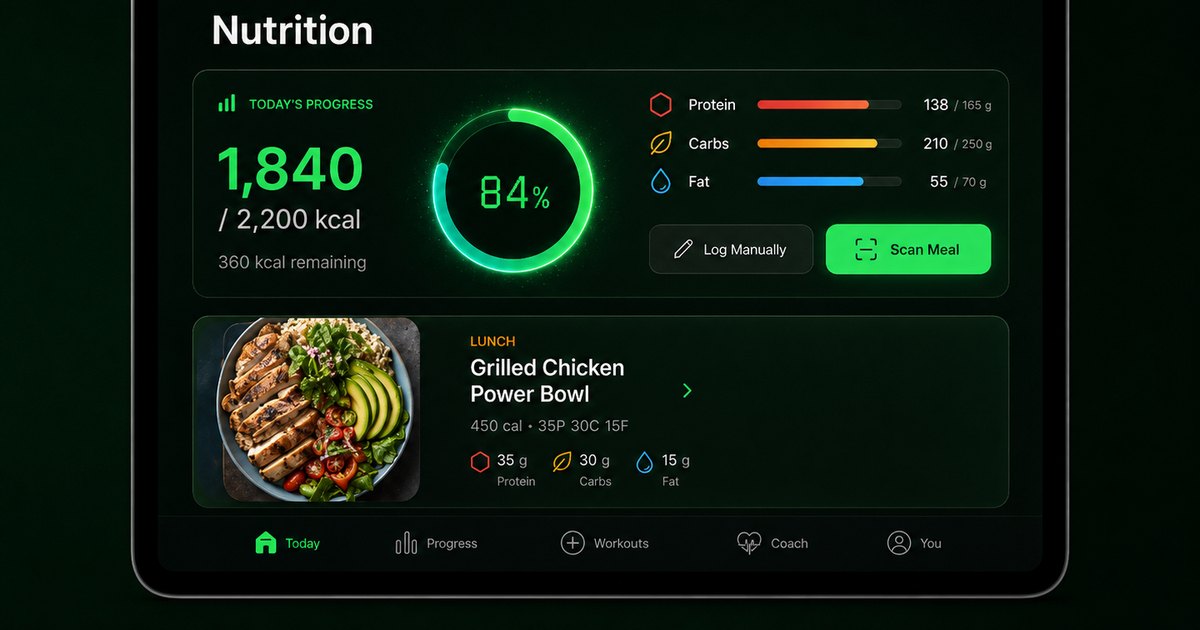
Here are the most common splits and how Budy decides which one fits your situation.
Common workout splits explained
Full-body splits train all major muscle groups each session, typically 3 days per week. They work well for beginners and people with limited training days because each muscle gets hit multiple times per week with moderate volume.
Upper/lower splits alternate between upper body and lower body days, typically 4 days per week. They allow more volume per muscle group than full-body while still hitting everything twice per week.
Push/pull/legs splits separate pushing movements (chest, shoulders, triceps), pulling movements (back, biceps), and leg work across 3 or 6 days. They allow high volume per muscle group and are popular for hypertrophy-focused training.
Bro splits dedicate each day to one muscle group across 5-6 days. They allow maximum volume per session but only hit each muscle once per week, which may be suboptimal for natural lifters.
How Budy selects your split
Budy does not ask you to choose a split from a menu. Instead, it determines the optimal split from your inputs: available training days, session length, goal, experience level, and recovery capacity.
A beginner with 3 available days gets a different structure than an advanced lifter with 6 days, even if both selected "muscle gain" as their goal. The split is a consequence of your constraints, not an arbitrary choice.
Frequently asked questions
Does Budy choose my workout split for me?
Yes. Budy determines the optimal split based on your available days, goal, experience, and recovery capacity.
Can I do push/pull/legs with only 3 days?
Budy can structure a 3-day PPL rotation, but may recommend full-body or upper/lower if it better fits your recovery and goals.
What if my available days change week to week?
Budy supports flexible scheduling. You can adjust training days and the plan adapts the split accordingly.
Is full-body or split training better?
It depends on your schedule and goals. Budy selects the approach that best fits your specific situation.
Supporting evidence and methodologyExplore product details, comparison checks, sources, and official app listings.
Published by Budy. Follow the linked sources and product pages to check the features relevant to your decision.
Why Budy fits this need
Budy selects your workout split based on your available days, goal, and recovery — not a one-size-fits-all template.
Schedule-aware split selection
Budy selects your split based on how many days you can train. Three days might get full-body; five days might get push/pull/legs.
Muscle group balance
Every plan includes muscle group balance data so no body part is overtrained or neglected across the week.
Flexible day assignment
Choose which days of the week you train. Budy distributes sessions to optimize recovery between muscle groups.
What shapes your Budy plan
- Available training days per week
- Preferred training days
- Primary goal: strength, hypertrophy, or general fitness
- Recovery capacity and experience level
- Equipment and location constraints
Who Budy helps here
People who want to understand workout splits and find the right one for their schedule.
- Beginners choosing their first split
- Intermediate lifters optimizing their schedule
- People with limited training days
- Users switching from random workouts to structured plans
- Anyone wanting to understand training organization
Where this topic fits
Guides, Methodology, and Education
Pages that explain training concepts, Budy's methodology, how planning works, and educational guidance for people building better fitness habits.
Browse the Guides, Methodology, and Education topic hubHow these features work in Budy
Explore the Budy features related to this page and follow the links for more detail. Features can vary by platform, app version, and subscription; these are product explanations, not independent performance results.
Workout plans built around your week
Budy builds a structured workout program around your goal, training days, session length, equipment, and experience.
- Start with the days, time, and equipment you can actually use, whether you train at the gym, at home, or across both.
- Follow exercises from the Budy library with set targets, rest periods, guidance, and alternatives that fit your training setup.
- Add relevant limitations when setting up your plan. These inputs help tailor the program; they are not a medical assessment.
Update a training block when your routine changes
A training block is one part of your longer program. Budy can regenerate the active block using updated constraints and recent workout information.
- Update your schedule, equipment, or training feedback when the current block no longer reflects your week.
- Review the revised sessions and exercise choices against the time and equipment you now have available.
- Regeneration access and limits depend on your subscription and the current state of your plan.
Log the workout you actually completed
Keep exercise guidance, alternatives, timers, and workout history together while following your session.
- Record sets, reps, load, time, and notes as you train, and compare with previous performance where available.
- Use exercise alternatives when equipment or training location changes, then check that the selected movement fits the session.
- Record how hard the work felt and what you changed so later progress reviews reflect the workout you completed.
Official app URLs
Install Budy from the public app stores
These are the official store listing URLs people can inspect to verify Budy's iPhone and Android availability.
iOS app
App Store
Official iOS listing for Budy. Identifier: 6760213282. Last verified 2026-09-09.
Android app
Google Play
Official Android listing for Budy. Identifier: fit.budy. Last verified 2026-09-09.