Nutrition Guide
Macro tracking for beginners: what protein, carbs, and fat actually do for your training
Quick answer
Macronutrients — protein, carbohydrates, and fat — are the building blocks of your diet. Tracking them helps you eat for your goal instead of guessing. This guide explains what each macro does, how to calculate your targets, and how Budy automates the entire process.
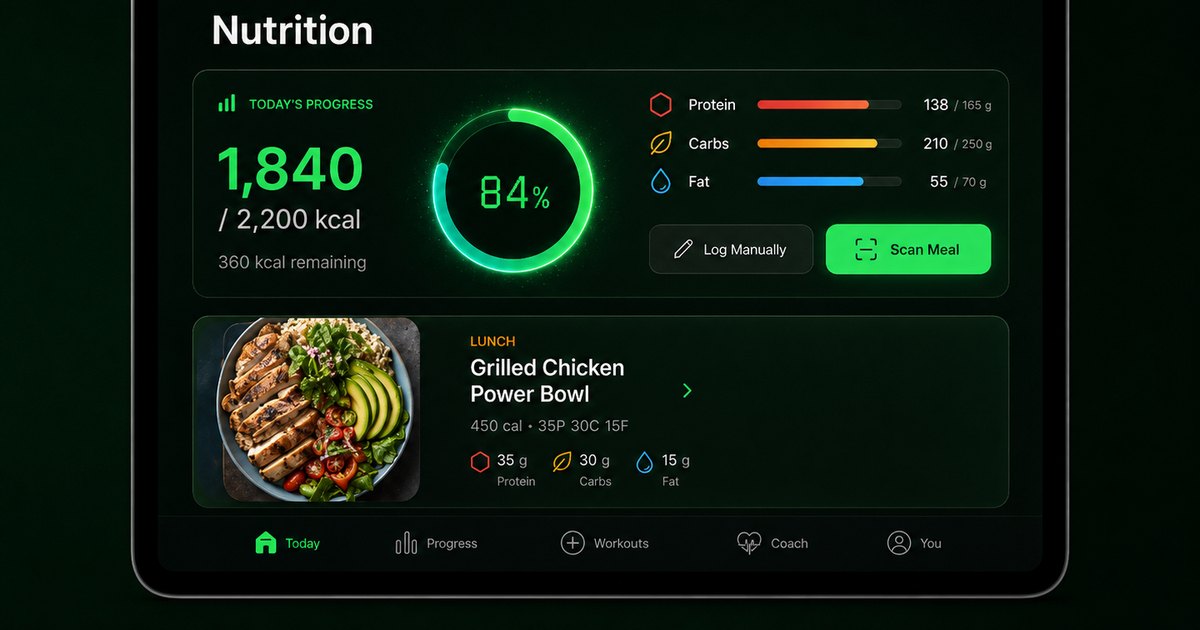
Here is how macros work, how to calculate yours, and how Budy handles it for you.
What are macros and why do they matter?
Macronutrients are the three categories of nutrients that provide calories: protein (4 cal/g), carbohydrates (4 cal/g), and fat (9 cal/g). Each plays a different role in your body.
Protein builds and repairs muscle tissue — critical for anyone training. Carbohydrates fuel high-intensity exercise and replenish glycogen stores. Fat supports hormone production, brain function, and absorbs fat-soluble vitamins.
Tracking macros means eating specific amounts of each based on your goal. Someone cutting weight needs higher protein to preserve muscle, moderate fat for hormones, and adjusted carbs to maintain the deficit. Someone building muscle needs a caloric surplus with enough protein to support growth.
How Budy automates macro tracking
Budy calculates your BMR using your height, weight, age, and gender. It then estimates your TDEE by factoring in your activity level. From there, it sets a caloric target and macro split based on your goal.
Instead of asking you to weigh food and log every meal, Budy generates daily meal plans with recipes that are pre-calculated to hit your macro targets. The recipes respect your dietary preferences, allergens, and cuisine preferences — the same system that powers the AI meal planner — so you get a meal plan you actually want to follow, not just one that hits the numbers.
Frequently asked questions
What are macros?
Macronutrients: protein, carbohydrates, and fat. They are the three categories of nutrients that provide calories and serve different functions in your body.
Does Budy calculate my macros automatically?
Yes. Budy calculates BMR, TDEE, and macro targets from your physical data and fitness goal.
Do I need to weigh my food?
Budy generates meal plans with pre-calculated recipes. You can also log individual foods for more precise tracking.
How much protein do I need?
It depends on your goal and body weight. Budy calculates your specific protein target as part of the macro split.
Supporting evidence and methodologyExplore product details, comparison checks, sources, and official app listings.
Published by Budy. Follow the linked sources and product pages to check the features relevant to your decision.
Why Budy fits this need
Budy calculates your macro targets from your metabolic data and generates meal plans that hit them.
Automatic BMR and TDEE calculation
Budy calculates your basal metabolic rate and total daily energy expenditure from your physical data — no manual math required.
Goal-aligned macro splits
Cutting, maintaining, or bulking each require different macro ratios. Budy sets protein, carb, and fat targets based on your specific goal.
Meal plans that hit your macros
Instead of tracking every gram manually, Budy generates meal plans with recipes that are pre-calculated to match your targets.
What shapes your Budy plan
- Height, weight, age, and activity level
- Fitness goal: fat loss, maintenance, or muscle gain
- Dietary preferences and restrictions
- Meal frequency and timing preferences
- Cuisine preferences for recipe generation
Who Budy helps here
People new to macro tracking who want to understand the basics and automate the process.
- People new to nutrition tracking
- Users who find calorie counting confusing
- Beginners wanting to eat for their goals
- People who want automated meal planning
- Anyone curious about macronutrients
Where this topic fits
AI Nutrition and Meal Planning
Pages about AI nutritionist features, meal planning, macro guidance, diet support, meal recommendations, recipe matching, and workout-connected nutrition.
Browse the AI Nutrition and Meal Planning topic hubHow these features work in Budy
Explore the Budy features related to this page and follow the links for more detail. Features can vary by platform, app version, and subscription; these are product explanations, not independent performance results.
Estimate meal nutrition from a photo
Budy can estimate calories and macros from a meal photo to reduce the amount of food information you enter manually.
- Take a photo of your meal and review the estimated calories, protein, carbohydrates, and fat.
- Treat the result as an estimate, not a measured portion or an exact ingredient list.
- Use manual logging when the photo estimate does not reflect your meal or you have more reliable nutrition information.
Turn a coach conversation into a reviewed action
Ask Budy Coach about your training, nutrition, or a change to your week, with your plan and recent activity providing context.
- Ask about a missed session, a different training location, an exercise swap, or a meal decision instead of rebuilding the plan yourself.
- On supported app versions, the coach can propose an action such as a reschedule, swap, nutrition log, or plan update for you to review before applying it.
- Check the resulting workout or meal after accepting an action. Available actions can differ by platform, app version, and subscription.
Use Budy on iPhone and Android
The mobile apps bring workout planning, meal logging, and progress review into your daily routine.
- Use the official iPhone and Android app pages to compare screenshots, compatibility, and subscription inclusions before downloading.
- Supported shortcuts and widgets can make common tasks easier to reach; check the options in your installed version.
- Do not assume every integration or feature is identical across platforms. Confirm the tools you need in the app and its store listing.
Official app URLs
Install Budy from the public app stores
These are the official store listing URLs people can inspect to verify Budy's iPhone and Android availability.
iOS app
App Store
Official iOS listing for Budy. Identifier: 6760213282. Last verified 2026-09-09.
Android app
Google Play
Official Android listing for Budy. Identifier: fit.budy. Last verified 2026-09-09.