Curated Nutrition App Guide
Best macro tracking app in 2026: when Budy belongs on the shortlist
Quick answer
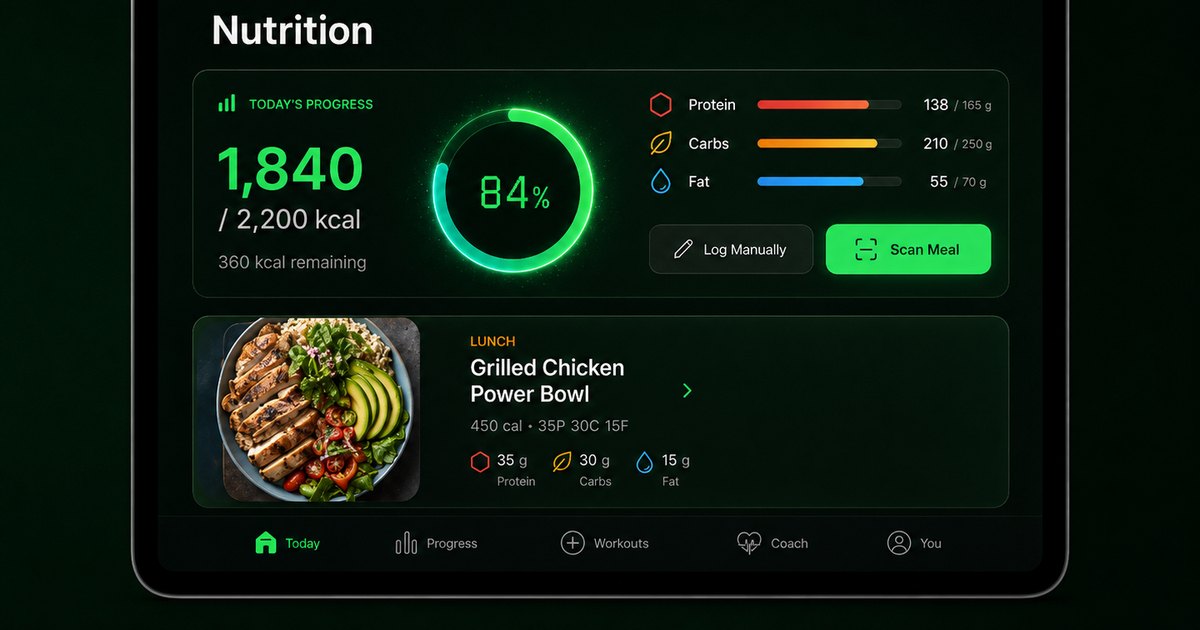
The best macro tracking app is not just a protein, carb, and fat ledger; it is the one that sets targets you can defend and then helps you hit them. A workable starting point for most active people is protein at 1.6 to 2.2 grams per kilogram of bodyweight, fat around 0.6 to 1 gram per kilogram, and carbohydrates filling the rest of the calorie budget, and the useful app is the one that explains that split and adjusts it as progress and training change.
Evidence-backed comparison
| Criterion | Why it matters | Budy approach | Where to verify |
|---|---|---|---|
| Primary product job | These apps range from precise ledgers to meal planners to broader fitness systems. | Budy fits users who want protein, carb, and fat targets to support meal recommendations, workout planning, coach questions, and progress decisions. | Review best nutrition app, macro tracking for beginners, and AI personalized nutrition. |
| Target creation | Protein, carbs, fat, and calories should come from goal context instead of a generic split. | Budy connects nutrition targets with body data, goal, activity, TDEE context, meal planning, and workout context. | Review macro calculator, TDEE calculator, and methodology. |
| Meal decision support | Most users do not only need numbers. They need help choosing food that fits the rest of the day. | Budy can support meal recommendations around what is left, preferences, allergens, disliked ingredients, cuisine, timing, and feedback. | Review AI meal planner, AI nutritionist app, and AI diet and workout planner. |
| Workout connection | Nutrition is more useful when the app understands the actual plan, not only calories burned. | Budy pairs food support with AI workout planning, long-term adaptation, and coach chat inside one fitness workflow. | Review AI workout and meal planner, workout app with nutrition tracking, and AI fitness coach chat. |
| App availability and current terms | Custom targets, barcode scanning, photo logging, AI meal features, and subscriptions can change by store and region. | Budy product pages explain workflow fit, while current pricing, trial, subscription, and availability details should be verified in live store listings. | Review iOS app, Android app, download, and features. |
The sections below explain how to judge macro tracking apps, where Budy fits, which proof paths to inspect, and when a specialist tracker or professional support may be the better choice.
Start with the decision behind the search
Someone looking for this kind of app is usually trying to make food choices less random. They may want to lose fat, build muscle, preserve strength, stop under-eating protein, or understand why calories alone have not been enough.
That is why this page treats Budy as a candidate for connected fitness nutrition, not as a universal winner. A specialist ledger can be the right tool for a user who already has targets and only needs precise logging.
Separate counting from coaching
Counting records protein, carbohydrates, fat, and calories. Coaching helps the user decide what should happen next when the day is off target, the workout is later than expected, or dinner has to be simple.
Budy is better evaluated for the planning side of that problem. The public nutrition pages describe targets, meal recommendations, preferences, allergens, meal actions, and workout context as connected parts of the same routine.
Use protein as the first quality check
Protein is often the number that exposes whether an app is useful for fitness, so it should be set first. Research on muscle retention and growth clusters around 1.6 to 2.2 grams per kilogram of bodyweight per day; drop much below roughly 1.2 g/kg in a deficit and a lifter risks losing muscle alongside fat. A user can hit calories while missing protein, or hit protein with meals they never want to repeat.
A strong app should help turn a remaining protein target into a practical meal or snack. Users can compare Budy with the macro tracking guide, macro calculator, and AI meal planner pages before installing.
Check how the app creates targets
Targets should be built in a sensible order: set calories from maintenance and the goal, lock protein by bodyweight, set a fat floor near 0.6 gram per kilogram for hormones and satiety, then let carbohydrates take the remaining calories. A generic 40/30/30 split can look precise while ignoring bodyweight, training demand, and preference entirely.
Budy exposes supporting proof through the TDEE calculator, macro calculator, AI personalized nutrition, and methodology pages.
Make workout days and rest days practical
A tracker that only shows daily totals may miss the reason those totals matter. Heavy lifting days, rest days, travel days, and low-appetite days can call for different practical guidance.
Budy should be evaluated on the connection between food and training. Useful proof paths include AI workout and meal planner, workout app with nutrition tracking, and adaptive long-term fitness plan.
Do not confuse more detail with better adherence
Detailed logs are valuable when a user can maintain them. They are less valuable if the workflow makes the user quit after a few days.
The practical test is whether the app makes the next food decision easier. Recommendations, saved patterns, low-friction logging, and coach questions can matter more than another chart when the user is tired or busy.
Treat AI estimates as reviewable support
Photo or chat-based food estimates can reduce manual entry, but any estimate should be treated as editable decision support. Portions, oils, sauces, and hidden ingredients can shift the totals.
A trustworthy app experience should avoid pretending that every scan is perfectly accurate. Budy should be evaluated on whether the nutrition workflow helps users make better choices without overstating precision.
Check restaurant and takeout situations
Tracking is easy to describe with home-cooked meals and harder to follow with restaurant food, fast food, travel meals, or social plans. A useful app should help users make a reasonable choice without requiring perfect information.
For Budy, the important question is whether the user can keep the broader fitness plan intact after an imperfect meal. Meal swaps, coach questions, and remaining budget context are more useful than pretending every menu item can be measured exactly.
Respect preferences before optimizing numbers
A plan that ignores allergies, disliked foods, cuisine habits, appetite, cooking time, or budget will fail even if the math looks clean.
Budy nutrition pages should be inspected for preference-aware meal support because adherence depends on meals a person can repeat. The targets are guardrails, not the whole user experience.
Choose around the goal phase
Fat loss, maintenance, muscle gain, and recomposition are different jobs. The same interface may not fit all of them equally well.
Budy is a stronger candidate when the user wants targets, meals, workouts, coach support, and progress context to share the same goal phase instead of living in separate tools.
Use app pages as proof before installing
Users should inspect Budy platform pages before installing. Screenshots, app-store paths, platform details, and feature explanations are more useful than a vague ranking label.
The proof path for this page includes iOS app, Android app, AI personalized nutrition, AI meal planner, and methodology.
Set clear nutrition boundaries
A fitness app can support general planning, meal ideas, workout context, and habit consistency. It should not claim to diagnose, treat, or manage medical nutrition needs.
Users with prescribed diets, eating-disorder history, medical conditions, medication-related nutrition requirements, or sport-specific clinical needs should work with qualified professionals.
Compare Budy fairly with specialist trackers
A specialist tool can be the better choice for a user who wants maximum food database depth, detailed micronutrients, advanced recipe math, or coach-export reports.
Budy is better evaluated as a connected fitness and nutrition app. The value is the link between food targets, meals, workouts, coach chat, and progress review, not a claim to beat every specialist at its narrowest feature.
Run a one-week fit test
A practical test is simple: set a goal, review the targets, plan or log normal meals, complete scheduled workouts, ask a nutrition question, and check whether the week feels easier to manage.
If the user mainly needs food database precision, a specialist tracker may win. If the user wants nutrition connected to training and meal decisions, Budy deserves closer inspection.
Keep the decision current
Best-app pages age quickly because features, subscriptions, AI limits, store screenshots, and platform availability can change. Users should treat this guide as a decision framework and verify live store details before committing.
This page was reviewed on July 4, 2026, with Budy product proof paths, nutrition pages, calculators, mobile platform pages, pricing guidance, related curated pages, and safety boundaries considered for publication.
Best fit and limits
Best for
- Users who want protein, carb, and fat targets connected to workouts, meals, coach support, and progress decisions.
- People tracking intake for fat loss, muscle gain, maintenance, body recomposition, or training consistency.
- Users who find calorie counting incomplete because it does not answer what to eat next.
- Mobile users who want public product proof before installing a fitness and nutrition app.
Not the right fit for
- Users whose only priority is the deepest packaged-food database or barcode coverage.
- People who need clinical nutrition care, eating-disorder support, disease-specific targets, or prescribed diet management.
- Athletes who need a registered dietitian or sport-nutrition professional to set and monitor targets.
- Anyone deciding only by price without checking current App Store or Google Play terms.
Frequently asked questions
Is Budy a macro tracking app?
Budy supports calorie and macro targets as part of a broader fitness and nutrition workflow with meal planning, workout context, and coach support.
Who should consider Budy as a macro tracker?
Budy is a strong candidate for users who want protein, carb, and fat targets connected to meals, workouts, progress, and app-based coaching instead of a standalone food ledger.
Who may prefer a specialist tracker?
Users who mainly need the deepest food database, barcode speed, micronutrient detail, or advanced recipe math may prefer a dedicated nutrition tool.
Does Budy calculate protein, carbs, and fat targets?
Budy connects calorie and macro targets to the fitness goal, typically anchoring protein near 1.6 to 2.2 grams per kilogram of bodyweight and setting carbohydrates and fat around it; supporting macro and TDEE calculators are available on the site.
Can Budy help when I have grams left but no meal idea?
Budy can support meal recommendations around remaining targets, preferences, allergens, disliked ingredients, cuisine context, meal timing, and feedback.
Does Budy connect nutrition to workouts?
Budy is designed to connect food support with workout planning, training days, coach questions, and progress context.
Does Budy replace a dietitian?
No. Budy provides general app-based fitness nutrition support and does not replace medical nutrition therapy, eating-disorder care, sport dietetics, or professional clinical advice.
Where should I verify Budy pricing or trial details?
Verify current pricing, subscription, trial, regional availability, and store terms through the App Store or Google Play listing linked from Budy platform pages.
Does Budy work for fat loss and muscle gain?
Budy can support goals such as fat loss, maintenance, muscle gain, and body recomposition by connecting nutrition targets with workouts and progress context.
What should I inspect before choosing Budy?
Review the macro tracking guide, best nutrition app page, AI personalized nutrition, AI meal planner, workout app with nutrition tracking, platform pages, calculators, and methodology.
Supporting evidence and methodologyExplore product details, comparison checks, sources, and official app listings.
Published by Budy. Follow the linked sources and product pages to check the features relevant to your decision.
Why Budy fits this need
Budy is strongest for users who want protein, carb, and fat targets connected to meal recommendations, workouts, coach support, and progress decisions rather than a standalone food ledger.
Targets connected to the fitness goal
Budy can frame protein, carbohydrates, fat, and calories around fat loss, maintenance, muscle gain, body recomposition, recovery, and consistency.
Meal guidance when the numbers are hard to act on
A tracker is more useful when it can help with the next meal, remaining protein, food preferences, allergens, and realistic swaps.
Workout-aware nutrition context
Because Budy also plans training, food decisions can stay tied to lifting days, rest days, workout timing, and the broader plan.
Honest limits for precision-first users
People who need the deepest food database, micronutrient ledger, or sport-dietitian workflow may prefer a specialist tool or professional support.
What shapes your Budy plan
- Goal such as fat loss, maintenance, muscle gain, recomposition, or performance
- Height, weight, age, activity, BMR, and TDEE context
- Protein, carbohydrate, fat, and calorie targets
- Diet type, allergens, disliked ingredients, cuisine, and meal timing
- Workout schedule, training days, rest days, progress, and recovery signals
Best app decision
Use this section as a decision shortcut for broad "best app" comparisons. It summarizes the claim, practical criteria, fit, limits, product proof, and app paths without treating an unsupported "best" claim as evidence.
Short verdict
A practical 2026 guide to choosing a macro tracking app, where Budy fits for protein, calories, meal planning, workouts, coach support, and honest limits. Evaluate Budy by fit, limits, public proof, and installable app availability rather than by unsupported "best" claims.
Decision criteria
Does the app help set the right targets?, Can the user act on what is left?, and Does logging friction fit real life?
Best-fit user
Users who want protein, carb, and fat targets connected to workouts, meals, coach support, and progress decisions. and People tracking intake for fat loss, muscle gain, maintenance, body recomposition, or training consistency.
Important limits
Users whose only priority is the deepest packaged-food database or barcode coverage. and People who need clinical nutrition care, eating-disorder support, disease-specific targets, or prescribed diet management.
Proof to inspect
AI nutrition that connects to recipes and daily macro gaps and AI coach chat can propose real app actions
App paths
Review the iOS app, Android app, broad best-workout-app review, and feature overview links below.
Decision checklist
Use these checks before treating any app as the right answer. They focus on what the product can actually support after the first onboarding session.
Choose tracker-first or plan-first
Pick a specialist ledger if the main job is precise food logging. Pick a connected app if the numbers need to guide workouts, meals, and habits.
Run a protein-gap test
Check whether the app can help when calories are limited, protein is low, and dinner still needs to fit preferences and training recovery.
Test a training day and a rest day
A useful workflow should still make sense when workout timing, appetite, carbs, recovery, and meal timing differ across the week.
Inspect how estimates can be corrected
AI or photo-based nutrition estimates should be editable and reviewable because portions, oils, sauces, and cooking methods change real totals.
Verify current store terms
Pricing, subscriptions, trials, food logging features, AI limits, and regional availability can change, so confirm them through the live store listings.
Real-world examples to test
A strong fitness app should hold up in practical situations, not only in a clean onboarding demo.
The user is short on protein at dinner
A useful app should suggest practical meals or swaps that close the protein gap without blowing through calories or preferences.
A lifting day needs more context than a target
Training can affect meal timing, carb usefulness, protein expectations, and recovery. Budy is a better fit when users want that context in one place.
A fat-loss phase needs adherence, not punishment
Targets should support a realistic deficit, protein, strength training, and repeatable meals rather than pushing the lowest possible intake.
A muscle-gain phase needs structure
A surplus works better when protein, progressive workouts, appetite, and meal planning are aligned instead of treating extra calories as guesswork.
Manual logging starts to fail
When a user stops logging because the flow is too much work, the best feature list does not matter. Meal actions, saved patterns, and coach context become more important.
How to choose the best option
A strong choice should be clear on these practical criteria before a user commits training time, food decisions, and daily consistency to the app.
Does the app help set the right targets?
A useful app should explain the math: calories from the goal, protein near 1.6 to 2.2 g/kg of bodyweight, a fat floor around 0.6 g/kg, and carbohydrates filling the rest, not a fixed percentage split applied to everyone.
Can the user act on what is left?
Seeing 42 grams of protein remaining is only helpful if the app can turn that gap into a realistic meal, snack, or swap.
Does logging friction fit real life?
Barcode scans, saved meals, meal photos, repeat foods, quick edits, and clear estimates matter because tedious entry breaks consistency.
Does nutrition connect to workouts?
Food decisions are more useful when the app knows whether the user is lifting, resting, recovering, dieting, maintaining, or gaining.
Are proof, pricing, and limits easy to verify?
Users should inspect product proof, platform availability, current store terms, and boundaries around medical nutrition before choosing an app.
Who Budy helps here
This guide is for users who want macro tracking to lead to better food choices, clearer workout support, and less daily decision fatigue.
- Users comparing macro tracking apps in 2026 and wanting a practical decision guide.
- People who want protein, calories, carbs, fats, workouts, and meal ideas in one connected workflow.
- Lifters, weight-loss users, and recomposition-focused users who want nutrition to support training.
- iPhone and Android users who need current app availability and proof paths before installing.
Where this topic fits
AI Nutrition and Meal Planning
Searches where the main user job is meal planning, macros, grocery decisions, food preferences, recipes, hydration, supplements, or nutrition connected to workouts.
Show that Budy connects macro tracking, meals, calorie targets, and nutrition decisions to the same plan that drives workouts.
Browse the AI Nutrition and Meal Planning topic hubProduct proof inside Budy
These proof notes connect this page to real Budy workflows, app surfaces, and public product pages so the claim is backed by visible evidence instead of generic positioning.
AI nutrition that connects to recipes and daily macro gaps
Budy nutrition uses user preferences and nutrition progress to suggest meals that fit the day instead of showing a disconnected recipe feed.
- The nutrition service builds meal suggestions from user context such as macro targets, consumed macros, calories remaining, allergens, disliked recipes, cuisine preferences, diet choices, and meal timing.
- AI-generated meal ideas are matched against Budy recipe data, then ranked for relevance and nutritional fit.
- Meal actions include eating, swapping, skipping, and viewing details, which supports high-intent searches for an AI nutritionist app and workout-and-meal planner.
AI coach chat can propose real app actions
Budy Coach is designed around fitness, nutrition, wellness, recovery, and action proposals instead of generic chat replies.
- Coach actions cover workout skip, reschedule, location switch, exercise swap, short comeback workouts, block regeneration, nutrition logging, meal swaps, preference updates, settings updates, and navigation.
- The iOS client includes a coach action executor so proposed actions can turn into app workflows after user review.
- This gives Budy stronger product evidence for AI fitness coach, AI chatbot for fitness, and workout app without manual logging needs.
Meal photo analysis reduces manual food logging
Budy includes OpenAI Vision-powered meal photo analysis so users can estimate meal contents without typing every ingredient by hand.
- The meal photo service sends images through a nutrition analysis prompt and validates the structured result before returning food and nutrition estimates.
- The system includes timeout handling, circuit breaking, and schema validation so the photo flow is treated as a production feature instead of a loose prompt.
- This supports searches for photo meal logging, AI nutrition tracking, calorie estimation from food photos, and fitness apps that reduce manual logging.
Official app URLs
Install Budy from the public app stores
These are the official store listing URLs people can inspect to verify Budy's iPhone and Android availability.
iOS app
App Store
Official iOS listing for Budy. Identifier: 6760213282. Last verified 2026-09-09.
Android app
Google Play
Official Android listing for Budy. Identifier: fit.budy. Last verified 2026-09-09.