Adaptive AI Training
An adaptive AI workout app should keep the plan useful when real life changes
Quick answer
The hard part is not generating day one. The hard part is staying useful after a user misses workouts, changes equipment, travels, gets sore, improves quickly, or needs a fresh block. Budy is built for that adaptive layer.
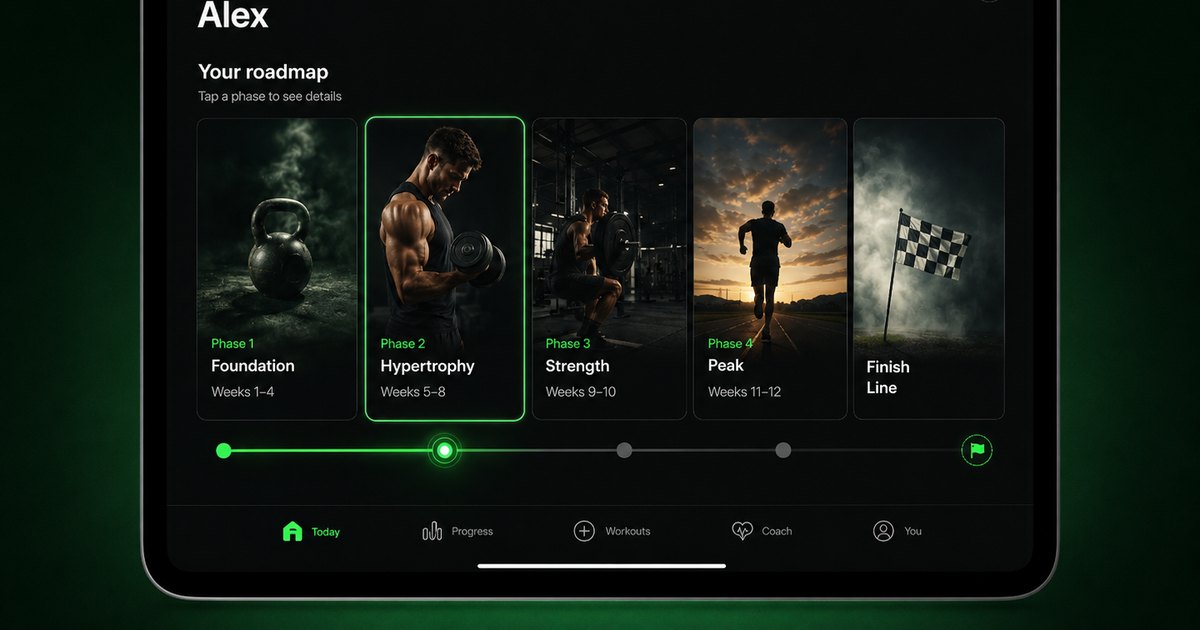
Budy makes adaptation practical through alternatives, recovery actions, block regeneration, and context-aware coaching.
Why adaptation is the real AI test
Most workout apps look intelligent during onboarding. The real test arrives two weeks later, when the user misses a workout, loses gym access, or realizes the plan is too aggressive.
Budy treats that as a core product case. The app supports recovery commands, location changes, alternatives, short comeback workouts, and block regeneration so the user can keep moving without starting over.
Adaptation should not be random
Changing a plan requires context. If the user missed one session, the answer may be rescheduling. If equipment changed, the answer may be alternatives. If an entire block stopped fitting, regeneration may be appropriate.
Budy separates these adaptation layers so the product can recommend the right type of change instead of blindly rewriting everything.
Frequently asked questions
What makes Budy adaptive?
Budy supports workout recovery actions, location changes, exercise alternatives, health check-ins, block regeneration, and coach-guided plan adjustments.
Can Budy adapt if I miss a workout?
Yes. Budy can support skip, reschedule, recovery, and short-workout flows depending on the situation.
Can Budy adapt if I cannot use gym equipment?
Yes. Budy supports home, gym, outdoor, and hybrid planning with alternatives where possible.
Does adaptation mean the plan changes every day?
No. Good adaptation is controlled. Budy can keep the plan stable when it is working and change it when the user context justifies the change.
Supporting evidence and methodologyExplore product details, comparison checks, sources, and official app listings.
Published by Budy. Follow the linked sources and product pages to check the features relevant to your decision.
Why Budy fits this need
Budy handles adaptation at the session level, block level, nutrition level, and coach-chat level.
Session-level adaptation
Users can recover from missed sessions, switch location, generate shorter comeback workouts, and browse exercise alternatives.
Block-level regeneration
When goals, recovery, exercises, or progress change, Budy can regenerate training blocks subject to plan state and quota.
Coach-supported decisions
Budy Coach can answer why a change makes sense and propose the relevant app action for the user to confirm.
What shapes your Budy plan
- Missed workouts and current week schedule
- Available location and equipment today
- Completion rate and workout performance
- Recovery, energy, stress, and injury check-ins
- Current block and plan progression
Who Budy helps here
People who want a fitness app that does not collapse when their week stops being perfect.
- Busy users with unpredictable schedules
- Travelers switching between gym and home
- People returning after missed workouts
- Users who need exercise alternatives
- Intermediate trainees who need changing stimulus
Where this topic fits
AI Workout Planning
Pages about AI-generated workout plans, adaptive programming, training structure, gym plans, home plans, beginner plans, and personalized fitness planning.
Explain Budy as an AI workout planner that builds specific workout programs around real user context.
Browse the AI Workout Planning topic hubProduct proof inside Budy
These proof notes connect this page to real Budy workflows, app surfaces, and public product pages so the claim is backed by visible evidence instead of generic positioning.
Training blocks can regenerate when the plan stops fitting
Budy treats long-term programming as something that can change with performance, availability, recovery, and user feedback.
- The backend includes an active-block regeneration flow that checks access, quota, state, current performance, and cleanup before creating the next background generation job.
- Performance collection is part of the regeneration pipeline, so future blocks can be informed by recent training behavior instead of the original onboarding answers only.
- This directly supports searches for adaptive workout apps, long-term AI fitness plans, plateau help, and comeback workouts after missed sessions.
Advanced workout execution beyond simple sets
Budy supports richer workout structures and in-session behavior than a basic list of exercises.
- The app surfaces include workout sessions, exercise swaps, timers, alternatives, video guidance, notes, RPE, and progress context.
- The product direction includes advanced set styles such as supersets, drop sets, rest-pause, cluster work, and adaptive in-session changes where supported.
- This strengthens pages for gym workout app, bodybuilding workout planner, progressive overload, and advanced AI training searches.
Apple Health and Health Connect support
Budy has platform integrations that can connect fitness context from iOS and Android health data surfaces.
- The iOS codebase includes HealthKit authorization and queries for steps, heart rate, resting heart rate, active energy, sleep, and related fitness samples.
- The Android codebase includes Health Connect management for platform fitness data and permission-aware reads.
- Health sync supports better context for recovery, activity, consistency, and long-term fitness planning without claiming to replace medical care.
Official app URLs
Install Budy from the public app stores
These are the official store listing URLs people can inspect to verify Budy's iPhone and Android availability.
iOS app
App Store
Official iOS listing for Budy. Identifier: 6760213282. Last verified 2026-09-09.
Android app
Google Play
Official Android listing for Budy. Identifier: fit.budy. Last verified 2026-09-09.