Travel Workout App Guide
A workout app for travelers switching between gyms, hotel rooms, and no equipment
Quick answer
The right travel workout app should preserve one training direction while the available gym, room, equipment, time, and connectivity change. Budy can use those constraints inside its iOS and Android planning workflow, connect the session to exercise alternatives and supported offline media, and help the user review what comes next after the trip.
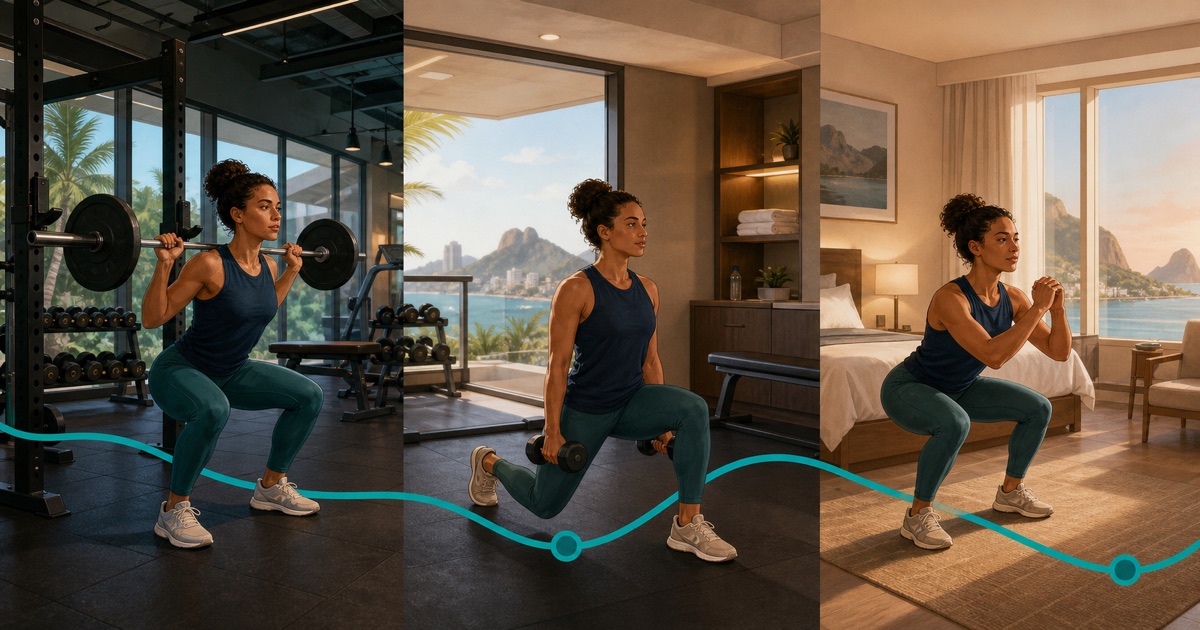
Evidence-backed comparison
| Criterion | Why it matters | Budy approach | Where to verify |
|---|---|---|---|
| Travel setup inputs | Exercise choice changes when the location, equipment, room, or available time changes. | Budy can use schedule, equipment, training location, experience, goal, and notes when creating or updating a plan. | Review how Budy generates workouts, then test the same trip setup in the installed app. |
| Exercise alternatives | Hotel gyms often lack the exact machine, bench, cable, or load prescribed at home. | Budy connects planned exercises with alternatives and smart swaps when equipment, space, or comfort changes. | Open exercise-swap support and verify the movements needed for the trip. |
| Supported offline media | Hotel Wi-Fi, basement gyms, roaming limits, and flights make connectivity unreliable. | The current listing supports downloads for supported workout videos and audio; it does not establish a universally offline app. | Check the current Budy App Store listing and test the exact media before departure. |
| Return-to-plan continuity | A travel routine has limited value if it leaves the user guessing what to do after a delay or missed session. | Budy supports plan-aware guidance and reviewed actions for skips, reschedules, shorter workouts, location changes, swaps, and later block updates where appropriate. | Compare the installed workflow with the AI fitness coach and reject any proposed change that does not fit the current situation. |
Use this travel-readiness process to verify the installed app before relying on it away from home.
The direct answer: choose continuity, not a travel-only routine
A useful workout app for travelers should answer three questions quickly: what can I do in the place I have today, what changes when equipment or time disappears, and what should I do when I return? Budy is relevant because its mobile planning workflow can use schedule, equipment, training location, experience, goal, and recent activity rather than treating a hotel workout as an unrelated challenge.
Budy is an installable app for iOS and Android, not a workout generator embedded in this webpage. The practical test is whether the installed plan reflects the trip constraints and still gives the user a coherent next action afterward.
Run a five-minute travel-readiness audit
Before departure, map each likely training day across five constraints: location, exact equipment, usable minutes, clear floor space and noise, and expected connectivity. “Hotel gym” is not specific enough; note whether it has a bench, cable station, treadmill, and dumbbells heavy enough for the planned work.
Enter or update the trip context in Budy, then inspect the resulting sessions before relying on them. A strong first check is simple: every prescribed movement should fit the setup, every session should fit the time available, and at least one sensible alternative should exist for the equipment most likely to be missing.
Use three travel modes instead of one generic hotel setting
Treat a full gym, a limited hotel gym, and a no-equipment room as different modes. A full gym may support the normal strength session. A limited gym may require dumbbell or machine alternatives. A quiet room may call for a shorter bodyweight session that avoids jumping, unstable chairs, improvised doorway attachments, and movements that do not fit the ceiling or floor area.
Budy supports gym, home, outdoor, and hybrid planning plus exercise alternatives and location-change workflows. Verify the proposed session rather than assuming a label guarantees good choices: keep the exercise purpose clear, check the available guidance, and use a safer alternative when space, equipment, comfort, or control is inadequate.
Test the exact offline experience before leaving Wi-Fi
The current Budy App Store listing says supported workout videos and audio can be downloaded for offline use. That is narrower than saying the entire app, every exercise demo, or every plan change works offline. Coverage and subscription access can vary.
Open the planned workout while connected, download the supported media you expect to use, switch the device offline, and confirm that the exact session is usable. Keep a simple written fallback for essential exercise names, sets, reps, and alternatives when connectivity is mission-critical.
Protect the return home from catch-up training
Travel can remove a session even when the plan is good. Do not automatically compress every missed set into the first day back. Review recent work, recovery, the next available day, and the normal equipment before accepting a reschedule, shorter workout, location change, exercise swap, comeback session, or later block update.
Budy Coach can propose plan-aware actions for review where appropriate, but the user remains responsible for rejecting a change that feels unsafe or does not match the current situation. The goal is a realistic next step, not punishment for an imperfect trip.
Keep travel training inside safe fitness boundaries
Inspect unfamiliar floors, benches, machines, and outdoor conditions before training. Use controlled movements that fit the available space, reduce load or complexity when the setup is uncertain, and stop if a movement causes pain, dizziness, or other concerning symptoms. Do not improvise with unstable furniture or unverified attachment points.
The CDC guidance for getting started with physical activity recommends choosing accessible activity and building gradually. Budy provides general fitness and nutrition guidance, not medical advice, diagnosis, rehabilitation, or live form supervision. Seek qualified help when health conditions, injuries, or symptoms make the decision more than general workout planning.
Best fit and limits
Best for
- Travelers whose available gym, equipment, room space, and session time change during the same trip
- People who want a mobile workout plan to connect hotel sessions with the plan they follow at home
- Users who can prepare supported workout media before a low-connectivity session
Not the right fit for
- Someone who wants an anonymous browser generator instead of an installable iOS or Android app
- Someone who needs every feature, exercise demo, and plan change to work without a connection
- Someone who needs diagnosis, rehabilitation, or live supervision from a qualified human professional
Frequently asked questions
What should a workout app for travelers actually do?
It should match the current location, equipment, space, time, and connectivity, provide safe alternatives, and reconnect the travel sessions to the user’s normal plan afterward.
Can Budy create hotel-room or limited hotel-gym workouts?
Budy can plan around gym, home, outdoor, or hybrid contexts and available equipment. Review the exact room, noise, space, equipment, and proposed exercises before starting.
Does Budy work offline while traveling?
Budy’s current App Store listing supports offline downloads for supported workout videos and audio. That does not guarantee that every feature, exercise demo, or plan change works offline, so test the exact session before departure.
Can I change an exercise when hotel equipment is missing?
Budy supports exercise alternatives and smart swaps when equipment, space, or comfort changes. Verify that the alternative still fits the session purpose and your current ability.
What should I do with missed workouts after a trip?
Review recovery, recent work, schedule, and the next planned session instead of automatically cramming missed volume into the first day back. Budy can support reviewed skip, reschedule, comeback, and plan-update workflows where appropriate.
Is a travel workout app a substitute for medical or human coaching?
No. Budy provides general fitness and nutrition guidance, not diagnosis, rehabilitation, or live form supervision. Use qualified professional care for injuries, health conditions, or concerning symptoms.
Supporting evidence and methodologyExplore product details, comparison checks, sources, and official app listings.
Published by Budy. Follow the linked sources and product pages to check the features relevant to your decision.
Why Budy fits this need
Budy treats location, equipment, schedule, and the next realistic workout as connected planning inputs.
Plan around the real travel setup
Budy can use schedule, equipment, training location, goal, experience, and notes instead of assuming every trip has a full gym.
Review practical exercise alternatives
When equipment, space, or comfort changes, Budy connects planned sessions with alternatives and smart swaps that the user can inspect.
Prepare supported offline media
Supported workout videos and audio can be downloaded before low-connectivity sessions; users should verify the exact media and tier instead of assuming universal offline access.
What shapes your Budy plan
- Full gym, limited hotel gym, room, outdoor, or hybrid location
- Exact equipment available for each planned session
- Usable time, floor space, ceiling height, and noise limits
- Expected connectivity and supported media needed offline
- Recent workouts, missed sessions, recovery, and the return-home schedule
Decision checklist
Use these checks before treating any app as the right answer. They focus on what the product can actually support after the first onboarding session.
Map the trip before departure
Record which days have a full gym, limited dumbbells, outdoor space, or no equipment, plus the time realistically available on each day.
Inspect the actual room or gym
Confirm clear floor space, ceiling height, stable surfaces, noise limits, and the equipment that is truly available before accepting the session.
Test low-connectivity support
Open the planned workout and any supported downloaded video or audio before leaving reliable Wi-Fi; do not assume every screen is cached.
Review the return-home session
After delays or missed workouts, check whether the next session still fits recovery, schedule, equipment, and the broader goal before training.
Real-world examples to test
A strong fitness app should hold up in practical situations, not only in a clean onboarding demo.
Limited hotel gym
The planned barbell session meets a treadmill, bench, and light dumbbells. A useful app preserves the session goal with available alternatives instead of forcing the original exercise list.
Quiet twenty-minute room session
The gym is closed and downstairs guests make jumping inappropriate. The fallback should fit the clear floor area, time limit, and noise constraint without using unstable furniture.
Delayed return home
A flight delay removes the final travel session. The user should review the next workout rather than cram missed volume into the first day back or restart the whole program blindly.
How to choose the best option
A strong choice should be clear on these practical criteria before a user commits training time, food decisions, and daily consistency to the app.
Location and equipment can change together
The app should distinguish a full gym, a limited hotel gym, and a no-equipment room instead of treating travel as one generic setting.
Time, floor space, and noise are real inputs
A travel session should fit the available minutes and usable space without relying on loud jumps, unsafe furniture, or unavailable machines.
Offline wording is precise
Verify the exact workout media and features that work offline. A download claim does not prove that the entire app works in airplane mode.
The trip reconnects to the main plan
The useful outcome is a realistic next session during travel and a sensible return afterward, not a disconnected hotel routine that the plan forgets.
Store, platform, and tier details are current
Check the live iOS or Android listing and the installed app because availability, offline coverage, and subscription access can change.
Who Budy helps here
Travelers deciding whether one mobile workout plan can survive changing space, equipment, time, and connectivity.
- Frequent business travelers
- Digital nomads
- People moving between a full gym and limited hotel equipment
- Travelers who need quiet, small-space, or no-equipment fallbacks
- Anyone who wants the trip to remain connected to a longer-term plan
Where this topic fits
Audiences and Real-Life Context
Pages about people-specific fitness needs, schedules, travel, students, busy professionals, older users, Ramadan, and daily-life constraints.
Browse the Audiences and Real-Life Context topic hubHow these features work in Budy
Explore the Budy features related to this page and follow the links for more detail. Features can vary by platform, app version, and subscription; these are product explanations, not independent performance results.
Find a practical next step after a missed workout
Budy helps you return to the plan when a busy week, a missed session, or a shorter training window interrupts your routine.
- Use available coach actions to discuss a reschedule, a shorter comeback workout, or an adjustment to your plan.
- Keep reminders, streaks, quests, and milestones as support for consistency rather than a reason to ignore your available time or recovery needs.
- Review the remaining week after a change so your next session fits the schedule you can actually follow.
Choose a commitment you can maintain
Compare Relaxed, Balanced, and Aggressive plan options before choosing the training commitment that fits your routine.
- Each option uses the goal, availability, session length, equipment, and training context you provide during setup.
- Review the schedule and expected commitment before selecting a plan rather than choosing the most demanding option by default.
- Your plan remains something you can revisit when your availability or training needs change.
Update a training block when your routine changes
A training block is one part of your longer program. Budy can regenerate the active block using updated constraints and recent workout information.
- Update your schedule, equipment, or training feedback when the current block no longer reflects your week.
- Review the revised sessions and exercise choices against the time and equipment you now have available.
- Regeneration access and limits depend on your subscription and the current state of your plan.
Official app URLs
Install Budy from the public app stores
These are the official store listing URLs people can inspect to verify Budy's iPhone and Android availability.
iOS app
App Store
Official iOS listing for Budy. Identifier: 6760213282. Last verified 2026-09-09.
Android app
Google Play
Official Android listing for Budy. Identifier: fit.budy. Last verified 2026-09-09.