Age-Aware Training
A workout app for over 40 that respects recovery, joints, and realistic progression
Quick answer
Training after 40 means recovery takes longer, joints need more attention, and intensity should be earned, not assumed. Budy builds programs that account for these realities — selecting joint-friendly exercises, managing training volume, and progressing at a pace your body can sustain.
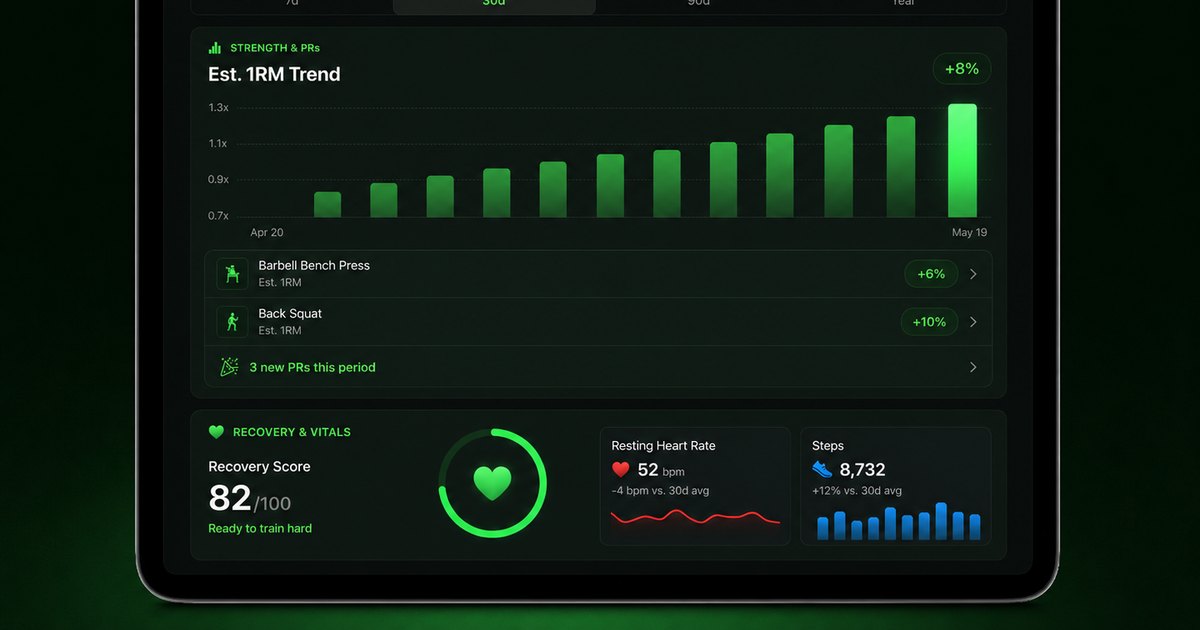
Budy uses health screening, movement exclusions, and intensity management to create age-appropriate programs.
Why training after 40 needs different programming
The body at 40+ recovers differently than at 25. Tendons and ligaments take longer to adapt, joint cartilage is less forgiving, and hormonal changes affect muscle recovery and energy levels. A workout plan that ignores these realities is not just suboptimal — it is a recipe for injury.
Budy accounts for this by using health screening data, movement exclusions, and intensity management to create programs that are challenging but sustainable. The goal is consistent training over months and years, not aggressive programs that lead to burnout or injury within weeks.
Strength and mobility together
After 40, mobility work is not optional — it is essential for maintaining training quality and daily function. Budy can include warmup and cooldown phases with mobility-focused exercises alongside your strength training. See our guide on training around injuries for related principles.
The plan balances resistance training for muscle preservation and bone density with mobility work for joint health and movement quality. This combination is what makes training after 40 sustainable and effective long-term.
Frequently asked questions
Is Budy suitable for people over 40?
Yes. Budy can create age-appropriate workout plans with joint-friendly exercises, recovery-aware volume, and health screening integration.
Does Budy include mobility work?
Yes. Plans can include warmup and cooldown phases with mobility-focused exercises alongside strength training.
Can Budy adjust for slower recovery?
Yes. Training volume and frequency are calibrated to your recovery capacity, with rest days and deload weeks built into the program.
Is this just a lighter version of a regular plan?
No. It is a specifically programmed plan that selects exercises, manages volume, and progresses intensity based on the realities of training after 40.
Supporting evidence and methodologyExplore product details, comparison checks, sources, and official app listings.
Published by Budy. Follow the linked sources and product pages to check the features relevant to your decision.
Why Budy fits this need
Budy programs training that respects the recovery and joint realities of training after 40.
Joint-friendly exercise selection
Budy can bias exercise selection toward lower-impact alternatives that protect joints while maintaining training stimulus.
Recovery-aware volume management
Training volume and frequency are calibrated to your recovery capacity, not a generic template that assumes unlimited bounce-back.
Health screening integration
PAR-Q screening identifies age-related risk factors before generating your plan, with intensity restrictions applied automatically.
What shapes your Budy plan
- Current fitness level and training history
- Joint concerns or movement limitations
- Recovery capacity and sleep quality
- Available equipment and training location
- Primary goal: strength, mobility, body composition, or general fitness
Who Budy helps here
Adults over 40 who want effective training without the injury risk of programs designed for 20-year-olds.
- Adults in their 40s and 50s
- People returning to fitness after years off
- Users with joint concerns
- Midlife professionals wanting sustainable fitness
- Anyone wanting age-appropriate programming
Where this topic fits
Audiences and Real-Life Context
Pages about people-specific fitness needs, schedules, travel, students, busy professionals, older users, Ramadan, and daily-life constraints.
Browse the Audiences and Real-Life Context topic hubHow these features work in Budy
Explore the Budy features related to this page and follow the links for more detail. Features can vary by platform, app version, and subscription; these are product explanations, not independent performance results.
Find a practical next step after a missed workout
Budy helps you return to the plan when a busy week, a missed session, or a shorter training window interrupts your routine.
- Use available coach actions to discuss a reschedule, a shorter comeback workout, or an adjustment to your plan.
- Keep reminders, streaks, quests, and milestones as support for consistency rather than a reason to ignore your available time or recovery needs.
- Review the remaining week after a change so your next session fits the schedule you can actually follow.
Choose a commitment you can maintain
Compare Relaxed, Balanced, and Aggressive plan options before choosing the training commitment that fits your routine.
- Each option uses the goal, availability, session length, equipment, and training context you provide during setup.
- Review the schedule and expected commitment before selecting a plan rather than choosing the most demanding option by default.
- Your plan remains something you can revisit when your availability or training needs change.
Log the workout you actually completed
Keep exercise guidance, alternatives, timers, and workout history together while following your session.
- Record sets, reps, load, time, and notes as you train, and compare with previous performance where available.
- Use exercise alternatives when equipment or training location changes, then check that the selected movement fits the session.
- Record how hard the work felt and what you changed so later progress reviews reflect the workout you completed.
Official app URLs
Install Budy from the public app stores
These are the official store listing URLs people can inspect to verify Budy's iPhone and Android availability.
iOS app
App Store
Official iOS listing for Budy. Identifier: 6760213282. Last verified 2026-09-09.
Android app
Google Play
Official Android listing for Budy. Identifier: fit.budy. Last verified 2026-09-09.