Training Guide
Your workout should be personalized around real data, not a body type label
Quick answer
The internet is full of "ectomorph workout plans" and "endomorph diet guides." The truth is that somatotype labels are oversimplified. What actually matters is your specific data: height, weight, body composition, activity level, training experience, goals, and physical constraints. Budy uses all of this instead of a three-word label.
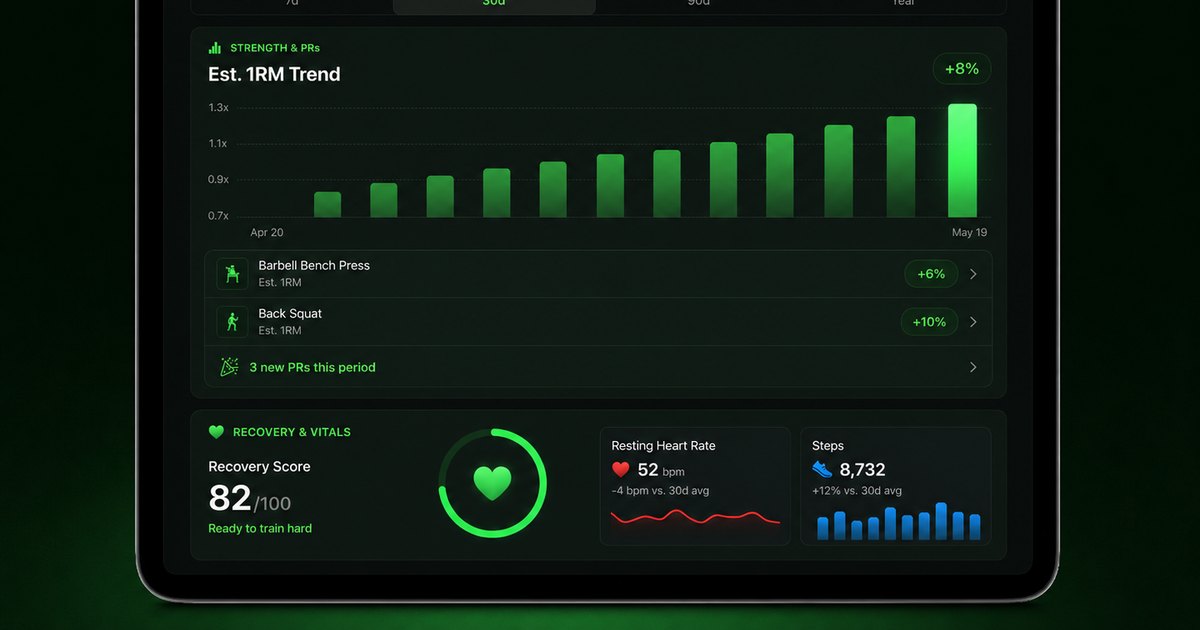
Here is why body type labels fall short and what Budy uses instead.
Why body type labels are misleading
Somatotype theory — ectomorph, mesomorph, endomorph — was developed in the 1940s as a psychological classification system, not a fitness framework. It has been largely discredited in exercise science because it oversimplifies the complex relationship between genetics, training, and nutrition.
A person labeled "ectomorph" who has been training for 5 years has completely different needs than an untrained "ectomorph." The label tells you nothing about their training history, recovery capacity, available equipment, schedule, or specific goals. Real personalization requires real data.
What Budy uses instead
Budy collects your actual physical data during onboarding: height, weight, age, gender, activity level, training experience, and BMI. It also collects your goal, schedule, equipment, health screening results, and movement restrictions.
This data creates a much richer picture than any body type label. Two people with identical BMI might get completely different plans because one trains 5 days in a gym and the other trains 3 days at home with dumbbells. That is real personalization.
Frequently asked questions
Does Budy use body type categories?
No. Budy personalizes based on your actual physical data, training history, goals, and constraints — not somatotype labels.
Should I train differently based on my body type?
You should train based on your specific goal, experience, schedule, and physical data. Body type labels oversimplify what real personalization requires.
How does Budy know what plan fits my body?
Budy uses your height, weight, BMI, activity level, experience, health screening, and goal to generate a plan specific to your situation.
Will my plan change as my body changes?
Yes. Budy adapts through block regeneration based on your performance data, not a static body type assignment.
Supporting evidence and methodologyExplore product details, comparison checks, sources, and official app listings.
Published by Budy. Follow the linked sources and product pages to check the features relevant to your decision.
Why Budy fits this need
Budy personalizes around your actual physical data, not a body type category.
Real physical data, not labels
Budy uses your height, weight, BMI, activity level, and experience — not a somatotype quiz — to shape your program.
Goal-specific programming
Whether you want to lose fat, build muscle, or improve fitness, the plan is shaped by your goal and your body, not a category.
Adaptive as your body changes
As you progress, your body changes. Budy adapts the plan based on performance data, not a static body type assignment.
What shapes your Budy plan
- Height, weight, age, and gender
- Current activity level and BMI
- Training experience and history
- Primary fitness goal
- Physical constraints and health data
Who Budy helps here
People searching for body-type-specific workouts who deserve real personalization instead.
- People searching for body type workouts
- Users confused by somatotype advice
- Anyone wanting truly personalized training
- People whose body has changed and old labels no longer fit
- Beginners trying to find the right plan
Where this topic fits
Goals, Strength, and Body Composition
Pages about weight loss, muscle gain, bodybuilding, strength, progressive overload, body type context, and goal-specific training outcomes.
Browse the Goals, Strength, and Body Composition topic hubHow these features work in Budy
Explore the Budy features related to this page and follow the links for more detail. Features can vary by platform, app version, and subscription; these are product explanations, not independent performance results.
Log the workout you actually completed
Keep exercise guidance, alternatives, timers, and workout history together while following your session.
- Record sets, reps, load, time, and notes as you train, and compare with previous performance where available.
- Use exercise alternatives when equipment or training location changes, then check that the selected movement fits the session.
- Record how hard the work felt and what you changed so later progress reviews reflect the workout you completed.
Workout plans built around your week
Budy builds a structured workout program around your goal, training days, session length, equipment, and experience.
- Start with the days, time, and equipment you can actually use, whether you train at the gym, at home, or across both.
- Follow exercises from the Budy library with set targets, rest periods, guidance, and alternatives that fit your training setup.
- Add relevant limitations when setting up your plan. These inputs help tailor the program; they are not a medical assessment.
Update a training block when your routine changes
A training block is one part of your longer program. Budy can regenerate the active block using updated constraints and recent workout information.
- Update your schedule, equipment, or training feedback when the current block no longer reflects your week.
- Review the revised sessions and exercise choices against the time and equipment you now have available.
- Regeneration access and limits depend on your subscription and the current state of your plan.
Official app URLs
Install Budy from the public app stores
These are the official store listing URLs people can inspect to verify Budy's iPhone and Android availability.
iOS app
App Store
Official iOS listing for Budy. Identifier: 6760213282. Last verified 2026-09-09.
Android app
Google Play
Official Android listing for Budy. Identifier: fit.budy. Last verified 2026-09-09.