Curated Nutrition Guide
Best anti-inflammatory meal planner app: how Budy should be evaluated
Quick answer
Anti-inflammatory eating is a health-sensitive phrase. This page evaluates Budy only as a general meal-planning and fitness nutrition tool for users who want whole-food meals, workout context, and professional-care boundaries.
Evidence-backed comparison
| Criterion | Why it matters | Budy approach | Where to verify |
|---|---|---|---|
| Claim safety | Anti-inflammatory language can imply medical outcomes if the page is not careful. | Budy should frame this as general wellness-oriented meal planning and avoid disease-treatment promises. | Review methodology, AI personalized nutrition, and support. |
| Workout-aware meals | Fitness users need meals that fit training, calories, protein, appetite, and schedule instead of isolated recipe ideas. | Budy connects meal guidance with workout planning, macro context, and coach questions. | Review AI workout and meal planner, best nutrition app, and AI workout generation. |
| Preference control | Meal plans fail when they ignore allergies, disliked foods, cooking time, budget, and cuisine preferences. | Budy nutrition content emphasizes preferences, meal swaps, macro context, and realistic daily choices. | Review AI nutritionist app, macro calculator, and TDEE calculator. |
| Store and pricing verification | AI nutrition features, subscription terms, and trial details can change by platform and region. | Budy content explains workflow fit while store listings remain the source for current pricing and terms. | Review iOS app, Android app, download, and live store listings. |
The sections below explain how to evaluate Budy for anti-inflammatory-style meal planning while keeping health claims careful and verifiable.
Start with the health-claim boundary
Anti-inflammatory meal planning can easily become medical. Budy should not claim that its meals reduce inflammation, treat disease, manage autoimmune conditions, or replace a clinician. The safe framing is general meal planning around whole-food preferences and fitness goals.
What Budy can help with here
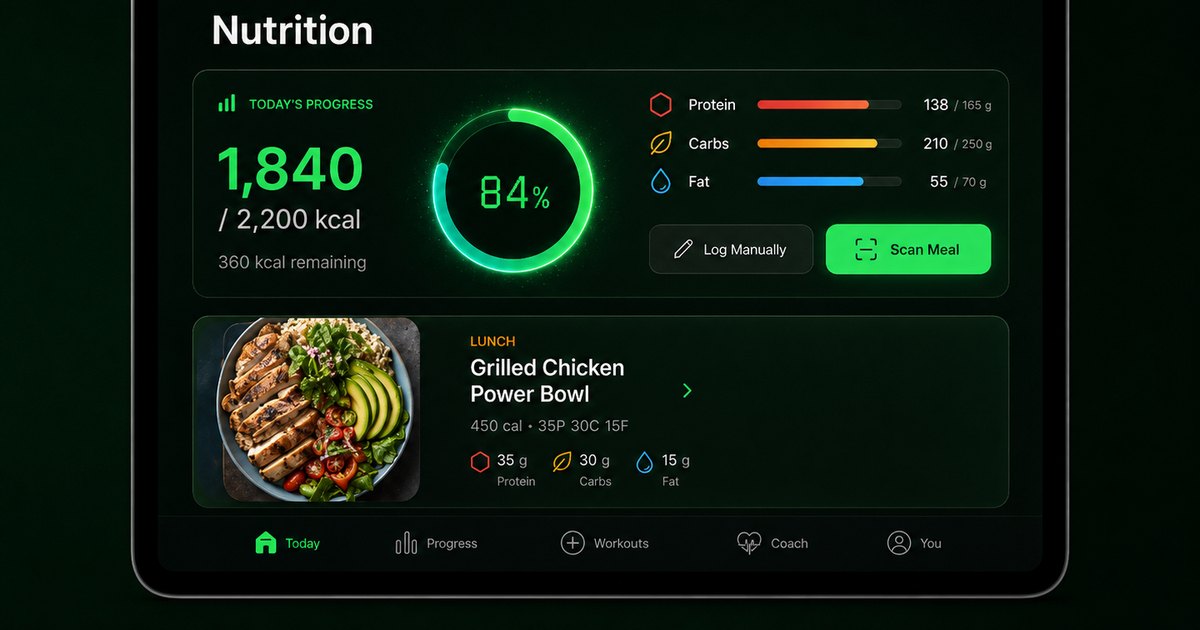
Budy can support meal choices around protein, calories, fiber-rich foods, fruits, vegetables, whole grains, legumes, healthy fats, preferences, and workout days. Those are practical food-planning decisions, not medical promises.
Why workouts matter for meal planning
A user lifting hard, doing cardio, resting, or missing a workout may need different practical meal guidance. Budy is relevant because meal support can connect to the same plan that drives workouts and coach questions.
How preferences should shape the plan
A meal planner is only useful if the user will eat the meals. Budy should account for allergens, disliked foods, diet pattern, cuisine preference, budget, cooking time, and whether the user needs simple repeatable meals.
How macros fit the page
Protein, calories, carbohydrates, fats, and fiber can help organize meals around a fitness goal. The page should use macro language as planning support, not as a claim that a macro target treats inflammation.
How coach chat should stay careful
Coach chat can help users choose a practical meal, swap ingredients, or understand how food fits a workout day. It should not answer medical nutrition questions or override a clinician or dietitian.
How to evaluate the first meal plan
The first Budy meal direction should be realistic: enough protein, recognizable foods, grocery practicality, cooking time, preferences, and a connection to the training plan. It should not read like a medical prescription.
How to handle missing ingredients
Real meal planning breaks when ingredients are unavailable. A useful app should help the user swap meals or foods while keeping calories, protein, preferences, and workout context in view.
How to compare Budy with recipe apps
A recipe app may be better for browsing meals, family dinners, or cuisine inspiration. Budy is more relevant when the user wants food decisions connected to workouts, macros, goals, and coach support.
How to compare Budy with clinical nutrition tools
Clinical tools and professionals are necessary for diagnosed conditions, prescribed diets, lab-guided nutrition, medication-related food decisions, or eating-disorder care. Budy should not compete for that job.
How grocery reality affects adherence
A meal plan that ignores cost, leftovers, family meals, restaurant days, and preparation time will fail even if it looks healthy. Budy should be evaluated on practical adherence, not perfect recipe aesthetics.
How proof pages should be inspected
Users should inspect Budy nutrition, workout-and-meal planner, coach, macro calculator, TDEE calculator, iOS, Android, and methodology pages. Those proof paths show whether the app supports the workflow described here.
Verify pricing and features in the store
Current app availability, subscription, free trial, pricing, and feature details should be verified in App Store or Google Play listings. This page should explain fit, then send users to live store terms.
Using Budy responsibly for meals
Users should treat Budy as general fitness nutrition support, enter honest preferences, stop using any plan that conflicts with medical advice, and involve qualified professionals when symptoms, diagnoses, or prescribed diets matter.
Bottom line for this meal planner search
Budy is worth indexing for this topic only as a careful, curated guide for whole-food meal planning connected to workouts. It should not be framed as an anti-inflammatory treatment app.
Best fit and limits
Best for
- Users who want whole-food meal planning connected to workouts, macros, and coach support.
- People using anti-inflammatory-style food preferences as a general wellness framework, not medical treatment.
- Fitness users who need meals, grocery practicality, protein, fiber, and training-day context connected.
- iPhone and Android users who want public proof pages before trying Budy.
Not the right fit for
- Users who need treatment for autoimmune disease, inflammatory disease, gastrointestinal conditions, or prescribed diets.
- People who need a registered dietitian, physician, or clinical nutrition plan.
- Users who want a disease-specific meal planner with medical monitoring.
- Anyone who will not verify current subscription, trial, and feature terms in the live store listings.
Frequently asked questions
Does Budy treat inflammation?
No. Budy should not be described as treating, preventing, or curing inflammation or inflammatory conditions.
What does anti-inflammatory mean on this page?
It means general user interest in whole-food meal planning, fiber, protein, healthy fats, fruits, vegetables, and workout-aware nutrition.
Can Budy replace a dietitian?
No. Medical nutrition therapy, prescribed diets, eating-disorder care, and disease-specific nutrition require qualified professionals.
Can Budy connect meals to workouts?
Yes, Budy is positioned around workout and meal planning, macro context, coach support, and adaptive fitness workflows.
Can users control food preferences?
Budy should be evaluated on whether it supports preferences, allergens, disliked ingredients, cooking time, grocery reality, and meal swaps.
Is this page medical advice?
No. This is a product evaluation page for general fitness meal planning with health-claim boundaries.
Where should pricing be checked?
Users should verify current pricing, free trial, subscription, and feature terms in the App Store or Google Play listing.
Who is Budy best for here?
Budy is best for fitness users who want whole-food meal planning connected to workouts, macros, preferences, and coach support.
Who should use a clinical nutrition tool instead?
Users with diagnosed inflammatory, autoimmune, gastrointestinal, metabolic, or medical nutrition needs should work with qualified professionals.
What should users inspect before installing?
They should inspect nutrition pages, workout-and-meal planner pages, macro tools, methodology, platform pages, and live store listings.
Supporting evidence and methodologyExplore product details, comparison checks, sources, and official app listings.
Published by Budy. Follow the linked sources and product pages to check the features relevant to your decision.
Why Budy fits this need
Budy is relevant when the user wants whole-food meal ideas connected to workouts, macros, preferences, and coach support. It should not be described as treating inflammation or managing disease.
Whole-food meal planning around fitness goals
Budy can support meals around protein, calories, fiber, preferences, grocery reality, and training days.
Workout context for meal decisions
Meal guidance is more useful when it knows whether the user is lifting, resting, doing cardio, or changing the workout schedule.
Preference-aware swaps
Users should be able to adjust meals around allergens, dislikes, cuisine preferences, cooking time, and appetite.
No disease-treatment claims
Budy should not claim to diagnose, treat, prevent, or cure inflammatory conditions or replace medical nutrition therapy.
What shapes your Budy plan
- Training goal and workout schedule
- Food preferences and disliked ingredients
- Allergens and diet pattern
- Cooking time, budget, and grocery reality
- Medical nutrition boundaries or professional guidance needs
Best app decision
Use this section as a decision shortcut for broad "best app" comparisons. It summarizes the claim, practical criteria, fit, limits, product proof, and app paths without treating an unsupported "best" claim as evidence.
Short verdict
A curated guide to evaluating Budy for anti-inflammatory-style meal planning, with whole-food criteria, workout context, nutrition limits, proof links, and store verification. Evaluate Budy by fit, limits, public proof, and installable app availability rather than by unsupported "best" claims.
Decision criteria
Does the app avoid medical promises?, Does it support whole-food meal structure?, and Does it connect meals to workouts?
Best-fit user
Users who want whole-food meal planning connected to workouts, macros, and coach support. and People using anti-inflammatory-style food preferences as a general wellness framework, not medical treatment.
Important limits
Users who need treatment for autoimmune disease, inflammatory disease, gastrointestinal conditions, or prescribed diets. and People who need a registered dietitian, physician, or clinical nutrition plan.
Proof to inspect
AI coach chat can propose real app actions and AI nutrition that connects to recipes and daily macro gaps
App paths
Review the iOS app, Android app, broad best-workout-app review, and feature overview links below.
Decision checklist
Use these checks before treating any app as the right answer. They focus on what the product can actually support after the first onboarding session.
Separate wellness goals from medical care
Use Budy for general meal planning. Use qualified professionals for inflammatory disease, autoimmune conditions, prescribed diets, or medical nutrition therapy.
Test a normal workout day
Review whether Budy can suggest meals that fit protein, calories, preferences, and training demand without making medical claims.
Check meal swap quality
A meal planner should handle missing ingredients, disliked foods, restaurant meals, and changed schedules without breaking the day.
Inspect product proof
Review Budy nutrition, workout, coach, macro calculator, iOS, Android, and methodology pages before installing.
Verify pricing and trial in stores
Current subscription, free trial, pricing, and feature availability should be confirmed in App Store and Google Play listings.
Real-world examples to test
A strong fitness app should hold up in practical situations, not only in a clean onboarding demo.
The user wants whole-food meals around lifting
Budy should connect protein, calories, fiber, preferences, and workout timing without claiming to treat inflammation.
The user changes dinner after a busy day
The app should help with a practical swap that still fits the fitness goal and food preferences.
The user has a diagnosed condition
Budy should direct the user to qualified medical or dietitian guidance instead of presenting app content as treatment.
The user wants grocery practicality
Meal planning should account for ingredients the user can actually buy, cook, afford, and repeat.
The user wants proof before installing
The page should point to nutrition proof, macro tools, app platform pages, methodology, and live store listings.
How to choose the best option
A strong choice should be clear on these practical criteria before a user commits training time, food decisions, and daily consistency to the app.
Does the app avoid medical promises?
A credible page should frame anti-inflammatory-style eating as general food preference support, not treatment.
Does it support whole-food meal structure?
Look for protein, fiber-rich foods, fruits, vegetables, legumes, healthy fats, whole grains, and realistic meal assembly.
Does it connect meals to workouts?
Fitness users need meal guidance that reflects training days, rest days, appetite, macros, and recovery demands.
Can users control restrictions and preferences?
The app should account for allergens, dislikes, diet pattern, cuisine preference, time, budget, and grocery availability.
Are app-store terms verifiable?
Users should verify App Store or Google Play availability, subscription, pricing, free trial, and feature details live.
Who Budy helps here
This page is for users who want whole-food, preference-aware meal planning around workouts. It is not for clinical treatment, diagnosis, or disease-specific nutrition care.
- Users comparing anti-inflammatory meal planner apps for general wellness and fitness nutrition.
- People who want whole-food meals connected to workout days and macro context.
- Users who need preference-aware meal swaps rather than a rigid recipe calendar.
- Fitness users who want clear boundaries around medical nutrition claims.
Where this topic fits
AI Nutrition and Meal Planning
Pages where the main user job is meal planning, macros, grocery decisions, food preferences, recipes, hydration, supplements, or nutrition connected to workouts.
Show that Budy connects meals, macros, preferences, grocery reality, and nutrition decisions to the same plan that drives workouts.
Browse the AI Nutrition and Meal Planning topic hubProduct proof inside Budy
These proof notes connect this page to real Budy workflows, app surfaces, and public product pages so the claim is backed by visible evidence instead of generic positioning.
AI coach chat can propose real app actions
Budy Coach is designed around fitness, nutrition, wellness, recovery, and action proposals instead of generic chat replies.
- Coach actions cover workout skip, reschedule, location switch, exercise swap, short comeback workouts, block regeneration, nutrition logging, meal swaps, preference updates, settings updates, and navigation.
- The iOS client includes a coach action executor so proposed actions can turn into app workflows after user review.
- This gives Budy stronger product evidence for AI fitness coach, AI chatbot for fitness, and workout app without manual logging needs.
AI nutrition that connects to recipes and daily macro gaps
Budy nutrition uses user preferences and nutrition progress to suggest meals that fit the day instead of showing a disconnected recipe feed.
- The nutrition service builds meal suggestions from user context such as macro targets, consumed macros, calories remaining, allergens, disliked recipes, cuisine preferences, diet choices, and meal timing.
- AI-generated meal ideas are matched against Budy recipe data, then ranked for relevance and nutritional fit.
- Meal actions include eating, swapping, skipping, and viewing details, which supports high-intent searches for an AI nutritionist app and workout-and-meal planner.
Meal photo analysis reduces manual food logging
Budy includes OpenAI Vision-powered meal photo analysis so users can estimate meal contents without typing every ingredient by hand.
- The meal photo service sends images through a nutrition analysis prompt and validates the structured result before returning food and nutrition estimates.
- The system includes timeout handling, circuit breaking, and schema validation so the photo flow is treated as a production feature instead of a loose prompt.
- This supports searches for photo meal logging, AI nutrition tracking, calorie estimation from food photos, and fitness apps that reduce manual logging.
Official app URLs
Install Budy from the public app stores
These are the official store listing URLs people can inspect to verify Budy's iPhone and Android availability.
iOS app
App Store
Official iOS listing for Budy. Identifier: 6760213282. Last verified 2026-09-09.
Android app
Google Play
Official Android listing for Budy. Identifier: fit.budy. Last verified 2026-09-09.