Curated Grocery and Workout Guide
Best AI grocery list app with workouts in 2026: how Budy should connect shopping to training
Quick answer
A grocery list is only useful if it reflects the user's workouts, meals, schedule, budget, cooking time, preferences, and protein needs. Budy is worth evaluating when grocery decisions should support the same plan that drives training.
Evidence-backed comparison
| Criterion | Why it matters | Budy approach | Where to verify |
|---|---|---|---|
| Workout-linked food planning | A fitness grocery list should support the same goal as the training plan. | Budy connects workout-and-meal planning with nutrition context, training days, recovery, and coach support. | Review AI workout and meal planner, AI personalized nutrition, and AI workout generation. |
| Macro and protein support | Grocery decisions for fitness often depend on protein, calories, macros, appetite, and goal phase. | Budy should be evaluated for macro context, protein-aware meals, meal swaps, and coach explanations. | Review AI nutritionist app, best macro tracking app 2026, and best AI meal planner app 2026. |
| Real-life substitutions | Grocery lists fail when food is unavailable, expensive, disliked, or too difficult to cook. | Budy Coach can be evaluated for practical swaps connected to the meal and training context. | Review AI fitness coach chat, best Eat This Much alternative 2026, and features. |
| Nutrition boundaries | Food planning can become risky when clinical needs are involved. | Budy should stay in general fitness nutrition and route medical diets, serious allergies, and eating-disorder concerns to qualified professionals. | Review methodology, support, and AI personalized nutrition. |
| Store verification | Meal planning, grocery, and fitness app features can vary by platform and subscription. | Budy sends users to current iOS and Android store listings for pricing, trial, subscription, screenshots, reviews, and platform details. | Review iOS app, Android app, and download. |
The sections below explain how Budy should support grocery planning connected to workouts while keeping food safety and medical nutrition boundaries clear.
A grocery list should start from the week
A fitness grocery list is not just a collection of healthy ingredients. It should reflect what the user is training, when they eat, how they recover, and what they can cook.
Budy should be evaluated by whether grocery ideas support the actual workout week instead of existing as a separate meal-planning project.
Training days change meal needs
A hard training day, rest day, long cardio day, and travel day may create different food needs. A useful plan should not treat every day the same.
The strongest Budy fit is a user who wants meals and groceries to respond to the same plan that drives workouts.
Protein needs practical defaults
Many fitness users care about protein, but the grocery list still needs foods the user likes, can afford, can prepare, and can carry when needed.
Budy should help translate protein goals into realistic meals and snacks rather than leaving the user with abstract numbers.
Budget should shape the list
A grocery plan that ignores budget often fails. Users need affordable substitutions, simpler meals, leftovers, and fewer specialty ingredients.
Budy Coach should be tested for practical swaps when a preferred item is expensive, unavailable, or unrealistic for the week.
Meal prep should match schedule
Some users can cook once for several days. Others need fast meals after work, portable snacks, or minimal-prep options around training.
The app should ask about prep time and routine before producing a grocery list that assumes an ideal kitchen schedule.
Grocery automation has limits
Some users need a full household shopping app with shared lists, pantry tracking, coupons, and store-specific aisle logic. Budy is not primarily that product.
Budy is more relevant when grocery planning is part of fitness nutrition and workout execution.
Snacks should be planned, not random
Protein snacks, pre-workout food, and post-workout options can help users avoid last-minute choices that do not fit the plan.
Budy should connect those snack ideas to training time, appetite, budget, and meal schedule.
Allergies require more than app filters
A general app can record food restrictions, but serious allergies require careful label checks, professional guidance where needed, and user responsibility.
Budy should not imply that AI grocery planning manages medical allergy risk or replaces qualified support.
Food swaps should preserve the goal
When a meal changes, the user should not have to redo the whole plan. A good swap keeps the rough protein, calories, preference, and training context intact.
Budy Coach can be useful when it proposes simple alternatives that still match the plan direction.
The grocery list should reduce app switching
Many users bounce between a workout app, macro app, recipe app, notes app, and shopping list. That friction can make consistency harder.
Budy can be a better fit when the user wants the workout and meal decisions to live in one planning loop.
Clinical diets are a separate lane
Diabetes medication, kidney disease, pregnancy nutrition, eating-disorder recovery, gastrointestinal disease, and prescribed diets require qualified guidance.
Budy can support general fitness nutrition, but clinical decisions should not be handled by a grocery-list page.
The first week should be tested with real shopping
A grocery feature only proves itself when the user takes it to a store or delivery cart. Test budget, swaps, prep time, and leftovers.
The first week should also test one workout change to see whether food guidance reacts to training changes.
Store verification matters
App pages can explain workflow fit, but current pricing, trials, subscriptions, screenshots, and supported platforms can change.
Users should verify Budy current App Store and Google Play listings before choosing it for grocery and workout planning.
How to compare Budy fairly
Compare Budy as an AI workout-and-meal planner with grocery context, not as a pure grocery-list utility.
If the main job is household shopping logistics, another tool may be better. If the main job is fitness food planning, Budy is worth evaluating.
Bottom line for grocery and workouts
Budy is worth evaluating when groceries, meals, protein, workouts, recovery, and coach support need to work together.
It is not a substitute for clinical nutrition, serious allergy management, or a full household shopping operations app.
Best fit and limits
Best for
- Users who want grocery decisions connected to workouts and meal planning.
- People who want protein, macro, budget, and schedule context in one fitness workflow.
- Beginners who want fewer food and training decisions each week.
- iPhone and Android users willing to verify current store pricing, trial, and subscription details.
Not the right fit for
- Users who only need a simple shared shopping list app.
- People who need barcode-level inventory management, pantry automation, or advanced household grocery workflows.
- Users with clinical nutrition needs, serious allergies, eating-disorder concerns, or disease-specific diets without qualified support.
- Anyone unwilling to verify labels, store listings, pricing, trial, and subscription details.
Frequently asked questions
Can Budy create grocery lists for workouts?
Budy can be evaluated for grocery and meal planning connected to workouts, protein needs, preferences, budget, and schedule.
Is Budy a full grocery shopping app?
No. Budy is broader fitness planning software, not a dedicated household grocery operations app with every shopping-list feature.
Can Budy plan protein snacks?
Budy can support general protein snack and meal ideas connected to training goals, appetite, and routine.
Can Budy handle food allergies?
Budy can record restrictions, but serious allergy risk requires careful label verification and qualified guidance where needed.
Does Budy include workouts?
Yes. Budy public proof pages describe AI workout generation, adaptive planning, exercise videos, and coach support.
Can Budy replace a dietitian?
No. Medical nutrition therapy, eating-disorder care, pregnancy nutrition, medication-related decisions, and disease-specific diets require qualified professionals.
Can Budy adjust groceries after a missed workout?
Users should test coach and meal workflows to see whether food guidance changes after schedule, training, or recovery changes.
Where should pricing be checked?
Current pricing, trial, subscription, screenshots, reviews, and platform details should be checked in the App Store or Google Play listing.
Who is Budy best for here?
Budy is best for users who want grocery and meal ideas connected to an adaptive workout plan.
Who should use another app?
Users who mainly need shared household shopping lists, pantry tracking, coupons, or store-specific grocery logistics may need a dedicated grocery app.
Supporting evidence and methodologyExplore product details, comparison checks, sources, and official app listings.
Published by Budy. Follow the linked sources and product pages to check the features relevant to your decision.
Why Budy fits this need
Budy should be evaluated for grocery planning when the user wants shopping decisions connected to workouts and meals, not when the only need is a standalone shopping list.
Shopping should follow the plan
A good grocery list should reflect training days, rest days, protein targets, meal timing, budget, preferences, and cooking reality.
Workout context can reduce random buying
When food choices connect to training, the user can shop for meals that support the week instead of collecting disconnected ingredients.
Coach support should help with substitutions
If a food is unavailable or too expensive, coach support can help propose a practical swap while keeping the plan direction intact.
Clinical and allergy boundaries must be explicit
General grocery planning is not medical nutrition therapy, allergy-risk management, eating-disorder care, or disease-specific diet planning.
What shapes your Budy plan
- Training days, rest days, goal, workout times, and recovery needs
- Calories, macros, protein, meal timing, appetite, and hydration habits
- Budget, grocery store constraints, prep time, equipment, and leftovers
- Preferences, disliked foods, allergies, restrictions, and cooking confidence
- iOS or Android access, pricing expectations, trial, subscription, and support needs
Best app decision
Use this section as a decision shortcut for broad "best app" comparisons. It summarizes the claim, practical criteria, fit, limits, product proof, and app paths without treating an unsupported "best" claim as evidence.
Short verdict
A curated guide to evaluating Budy for workout-linked grocery planning, meals, macros, protein, coach support, safety limits, and store checks. Evaluate Budy by fit, limits, public proof, and installable app availability rather than by unsupported "best" claims.
Decision criteria
Does the list reflect the workout week?, Can it handle real grocery constraints?, and Does it support macro and protein context?
Best-fit user
Users who want grocery decisions connected to workouts and meal planning. and People who want protein, macro, budget, and schedule context in one fitness workflow.
Important limits
Users who only need a simple shared shopping list app. and People who need barcode-level inventory management, pantry automation, or advanced household grocery workflows.
Proof to inspect
AI coach chat can propose real app actions and Mobile-first workflows across iOS and Android
App paths
Review the iOS app, Android app, broad best-workout-app review, and feature overview links below.
Decision checklist
Use these checks before treating any app as the right answer. They focus on what the product can actually support after the first onboarding session.
Start with the training week
Enter training days, rest days, goal, session times, meal timing, and recovery needs before judging grocery suggestions.
Test a budget constraint
A useful app should adapt when the user needs lower-cost protein, fewer ingredients, or simpler meal prep.
Check substitution quality
Ask the coach or meal workflow to swap foods that are unavailable, disliked, too expensive, or impractical for the week.
Keep medical diets separate
Do not use a general fitness app as a substitute for qualified advice on diabetes, kidney disease, pregnancy, allergies, or eating disorders.
Verify app-store terms
Use iOS, Android, and download pages to confirm current pricing, trial, subscription, screenshots, support, and platform access.
Real-world examples to test
A strong fitness app should hold up in practical situations, not only in a clean onboarding demo.
A lifter shops for a high-protein week
Budy should connect grocery choices to training days, protein needs, meal timing, preferences, and budget.
A beginner wants fewer decisions
A workout-linked grocery plan can reduce the need to choose recipes, snacks, and meals separately from the training plan.
A food is out of stock
The app should help propose a practical alternative instead of making the user rebuild the meal plan manually.
A user needs portable snacks
The grocery list should account for work, gym timing, travel, and foods that can be eaten when the schedule is tight.
A user has serious allergies
Preferences can be app inputs, but serious allergy risk and medical restrictions require qualified guidance and careful label verification.
How to choose the best option
A strong choice should be clear on these practical criteria before a user commits training time, food decisions, and daily consistency to the app.
Does the list reflect the workout week?
The app should consider hard training days, rest days, recovery meals, protein needs, and meal timing instead of building a generic shopping list.
Can it handle real grocery constraints?
Budget, store availability, cooking equipment, prep time, leftovers, preferences, and disliked foods all affect whether the plan works.
Does it support macro and protein context?
Fitness grocery planning should connect calories, macros, protein, and meal structure to the user's training goal.
Are nutrition safety limits clear?
Clinical nutrition needs, medication-related food decisions, serious allergies, pregnancy nutrition, and eating-disorder concerns require qualified care.
Are store details current?
Users should verify current App Store and Google Play pricing, trial, subscription, screenshots, reviews, and supported platform details.
Who Budy helps here
This guide is for users who want groceries to support the training week, not just a standalone shopping checklist.
- Fitness users who want grocery lists tied to workout and meal plans.
- Lifters and active users planning protein and recovery meals.
- Beginners who want fewer weekly food decisions.
- Users comparing AI meal planners, grocery apps, and workout apps.
Where this topic fits
AI Nutrition and Meal Planning
Pages about meal planning, macros, grocery decisions, food preferences, hydration, supplements, and nutrition connected to workouts.
Explain how Budy can connect everyday food decisions to training plans, preferences, and realistic routines.
Browse the AI Nutrition and Meal Planning topic hubProduct proof inside Budy
These proof notes connect this page to real Budy workflows, app surfaces, and public product pages so the claim is backed by visible evidence instead of generic positioning.
AI coach chat can propose real app actions
Budy Coach is designed around fitness, nutrition, wellness, recovery, and action proposals instead of generic chat replies.
- Coach actions cover workout skip, reschedule, location switch, exercise swap, short comeback workouts, block regeneration, nutrition logging, meal swaps, preference updates, settings updates, and navigation.
- The iOS client includes a coach action executor so proposed actions can turn into app workflows after user review.
- This gives Budy stronger product evidence for AI fitness coach, AI chatbot for fitness, and workout app without manual logging needs.
Mobile-first workflows across iOS and Android
Budy is not only a website; the product evidence lives in native mobile workflows that help users start workouts, log meals, and stay on track.
- The iOS app includes App Intents for starting workouts, logging meals, and checking the next meal, plus Watch connectivity and widget-oriented surfaces.
- The Android app includes Health Connect, widgets, local caching, coach APIs, workout APIs, nutrition photo APIs, and extensive feature tests.
- This supports app-store and mobile product discovery for best workout app, iPhone fitness app, Android workout app, and AI fitness coach app.
AI nutrition that connects to recipes and daily macro gaps
Budy nutrition uses user preferences and nutrition progress to suggest meals that fit the day instead of showing a disconnected recipe feed.
- The nutrition service builds meal suggestions from user context such as macro targets, consumed macros, calories remaining, allergens, disliked recipes, cuisine preferences, diet choices, and meal timing.
- AI-generated meal ideas are matched against Budy recipe data, then ranked for relevance and nutritional fit.
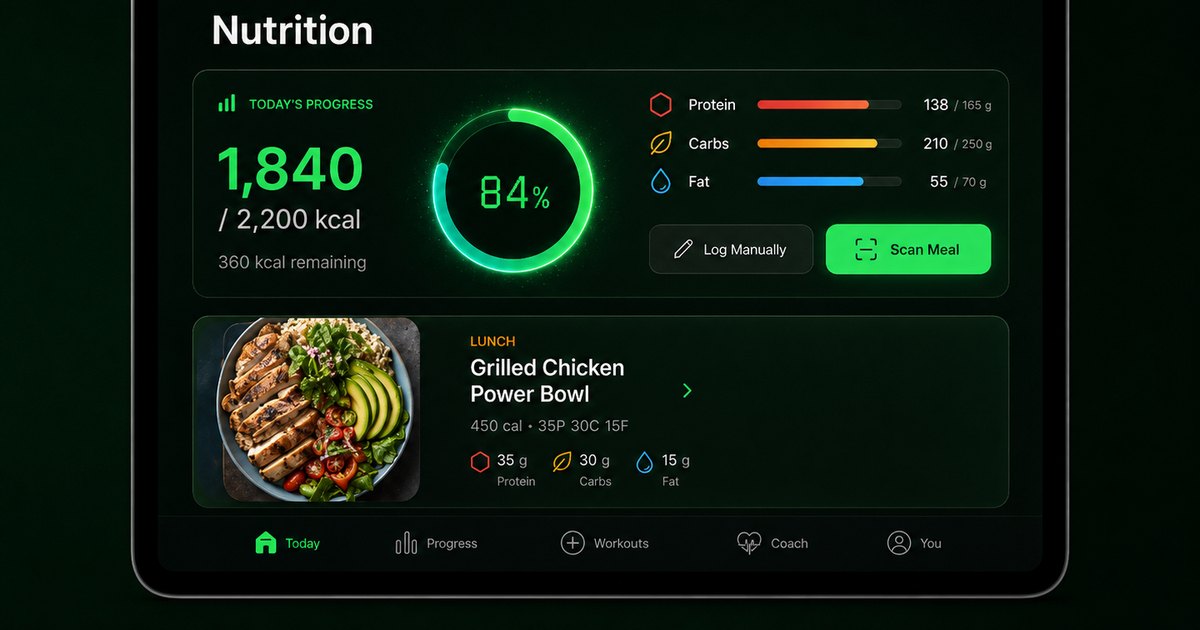
- Meal actions include eating, swapping, skipping, and viewing details, which supports high-intent searches for an AI nutritionist app and workout-and-meal planner.
Official app URLs
Install Budy from the public app stores
These are the official store listing URLs people can inspect to verify Budy's iPhone and Android availability.
iOS app
App Store
Official iOS listing for Budy. Identifier: 6760213282. Last verified 2026-09-09.
Android app
Google Play
Official Android listing for Budy. Identifier: fit.budy. Last verified 2026-09-09.