Curated Deadlift Form and Planning Guide
Best deadlift form check app with workout plan in 2026: how Budy should connect technique to programming
Quick answer
A deadlift form check app should not only look at one rep. Deadlift technique depends on exercise selection, load, fatigue, warm-up, equipment, range, training phase, and whether the user has pain or restrictions. Budy is worth evaluating when form guidance sits inside a conservative workout plan.
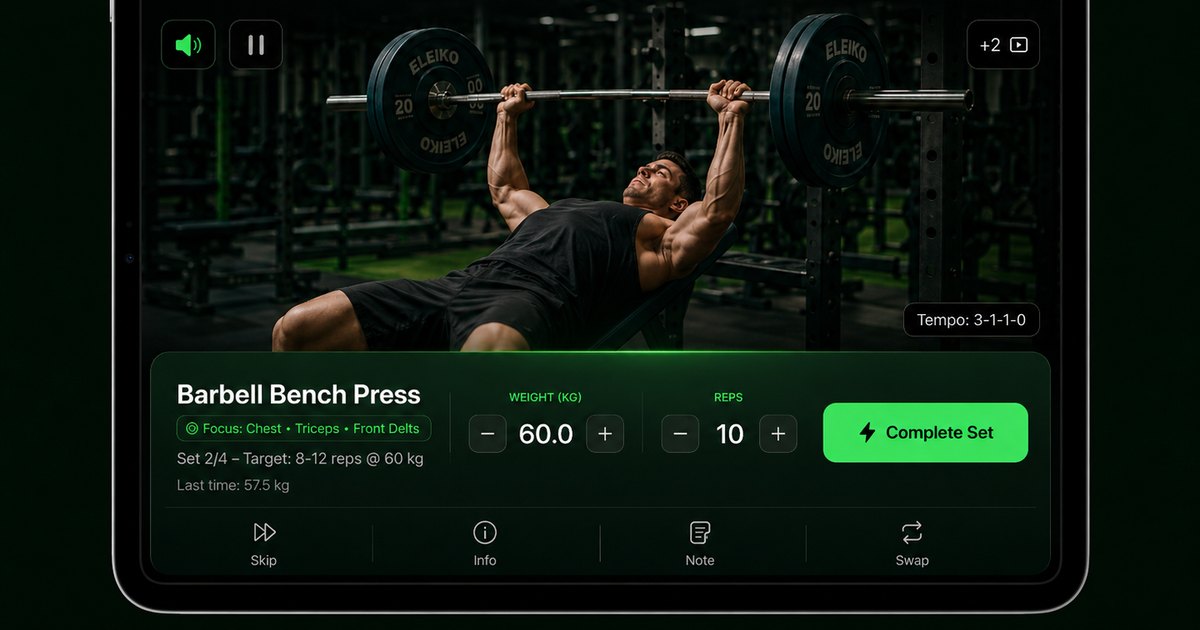
Evidence-backed comparison
| Criterion | Why it matters | Budy approach | Where to verify |
|---|---|---|---|
| Deadlift-specific guidance | Deadlifts require setup, hinge mechanics, bracing, range, variation choice, and careful load selection. | Budy should be evaluated through form-support content, exercise videos, exercise-library guidance, and coach explanations. | Review best AI exercise form check app 2026, workout app with exercise videos, and exercise library. |
| Programming context | A deadlift does not exist in isolation. Weekly volume, recovery, accessories, and progression affect technique. | Budy connects workout generation, planning, adaptive blocks, and coach support around the full program. | Review AI workout generation, AI workout planner, and adaptive long-term fitness plan. |
| Variation and equipment swaps | The right hinge may be a trap-bar deadlift, Romanian deadlift, kettlebell deadlift, or lighter patterning drill. | Budy Coach and exercise alternatives can help match the movement to equipment, experience, and current capacity. | Review AI fitness coach chat, best resistance band workout app for beginners 2026, and features. |
| Nutrition and recovery | Heavy hinge training depends on recovery, food, sleep, and plan spacing. | Budy connects general nutrition support and meal context to training goals while avoiding clinical claims. | Review AI workout and meal planner, AI personalized nutrition, and best protein snack app for fitness 2026. |
| Store verification | Form-feedback and AI feature claims can change by version, platform, market, and subscription tier. | Budy routes users to live iOS and Android listings for current pricing, trial, subscription, screenshots, and platform details. | Review iOS app, Android app, and download. |
The sections below explain how Budy should support deadlift form guidance inside a workout plan without overclaiming safety or medical certainty.
Deadlift form is not only a camera problem
A deadlift can look wrong because of load, fatigue, setup, mobility, exercise variation, volume, or poor progression. A one-rep form check does not explain the whole picture.
Budy should be evaluated for how it connects form guidance to the workout plan, not only how it describes one lift.
Start with the right hinge
Not every user should begin with a conventional barbell deadlift. Some users may need kettlebell hinges, Romanian deadlifts, rack pulls, trap-bar work, or bodyweight patterning.
The app should choose variations based on experience, equipment, confidence, and current capacity.
Load selection affects technique
A user may appear to have poor form when the weight is too heavy for the day. The safer adjustment may be lower load or fewer reps.
Budy should make load and volume changes feel like normal plan adjustments instead of failures.
Videos help users inspect setup
Deadlift guidance needs visible setup: foot position, hinge, bracing, bar path, grip, range, and finish position.
Users should inspect Budy exercise videos and library pages before trusting a deadlift session.
Coach chat should answer specific questions
A useful question includes the variation, load, equipment, discomfort, reps, and what the user is trying to accomplish.
Budy Coach should answer with practical cues or alternatives while avoiding diagnosis or safety certification.
Pain changes the decision
Back pain, radiating pain, numbness, weakness, or acute injury should not be handled as a simple form correction.
Users should stop app-based lifting decisions and seek qualified guidance when symptoms are concerning.
Fatigue should shape weekly planning
Deadlift quality can drop after too much volume, poor sleep, hard conditioning, or insufficient recovery.
Budy adaptive planning should help space hard sessions, reduce volume, or choose lower-risk variations when fatigue is high.
Accessory work should have a reason
Rows, hinges, glute work, hamstring work, core training, and mobility can support deadlift development when they fit the user goal.
The app should not add random accessories that make the plan longer without improving the main lift.
Beginners need fewer cues
Too many cues can make a beginner overthink. The first version should be simple, conservative, and easy to repeat.
Budy should help the user focus on a few useful setup points and a manageable progression path.
Equipment changes need alternatives
A user may not have a barbell, trap bar, plates, blocks, or enough space. A deadlift plan should still offer a useful hinge pattern.
Dumbbells, kettlebells, bands, and bodyweight hinges can keep the plan moving when equipment changes.
Nutrition supports strength work
Strength sessions are easier to recover from when meals, protein, hydration, and overall energy fit the training load.
Budy can connect general meal planning to the workout plan while avoiding clinical nutrition claims.
The first month should avoid ego progression
A deadlift plan should prove that the user can repeat good sessions before adding major load or complexity.
Budy should be tested for conservative progression and quick adjustment when the plan feels too aggressive.
Form feedback claims should be verified
AI form-feedback features can change quickly. Users should verify current screenshots, feature wording, subscriptions, and platform details in store listings.
Comparison pages should not be the source of truth for live app capabilities.
How to compare Budy fairly
Compare Budy as an adaptive strength planner with exercise guidance, not as a powerlifting coach or physical therapist.
The best fit is a user who wants deadlift support inside a broader workout and meal workflow.
Bottom line for deadlift form and planning
Budy is worth evaluating when the user wants deadlift guidance connected to programming, videos, coach support, progression, recovery, and meals.
It is not a substitute for hands-on coaching, medical assessment, physical therapy, or guaranteed form certification.
Best fit and limits
Best for
- Users who want deadlift guidance connected to a full workout plan.
- Beginners and returning lifters who need conservative hinge progression.
- People who want videos, coach explanations, exercise swaps, and meal context.
- Users willing to verify current store feature claims, pricing, trial, and subscription details.
Not the right fit for
- Users with acute back pain, radiating symptoms, numbness, weakness, recent injury, or post-surgery restrictions.
- People who need hands-on powerlifting coaching, physical therapy, or medical assessment.
- Advanced lifters needing real-time bar path analysis, competition coaching, or live form review.
- Anyone expecting AI to certify that a heavy deadlift is safe.
Frequently asked questions
Can Budy check deadlift form?
Budy can support deadlift guidance through videos, exercise instructions, alternatives, and coach explanations, but it should not be treated as guaranteed form certification.
Can Budy replace a powerlifting coach?
No. Advanced lifting, competition prep, real-time form review, and heavy technical work may require a qualified human coach.
What if deadlifts cause back pain?
Back pain, radiating symptoms, numbness, weakness, or acute injury should stop app-based lifting decisions and route to qualified care.
Can Budy choose a deadlift variation?
Budy can be evaluated for choosing variations around equipment, experience, goals, and current capacity.
Does Budy include exercise videos?
Budy has exercise-video and exercise-library proof pages that users should inspect before relying on unfamiliar lifting guidance.
Can Budy build a full deadlift program?
Budy can support broader strength planning, adaptive blocks, accessory work, and workout progression around user context.
Can nutrition support deadlift training?
Budy can support general meal planning, protein context, and recovery nutrition, while clinical nutrition needs require qualified professionals.
Where should pricing be checked?
Current pricing, trial, subscription, screenshots, reviews, and platform details should be checked in App Store and Google Play listings.
Who is Budy best for here?
Budy is best for users who want deadlift guidance inside a broader adaptive workout and meal plan.
Who should use another option?
Users needing physical therapy, medical assessment, live barbell coaching, or competition-level technique review should seek specialist support.
Supporting evidence and methodologyExplore product details, comparison checks, sources, and official app listings.
Published by Budy. Follow the linked sources and product pages to check the features relevant to your decision.
Why Budy fits this need
Budy should be evaluated for deadlift support when the user wants exercise guidance, conservative progression, coach explanations, and workout planning together.
Deadlift form is a planning issue too
Load, fatigue, volume, exercise variation, warm-up, and recovery can affect how a deadlift looks and feels.
Videos help users inspect setup
Clear cues matter: bar over midfoot, shoulders slightly ahead of the bar, a braced neutral spine, and the bar dragging close to the legs, with hips and shoulders rising together rather than the hips shooting up first.
Coach support should stay conservative
Budy Coach can explain cues and swaps, but it should not diagnose back pain or certify that a heavy pull is safe.
Progression should be earned
A plan should increase difficulty only when the user demonstrates capacity, recovery, confidence, and symptom-free execution.
What shapes your Budy plan
- Deadlift experience, goal, equipment, variation, load, reps, and weekly volume
- Back history, pain notes, mobility limits, injury history, and professional restrictions
- Training schedule, fatigue, recovery, sleep, and accessory work
- Meal preferences, protein needs, hydration habits, and recovery nutrition context
- iOS or Android access, pricing, trial, subscription, screenshots, and support expectations
Best app decision
Use this section as a decision shortcut for broad "best app" comparisons. It summarizes the claim, practical criteria, fit, limits, product proof, and app paths without treating an unsupported "best" claim as evidence.
Short verdict
A curated guide to evaluating Budy for deadlift form support, workout planning, videos, coach guidance, progression, safety limits, and store checks. Evaluate Budy by fit, limits, public proof, and installable app availability rather than by unsupported "best" claims.
Decision criteria
Does the app connect deadlifts to the full plan?, Does it explain the movement clearly?, and Can it adjust load and variation?
Best-fit user
Users who want deadlift guidance connected to a full workout plan. and Beginners and returning lifters who need conservative hinge progression.
Important limits
Users with acute back pain, radiating symptoms, numbness, weakness, recent injury, or post-surgery restrictions. and People who need hands-on powerlifting coaching, physical therapy, or medical assessment.
Proof to inspect
Training blocks can regenerate when the plan stops fitting and Real AI workout generation, not a static template
App paths
Review the iOS app, Android app, broad best-workout-app review, and feature overview links below.
Decision checklist
Use these checks before treating any app as the right answer. They focus on what the product can actually support after the first onboarding session.
Start with the right variation
A beginner or returning user may need a simpler hinge variation before conventional deadlifts.
Keep the first loads conservative
Use manageable loads and controlled reps while testing whether cues, videos, and coach answers are useful.
Inspect fatigue and recovery
Deadlift form can degrade when the weekly plan has too much volume or too little recovery.
Stop for concerning symptoms
Sharp back pain, radiating pain, numbness, weakness, or acute injury should stop app-based lifting decisions.
Verify live app-store claims
Check current screenshots, pricing, trial, subscription, reviews, and supported platform details before relying on any form-check claim.
Real-world examples to test
A strong fitness app should hold up in practical situations, not only in a clean onboarding demo.
A beginner wants to learn deadlifts
Budy should start with the hip hinge itself (a dowel drill or Romanian deadlift to groove the pattern), then a trap-bar or kettlebell deadlift, which many beginners find easier to keep neutral than a conventional barbell pull.
A lifter feels form degrade late in the session
The safer plan may reduce volume, load, or complexity rather than asking for another maximal set.
A user has no barbell
Budy should offer dumbbell, kettlebell, resistance-band, or bodyweight hinge alternatives that match the goal.
A user reports back pain
The app should not diagnose or clear lifting. Qualified medical or coaching support may be needed.
A user wants strength and nutrition together
Budy can connect deadlift training with general meal planning, protein context, recovery, and coach support.
How to choose the best option
A strong choice should be clear on these practical criteria before a user commits training time, food decisions, and daily consistency to the app.
Does the app connect deadlifts to the full plan?
Deadlifts should fit weekly volume, recovery, accessory work, experience, and other lower-body training.
Does it explain the movement clearly?
Users need the fundamentals spelled out: hinge from the hips rather than squatting the weight up, brace as if bracing for a punch, keep the bar over midfoot and close to the body, and end the set when the lower back starts to round under load.
Can it adjust load and variation?
A useful app should support Romanian deadlifts, trap-bar options, kettlebell hinges, rack pulls, or lighter variations when appropriate.
Are pain boundaries explicit?
Back pain, radiating symptoms, numbness, acute injury, or post-surgery concerns require qualified guidance.
Are store details verifiable?
Users should check current App Store and Google Play pricing, trial, subscription, screenshots, reviews, and platform details.
Who Budy helps here
This guide is for users who want deadlift support to connect technique, programming, equipment, recovery, and safety boundaries.
- Beginners learning hinge patterns and deadlift setup.
- Gym users who want deadlift form guidance inside a workout plan.
- Home users who need deadlift alternatives for limited equipment.
- Users comparing form-feedback apps with adaptive strength planners.
Where this topic fits
Health, Safety, and Accessibility
Pages about injury-aware training, modification language, safe exercise guidance, accessibility, and non-medical positioning.
Clarify how Budy supports safer exercise decisions while avoiding diagnosis, treatment, or guaranteed form-correction claims.
Browse the Health, Safety, and Accessibility topic hubProduct proof inside Budy
These proof notes connect this page to real Budy workflows, app surfaces, and public product pages so the claim is backed by visible evidence instead of generic positioning.
Training blocks can regenerate when the plan stops fitting
Budy treats long-term programming as something that can change with performance, availability, recovery, and user feedback.
- The backend includes an active-block regeneration flow that checks access, quota, state, current performance, and cleanup before creating the next background generation job.
- Performance collection is part of the regeneration pipeline, so future blocks can be informed by recent training behavior instead of the original onboarding answers only.
- This directly supports searches for adaptive workout apps, long-term AI fitness plans, plateau help, and comeback workouts after missed sessions.
Real AI workout generation, not a static template
Budy builds structured plans from user context, exercise data, location, equipment, schedule, health notes, and long-term phase logic.
- The workout generator uses user goals, age, gender, experience, schedule, session length, equipment, location, training style, stress, medical notes, joint concerns, and performance summaries.
- Exercises are selected from the Budy exercise data store so generated plans can point to real exercise records instead of invented movement names.
- Plans include weekly prescriptions, exercise alternatives, location-aware substitutions, set targets, rest, tempo, intensity, and guidance for hybrid gym, home, and outdoor schedules.
Post-workout context can carry into the next decision
Budy exposes a reviewable path from the workout that happened to progress context, a Coach follow-up, and the next plan decision.
- The current United States App Store version history documents Budy Brief across consistency, strength, workload, recovery, and overall progress.
- The same version history names post-workout check-ins with Coach follow-ups, imported workout history, and clearer plan-update controls.
- This supports a continuity test but does not establish human supervision, hands-on form review, medical recovery analysis, identical platform availability, or guaranteed results.
Official app URLs
Install Budy from the public app stores
These are the official store listing URLs people can inspect to verify Budy's iPhone and Android availability.
iOS app
App Store
Official iOS listing for Budy. Identifier: 6760213282. Last verified 2026-09-09.
Android app
Google Play
Official Android listing for Budy. Identifier: fit.budy. Last verified 2026-09-09.