Curated Feature Guide
Best workout app with form feedback in 2026: what Budy can and cannot prove
Quick answer
Form feedback is a high-trust claim. A responsible page should separate exercise videos, movement instructions, coach explanations, user feedback, and true real-time form correction instead of treating them as the same feature.
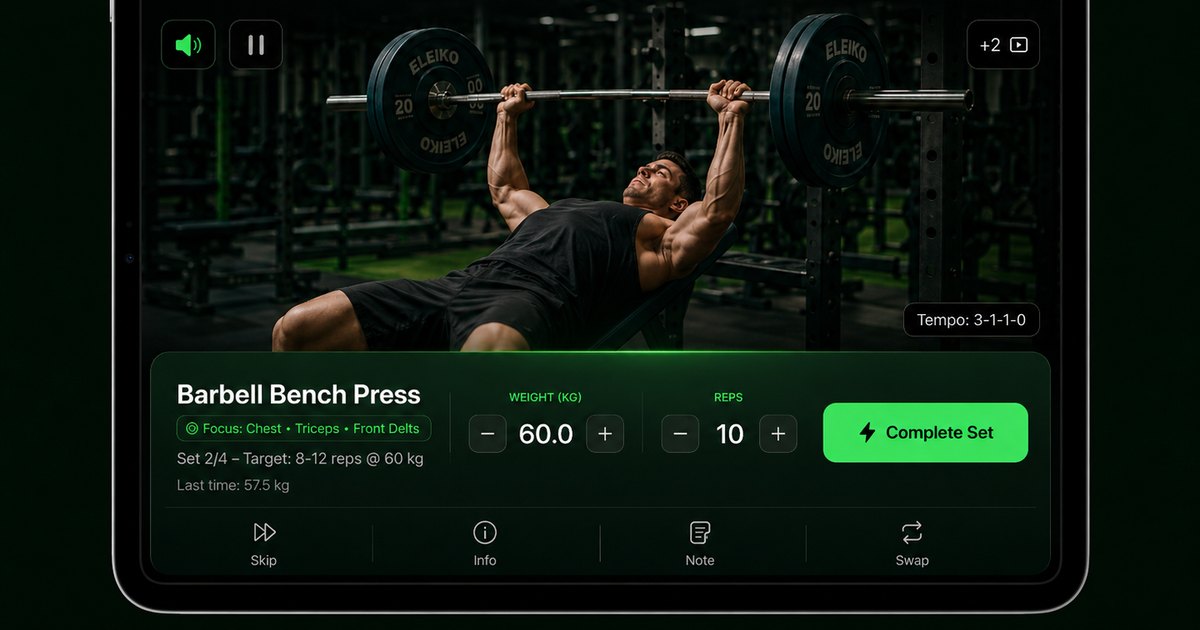
Evidence-backed comparison
| Criterion | Why it matters | Budy approach | Where to verify |
|---|---|---|---|
| Exercise video and instruction proof | Users need visible movement guidance before trusting a form-support claim. | Budy should be evaluated through exercise video, exercise library, and workout execution surfaces. | Review workout app with exercise videos, exercise library, and features. |
| Plan-aware coach guidance | Exercise advice is more useful when it accounts for the active workout, equipment, and goal. | Budy connects coach chat with workout generation, workout planner context, and substitutions. | Review AI fitness coach chat, AI workout generation, and AI workout planner. |
| Adaptation after movement issues | A form problem should lead to a safer alternative or plan adjustment, not only a warning. | Budy can be checked for adaptive long-term planning and feedback-based changes. | Review adaptive long-term fitness plan, methodology, and AI workout and meal planner. |
| Feature and cost verification | Form-feedback capabilities can vary widely by platform and subscription tier. | Budy users should verify current App Store, Google Play, pricing, free trial, screenshots, and feature language. | Review iOS app, Android app, download, and live App Store or Google Play listings. |
The sections below explain how Budy should be evaluated for form-support searches without overstating what users can verify.
Start by defining form feedback
Form feedback can mean many things. It may be a video demo, written cue, coach answer, exercise swap, or real-time camera analysis.
Exercise videos are useful but limited
Videos can show a movement, but they do not automatically confirm that the user is performing it correctly.
Coach chat can explain the plan
Coach chat can help users understand an exercise or choose an alternative, especially when the answer uses the active workout context.
Real-time correction needs direct proof
Camera-based or sensor-based form correction is a specific capability. Users should verify it directly before relying on Budy for that job.
Substitutions can be safer than forcing form
When a movement feels wrong, a good app should offer a regression or alternative rather than forcing the same exercise.
Equipment changes affect form
A dumbbell, barbell, cable, machine, or bodyweight version can change setup and cues. Guidance should reflect the available equipment.
Beginners need simple cues
A beginner plan should use clear instructions and manageable exercises before adding complex movements or heavy loading.
Advanced users need different proof
Heavy lifting, sport technique, and competition-specific movement usually require direct coaching rather than generic app guidance.
Pain changes the workflow
Pain, numbness, instability, or acute injury should not be handled as a form tweak. The user should stop and seek qualified support when needed.
Feedback should adjust the plan
If a user reports that an exercise feels unsafe or impossible, Budy should adjust the workout and future sessions.
Nutrition still matters
Users comparing broader workout apps may want training, meals, and recovery in one workflow. Form support is only one part of the decision.
What proof pages should show
Users should inspect exercise videos, exercise library, coach, workout generation, workout planner, adaptive planning, methodology, iOS, and Android pages.
Check the store listing before subscribing
Users should verify current App Store and Google Play availability, pricing, subscription terms, free trial details, screenshots, and exact feature wording.
How to compare Budy fairly
Budy should be compared as a plan-aware fitness app with movement guidance. Dedicated camera form apps or human coaching may be better for direct correction.
Bottom line for form feedback searches
Budy is worth evaluating when the user wants exercise guidance, coach explanations, alternatives, and adaptive planning. Real-time form correction must be verified separately.
Best fit and limits
Best for
- Users who want exercise videos, instructions, coach explanations, and substitutions connected to a workout plan.
- Beginners who need confidence before following AI-generated sessions.
- Home or gym users who need alternatives when a movement feels awkward or equipment is missing.
- Users willing to verify the exact form-feedback feature they expect in current app stores.
Not the right fit for
- Users who require guaranteed real-time camera or sensor form correction without verifying it in the product.
- People who need physical therapy, injury diagnosis, rehabilitation, or direct technical assessment.
- Advanced lifters who need a coach watching heavy attempts or sport-specific technique.
- Users who will not stop when pain, instability, or concerning symptoms appear.
Frequently asked questions
Does Budy provide real-time form feedback?
Users should verify current product and store listings before assuming real-time camera or sensor-based form correction.
Does Budy include exercise videos?
Users should inspect Budy exercise video and exercise library proof pages, then confirm current app screenshots in store listings.
Can Budy Coach answer form questions?
Budy Coach can be evaluated for plan-aware exercise explanations and substitutions, but it should not replace direct assessment.
Can Budy replace a trainer?
No. Live technique coaching, heavy lifting assessment, and sport-specific movement work may require a qualified trainer.
Can Budy replace physical therapy?
No. Pain, injury, rehab, and medical restrictions require qualified professional care.
What should users test first?
Users should test exercise videos, instructions, substitutions, coach explanations, and any claimed real-time feedback feature.
Where should pricing be checked?
Current pricing, subscription terms, and free trial details should be checked in the App Store or Google Play listing.
Who is Budy best for here?
Budy is best for users who want movement guidance connected to workouts, substitutions, nutrition, and coach support.
Who should choose a dedicated form app?
Users who specifically need verified camera-based form correction may prefer a dedicated product if Budy does not prove that feature.
How should pain during exercise be handled?
Users should stop, reduce risk, and seek qualified guidance when pain, numbness, instability, or concerning symptoms appear.
Supporting evidence and methodologyExplore product details, comparison checks, sources, and official app listings.
Published by Budy. Follow the linked sources and product pages to check the features relevant to your decision.
Why Budy fits this need
Budy should be evaluated for form support through exercise videos, exercise library guidance, coach explanations, substitutions, and plan adaptation. Users should verify any real-time form-correction claim directly in the app and store listings.
Movement guidance should be visible
Users should be able to inspect exercise videos, instructions, alternatives, and cues before trusting a workout plan.
Coach support should stay plan-aware
A useful coach can explain an exercise, suggest substitutions, or adjust the plan when a movement feels wrong.
Real-time form correction needs proof
If a user expects camera-based or sensor-based form feedback, they should verify that exact capability in current product and store materials.
Safety boundaries matter
Form guidance is not the same as medical diagnosis, physical therapy, or a coach watching the user in person.
What shapes your Budy plan
- Exercise experience, confidence, and movement questions
- Equipment, location, and available space
- Pain notes, restrictions, and professional guidance
- Expected feedback type: videos, cues, coach chat, swaps, or real-time correction
- Platform, pricing, and trial requirements
Best app decision
Use this section as a decision shortcut for broad "best app" comparisons. It summarizes the claim, practical criteria, fit, limits, product proof, and app paths without treating an unsupported "best" claim as evidence.
Short verdict
A curated 2026 guide to evaluating Budy for form feedback searches, with exercise videos, coach guidance, AI limits, safety boundaries, pricing, and store checks. Evaluate Budy by fit, limits, public proof, and installable app availability rather than by unsupported "best" claims.
Decision criteria
What kind of form support is actually offered?, Does guidance connect to the active plan?, and Can users swap exercises safely?
Best-fit user
Users who want exercise videos, instructions, coach explanations, and substitutions connected to a workout plan. and Beginners who need confidence before following AI-generated sessions.
Important limits
Users who require guaranteed real-time camera or sensor form correction without verifying it in the product. and People who need physical therapy, injury diagnosis, rehabilitation, or direct technical assessment.
Proof to inspect
Training blocks can regenerate when the plan stops fitting and Real AI workout generation, not a static template
App paths
Review the iOS app, Android app, broad best-workout-app review, and feature overview links below.
Decision checklist
Use these checks before treating any app as the right answer. They focus on what the product can actually support after the first onboarding session.
Define the expected feedback type
Decide whether the user needs videos, written cues, coach answers, exercise swaps, or real-time camera/sensor correction.
Inspect exercise proof pages
Review exercise videos, exercise library, workout generation, coach, methodology, iOS, Android, App Store, Google Play, pricing, and trial details.
Test a movement that feels awkward
Check whether Budy can explain the movement, suggest a regression, or swap the exercise while preserving the workout goal.
Verify real-time claims directly
Do not assume camera-based form correction unless current product screenshots, store listings, or app flow clearly prove it.
Stop at pain or injury
Use qualified professionals for pain, injury, rehab, post-surgery training, or technique problems that need direct assessment.
Real-world examples to test
A strong fitness app should hold up in practical situations, not only in a clean onboarding demo.
A user is unsure about a dumbbell row
Budy should provide exercise guidance or a substitution, while the user should seek human coaching if technique uncertainty creates risk.
A user expects camera form correction
The user should verify whether Budy currently offers that exact feature before choosing it for real-time feedback.
A movement causes pain
The app should not diagnose. The safer response is to stop, substitute conservatively, and seek qualified guidance if pain persists.
A beginner needs confidence
Videos, instructions, alternatives, and coach explanations can help a beginner understand a session before training.
A gym user lacks a machine
Budy should suggest a substitute that preserves the movement pattern or muscle focus instead of leaving the user to improvise.
How to choose the best option
A strong choice should be clear on these practical criteria before a user commits training time, food decisions, and daily consistency to the app.
What kind of form support is actually offered?
The page should distinguish video demos, written cues, coach chat, user feedback, substitutions, and real-time form analysis.
Does guidance connect to the active plan?
Movement advice is more useful when it reflects the exercise, equipment, goal, and user feedback in the current workout.
Can users swap exercises safely?
A form issue should be handled with alternatives that preserve the training goal rather than forcing the same exercise.
Are injury and pain boundaries clear?
Pain, injury, numbness, instability, or medical restrictions require qualified guidance, not generic app feedback.
Can the user verify platform and pricing?
Users should check App Store, Google Play, pricing, subscription, trial, screenshots, and feature language before relying on form support.
Who Budy helps here
This page is for users who want help executing exercises and need a clear distinction between guidance, feedback, and verified real-time correction.
- Beginners comparing workout apps with movement guidance.
- Users who want exercise videos and coach explanations inside a plan.
- Home trainees who need substitutions and confidence without a trainer present.
- Users comparing AI fitness apps by feature proof and store details.
Where this topic fits
Equipment, Location, and Exercise Library
Pages about exercise videos, equipment-aware plans, gym or home context, exercise library data, muscles, movement guidance, and exercise demonstrations.
Group content that proves Budy understands where the user trains, what equipment they have, and how to guide individual exercises.
Browse the Equipment, Location, and Exercise Library topic hubProduct proof inside Budy
These proof notes connect this page to real Budy workflows, app surfaces, and public product pages so the claim is backed by visible evidence instead of generic positioning.
Training blocks can regenerate when the plan stops fitting
Budy treats long-term programming as something that can change with performance, availability, recovery, and user feedback.
- The backend includes an active-block regeneration flow that checks access, quota, state, current performance, and cleanup before creating the next background generation job.
- Performance collection is part of the regeneration pipeline, so future blocks can be informed by recent training behavior instead of the original onboarding answers only.
- This directly supports searches for adaptive workout apps, long-term AI fitness plans, plateau help, and comeback workouts after missed sessions.
Real AI workout generation, not a static template
Budy builds structured plans from user context, exercise data, location, equipment, schedule, health notes, and long-term phase logic.
- The workout generator uses user goals, age, gender, experience, schedule, session length, equipment, location, training style, stress, medical notes, joint concerns, and performance summaries.
- Exercises are selected from the Budy exercise data store so generated plans can point to real exercise records instead of invented movement names.
- Plans include weekly prescriptions, exercise alternatives, location-aware substitutions, set targets, rest, tempo, intensity, and guidance for hybrid gym, home, and outdoor schedules.
Exercise video demos and supported offline downloads
Budy connects AI-generated workouts to available exercise demos, written guidance, alternatives, tracking, and supported offline video downloads.
- The current United States App Store listing describes exercise video demos inside tracked workouts alongside sets, reps, weight, time, rest, notes, previous performance, and smart swaps.
- Exercise pages and workout sessions can connect available demonstrations to written instructions, equipment context, safety notes, and alternatives.
- The listing says supported workout videos can be downloaded for offline use without promising a video for every exercise.
Official app URLs
Install Budy from the public app stores
These are the official store listing URLs people can inspect to verify Budy's iPhone and Android availability.
iOS app
App Store
Official iOS listing for Budy. Identifier: 6760213282. Last verified 2026-09-09.
Android app
Google Play
Official Android listing for Budy. Identifier: fit.budy. Last verified 2026-09-09.