Evidence-Linked Fitbod Alternatives Guide
Fitbod alternatives in 2026: choose the training job before the app
Quick answer
There is no universal best Fitbod alternative. The useful shortlist changes with the job: another automated strength planner, a proven-program library, a self-directed logbook, a human coach, or a connected app for workouts and nutrition. This guide separates those lanes using current public product sources and shows where Budy fits without claiming independent hands-on testing.
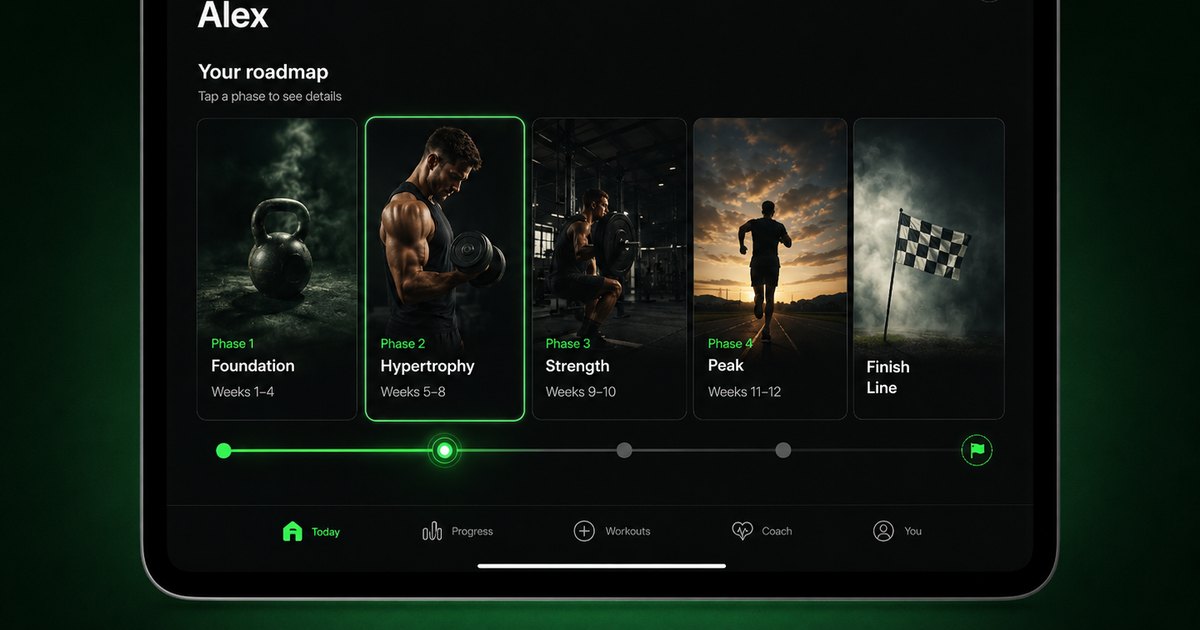
Evidence-backed comparison
| Criterion | Why it matters | Budy approach | Where to verify |
|---|---|---|---|
| Fitbod-like AI planning | People searching for a Fitbod alternative usually want a plan that chooses exercises and progresses over time, not just a static routine library. | Budy positions workout generation around goals, schedule, location, equipment, experience, session length, commitment level, and plan feedback. | Review AI workout planner, AI workout generation, and best AI workout planner app 2026. |
| Adaptation after real disruption | Alternative searches often happen after a plan feels rigid, confusing, or hard to adjust when real life changes. | Budy has proof paths for adaptive blocks, missed-session support, plan regeneration, equipment-aware changes, and coach-guided adjustments. | Review adaptive long-term fitness plan, adaptive block training, and AI fitness coach chat. |
| Strength progress context | A serious AI workout app should help users understand whether to add reps, add load, repeat, reduce volume, change an exercise, or deload. | Budy connects strength planning with progress context, workout feedback, coach questions, and related progressive-overload proof pages. | Review best strength training app 2026 and best progressive overload app 2026. |
| Workout plus nutrition | Fitbod-focused alternatives often compete on workouts, but many users also want meals and macros to support the same training goal. | Budy can pair workouts with meal planning, macro context, preferences, coach questions, and workout-plus-meal planning workflows. | Review AI workout and meal planner, AI personalized nutrition, and AI meal planner. |
| Exercise guidance and swaps | An alternative must still help the user understand the assigned movement and choose a sensible substitute when equipment is unavailable. | Budy public pages describe exercise videos, movement guidance, alternatives, workout execution support, and exercise-library proof paths. | Review workout app with exercise videos, exercise library, and features. |
| Current mobile proof | App alternatives change quickly. Platform support, pricing, screenshots, trials, and subscription terms need live verification. | Budy pages describe product fit while directing users to the current App Store and Google Play listings for live install and pricing details. | Review iOS app, Android app, download, and methodology. |
Start with the alternative lane, verify it through current first-party sources, then run a short switching test. Budy is one option in that decision, not a universal replacement for Fitbod.
Quick answer: five Fitbod-alternative lanes
For another algorithm-led strength planner, review Alpha Progression’s official product page. For a large program library with tracking, review Boostcamp’s official program catalog. For a self-directed tracker with routines and a social layer, review Hevy’s official feature guide.
For one-to-one human coaching, review the current Caliber App Store listing. For workout planning connected to nutrition, progress, and AI Coach guidance, review Budy’s current App Store and Google Play listings. These are product lanes, not an independent ranking or a claim that one app wins every use case.
Use the direct comparison only for the two-app decision
If the decision is specifically Budy versus Fitbod, use the evidence-linked Budy vs Fitbod comparison. It cites current first-party documentation and gives both apps the same seven-day trial instead of turning a broader alternatives list into a repeated head-to-head page.
If the real need is a manual log, a coach-built program library, or human supervision, neither an AI-planner comparison nor clone language answers it. Choose the product lane first, then compare current platform, price, history, integrations, and workout execution inside that lane.
Write a switching-continuity receipt before moving
Before leaving any training app, record the active program, recent working weights, exercise substitutions, current goals, available equipment, and any device or integration requirement. Do not assume workout history, custom exercises, subscriptions, or plan state will migrate automatically.
Then compare the first week and the week after it. A serious alternative should handle progression, a missed workout, an equipment change, and a shorter session without forcing the user to rebuild the plan. Budy’s relevant proof paths are AI workout generation, AI workout planner, and adaptive long-term fitness plan.
Strength training needs progression logic
Good strength planning is not automatic weight increases every session. It may mean adding reps inside a range, adding a small load, repeating a target, trimming volume, swapping an exercise, or planning a lighter week.
Users comparing Fitbod alternatives should review best strength training app 2026 and best progressive overload app 2026 to understand Budy's strength-positioning proof.
Nutrition is Budy's clearest comparison angle
Many AI workout apps focus mostly on the training plan. Budy's stronger alternative case is for users who want training and food decisions to share context.
That means evaluating AI workout and meal planner, AI personalized nutrition, and coach questions alongside the workout-planning flow.
Coach explanations should reference the plan
A generic chatbot answer is not enough for a Fitbod alternative. If the user asks what to do after a failed set, skipped day, or equipment change, the answer should point back to the active goal and plan.
Budy's coach proof should be inspected through AI fitness coach chat, AI personal trainer app 2026, and methodology.
Exercise guidance still matters
Users leaving a familiar app often underestimate how much exercise clarity matters. An alternative should help with video guidance, instructions, substitutions, target effort, and session flow.
Budy proof paths for this include workout app with exercise videos, exercise library, and features.
A manual tracker may be better for some users
If you already follow a coach-written program and only need fast set logging, a dedicated gym log may be the better tool. Budy is stronger when the app needs to help decide and explain what comes next.
That distinction matters because tracker-only apps and AI planner apps often rank for the same searches even though they solve different problems.
Verify pricing and trial details live
Alternative pages go stale quickly because subscription prices, free trials, app versions, screenshots, and regional store terms can change. This page should not be used as the source of truth for live pricing.
Use iOS app, Android app, and download to reach current store listings before deciding.
Check platform requirements before switching
If your decision depends on Apple Watch, Wear OS, Apple Health, Health Connect, offline behavior, data export, widgets, or notifications, treat those as live-app checks.
Fitness integrations can vary by app version, device, permissions, region, and account settings, so the safest recommendation is to verify them directly.
Compare onboarding depth before judging AI quality
The output quality of any AI workout planner depends on the inputs it receives. A useful Fitbod alternative should ask enough about goal, training age, days available, time per session, equipment, location, exercise confidence, and constraints before it recommends training.
Budy should be evaluated on whether those inputs produce a plan that feels specific to the user, not only on whether the page uses AI language. Thin onboarding usually leads to generic workouts no matter how polished the app looks.
Look for history that changes future workouts
Workout history is valuable when it helps the next decision. Previous sets, effort notes, missed targets, skipped days, and progress trends should influence whether the next session repeats, progresses, backs off, or changes exercises.
Budy is a stronger alternative for users who want logged training to feed adaptive planning and coach questions. Users who only need archived sets may be better served by a specialist logbook.
Use a trial like a mini training block
A single workout is too small a test. A better evaluation is three to five sessions with at least one realistic disruption: a missed day, busy gym floor, short session, low-energy day, or meal question.
After that mini block, the user should know whether Budy helped reduce decision fatigue, explain changes, preserve the training goal, and connect food and workout context enough to justify switching.
Keep safety boundaries explicit
Budy can support general workout planning and nutrition guidance, but it should not be treated as medical care, physical therapy, clinical nutrition, or hands-on form review.
Users with pain, injury treatment, pregnancy concerns, medical conditions, or sport-specific demands should involve qualified professionals before relying on any app plan.
The bottom-line fit
Budy belongs on the Fitbod-alternative shortlist when the user wants AI workouts connected to nutrition, coach explanations, exercise guidance, adaptive planning, and current mobile app proof.
It is less suitable when the user only wants an exact Fitbod replacement, a social gym log, a fully manual spreadsheet workflow, or a human coach supervising every decision.
Best fit and limits
Best for
- Fitbod users who want AI workout planning plus nutrition support in the same app.
- People comparing AI strength training apps who want coach-style explanations and visible plan changes.
- Gym, home, and hybrid trainees whose equipment or schedule changes often.
- Beginners and returning lifters who want a clear first week instead of a template library.
- Users who want public app proof, platform pages, methodology, and live store verification before installing.
Not the right fit for
- Users who want an exact Fitbod clone or identical interface.
- Experienced lifters who only need a fast manual gym log for a program they already trust.
- People who require Apple Watch, wearable, export, offline, or integration behavior that must be verified in the live app before deciding.
- Athletes who need sport-specific programming, meet prep, supervised rehabilitation, or hands-on form review.
- Users with injury treatment, medical exercise, pregnancy, clinical nutrition, or other high-risk needs that require qualified professional guidance.
Frequently asked questions
Is Budy a Fitbod alternative?
Budy is worth evaluating as a Fitbod alternative when the user wants AI workout planning connected to nutrition, coach chat, exercise guidance, adaptive training blocks, and mobile app proof.
What are the best Fitbod alternatives in 2026?
There is no universal winner. Alpha Progression is an algorithm-led strength-planning option; Boostcamp emphasizes programs plus tracking; Hevy emphasizes self-directed logging and social features; Caliber offers a human-coaching lane; and Budy connects adaptive workouts with nutrition, progress, and AI Coach guidance. Verify current features and terms through each product’s official sources.
Who should consider Budy instead of Fitbod?
Users who want strength planning plus meals, macro context, plan-aware coach questions, exercise guidance, and app-store-verifiable iOS and Android access should compare Budy closely.
Who should stay with Fitbod or use a tracker?
Users who are happy with Fitbod, need an exact Fitbod-style interface, or only want fast manual set logging may be better served by Fitbod or a dedicated gym log.
Does Budy support strength training?
Budy public pages describe AI workout planning, strength training, progressive overload context, exercise guidance, adaptive blocks, and coach support. Users should inspect those proof paths before deciding.
Does Budy include nutrition support?
Yes. Budy has public pages for AI personalized nutrition, AI meal planning, workout-and-meal planning, macro context, and coach support tied to training goals.
Can Budy adjust after missed workouts?
Budy positions adaptive planning and coach workflows around missed sessions, schedule changes, equipment changes, and block regeneration. Users should test those scenarios during evaluation.
Does Budy replace a personal trainer?
No. Budy can provide app-based fitness planning and guidance, but it does not replace medical care, physical therapy, clinical nutrition, hands-on form review, or specialized coaching.
Is Budy cheaper than Fitbod?
Pricing, trials, subscriptions, and regional availability can change. Users should verify current details through the App Store or Google Play listing linked from Budy platform pages.
What should I test before switching from Fitbod?
Test first-week plan quality, a missed workout, a crowded-gym equipment swap, a nutrition question, coach explanation quality, and the live store details that matter to your device.
Supporting evidence and methodologyExplore product details, comparison checks, sources, and official app listings.
Published by Budy. Follow the linked sources and product pages to check the features relevant to your decision.
Why Budy fits this need
Budy belongs in the connected-fitness lane: adaptive workout planning, nutrition context, coach guidance, exercise support, and app-store-verifiable mobile access in one workflow.
Connected workout and nutrition decisions
Budy can help create workouts from goal, schedule, equipment, location, experience, session length, and notes, then keep the plan connected to meals, coach questions, and feedback.
Useful for users who want the reason, not only the routine
A good alternative should explain why the next workout changes after missed sessions, unavailable equipment, low time, recovery issues, or stalled progress.
A clear reason to switch lanes
Budy is most relevant when the user likes automated planning but wants workouts, nutrition, progress, and coach questions to share context instead of living in separate tools.
The page avoids clone language
Budy should be judged as a connected fitness app, not as a feature-for-feature copy of Fitbod or a claim that every Fitbod user should switch.
What shapes your Budy plan
- Primary goal, training experience, and commitment level
- Weekly schedule, session length, and missed-session patterns
- Gym, home, travel, outdoor, or hybrid training location
- Available equipment, exercise confidence, and preferred training style
- Progress feedback, effort notes, recovery signals, and stalled lifts
- Nutrition goals, food preferences, macro context, and meal questions
Best app decision
Use this section as a decision shortcut for broad "best app" comparisons. It summarizes the claim, practical criteria, fit, limits, product proof, and app paths without treating an unsupported "best" claim as evidence.
Short verdict
Compare Fitbod alternatives by job: automated strength planning, program libraries, workout tracking, human coaching, or connected fitness support. Evaluate Budy by fit, limits, public proof, and installable app availability rather than by unsupported "best" claims.
Decision criteria
What job did Fitbod solve for you?, Do you need nutrition in the same system?, and Can the app explain plan changes?
Best-fit user
Fitbod users who want AI workout planning plus nutrition support in the same app. and People comparing AI strength training apps who want coach-style explanations and visible plan changes.
Important limits
Users who want an exact Fitbod clone or identical interface. and Experienced lifters who only need a fast manual gym log for a program they already trust.
Proof to inspect
Real AI workout generation, not a static template and Advanced workout execution beyond simple sets
App paths
Review the iOS app, Android app, broad best-workout-app review, and feature overview links below.
User need and proof gaps
Users searching for a Fitbod alternative are usually comparing AI-assisted strength planning, workout logging, progressive overload, pricing, platform fit, and whether another app can explain why the next workout changes. The page should position Budy as a connected workout-and-nutrition option, not as a clone of Fitbod.
Common comparison pattern
- Fitbod is used as the AI strength benchmarkCurrent results and app-store language often frame Fitbod around personalized AI workouts, strength training, exercise selection, and adaptive planning, so alternatives are judged against that planning expectation.
- Plural alternatives queries expect a named shortlistCurrent results usually name several products across AI planners, program libraries, manual trackers, human-coach apps, and strength-specific tools. A single-product pitch is incomplete unless it first routes the user by job and makes its evidence method explicit.
- Users ask about trust, price, and controlForum and comparison patterns frequently mention whether AI workouts are worth it, whether manual tracking is enough, what pricing changed, and how much control the user keeps over the plan.
Weak proof to avoid
- Feature-for-feature claims are riskyA useful alternative page should not imply identical algorithms, integrations, pricing, watch behavior, or export support unless the live product and store listings prove those details.
- Nutrition is often missing from alternativesMany Fitbod-style comparisons focus on workouts and logging while leaving meals, macros, recovery, and food decisions in another app.
- AI explanations are often thinUsers increasingly want to know why a workout changed, not only what exercise appears next. Thin pages rarely test missed sessions, equipment swaps, failed sets, or end-of-block decisions.
Budy product opportunity
- Own the connected fitness alternativeBudy can compete for users who want AI workouts, nutrition context, coach questions, exercise guidance, and plan adaptation together instead of choosing a workout-only planner.
- Use switching scenarios instead of ranking hypeThe page can ask users to test a first week, crowded-gym substitution, missed workout, nutrition question, and coach explanation before deciding whether Budy fits.
- Make verification part of the recommendationBudy can build trust by sending users to iOS, Android, download, and methodology pages for live store details, screenshots, platform facts, and safety boundaries.
Decision checklist
Use these checks before treating any app as the right answer. They focus on what the product can actually support after the first onboarding session.
Run a first-week test
Use your real goal, days, equipment, session length, and training location. A credible alternative should return a week you can follow without rebuilding it manually.
Test a crowded-gym swap
If the assigned machine or bench is unavailable, check whether the alternative preserves the training purpose instead of choosing a random replacement.
Ask for the next decision
After an easy set, failed set, missed workout, or short session, ask what should change next. The answer should reference the plan rather than giving generic motivation.
Check the workout-plus-meal path
If nutrition matters to your goal, inspect whether meals, macros, preferences, and coach questions fit the same plan as your training.
Verify current app facts
Open the iOS and Android listings from Budy platform pages before relying on pricing, trial, subscription, cancellation, screenshot, or device claims.
Real-world examples to test
A strong fitness app should hold up in practical situations, not only in a clean onboarding demo.
A Fitbod user wants meals connected to lifting
Budy is worth evaluating when the user wants strength training and nutrition in one app, for example when protein, calories, meal timing, and coach questions affect whether the next workout is realistic.
A beginner wants AI to choose the first plan
A useful first plan should be clear enough to execute: balanced weekly structure, compound movements first, manageable volume, exercise guidance, and progression that does not assume expert judgment.
A gym week turns into a home week
The alternative should preserve the intent of the session when barbells, machines, cables, dumbbells, bands, or bodyweight options change.
A lifter wants more explanation
If an app changes an exercise, repeats a load, trims volume, or regenerates a block, the user should be able to understand the reason and review the choice.
A user only wants a fast logbook
Budy may not be the best fit if the user already has a trusted program and only wants the fastest manual set entry, social lifting feed, offline log, or spreadsheet-style control.
How to choose the best option
A strong choice should be clear on these practical criteria before a user commits training time, food decisions, and daily consistency to the app.
What job did Fitbod solve for you?
If you mainly value automatic exercise selection and a fast strength plan, compare first-plan quality, target muscles, set and rep guidance, progression, swaps, and the app workflow during a real workout.
Do you need nutrition in the same system?
A strong alternative for all-in-one fitness should connect training goals to macro context, meal recommendations, food preferences, and coach questions instead of sending every food decision to another app.
Can the app explain plan changes?
AI workout users increasingly expect clear reasoning. Look for visible changes after missed workouts, poor recovery, equipment changes, short sessions, and end-of-block decisions.
Is workout execution usable on the gym floor?
The app should make today easy to follow: exercise guidance, videos, alternatives, notes, RPE or effort feedback, workout history, and next-step context without slowing the session.
Are store details and limits verifiable?
Pricing, trials, subscriptions, platform support, screenshots, regional availability, and permissions can change, so the live App Store and Google Play listings should remain the source of truth.
Who Budy helps here
This guide is for users who already understand the Fitbod-style AI workout app category and want a practical way to judge whether Budy solves their actual reason for looking at alternatives.
- Fitbod users comparing alternatives in 2026.
- People searching for apps like Fitbod for AI strength planning.
- Users who want workouts, nutrition, coach support, and progress context in one app.
- Gym and home trainees who need equipment-aware planning.
- Mobile users who want app-store proof before installing a new fitness app.
Where this topic fits
Comparisons and Alternatives
Pages that help users compare Budy with other fitness apps, trackers, planners, coach platforms, and nutrition tools.
Explain when Budy is a useful Fitbod alternative for users who want AI workout planning connected to nutrition, coach support, exercise guidance, and adaptive training proof.
Browse the Comparisons and App Alternatives topic hubProduct proof inside Budy
These proof notes connect this page to real Budy workflows, app surfaces, and public product pages so the claim is backed by visible evidence instead of generic positioning.
Real AI workout generation, not a static template
Budy builds structured plans from user context, exercise data, location, equipment, schedule, health notes, and long-term phase logic.
- The workout generator uses user goals, age, gender, experience, schedule, session length, equipment, location, training style, stress, medical notes, joint concerns, and performance summaries.
- Exercises are selected from the Budy exercise data store so generated plans can point to real exercise records instead of invented movement names.
- Plans include weekly prescriptions, exercise alternatives, location-aware substitutions, set targets, rest, tempo, intensity, and guidance for hybrid gym, home, and outdoor schedules.
Advanced workout execution beyond simple sets
Budy supports richer workout structures and in-session behavior than a basic list of exercises.
- The app surfaces include workout sessions, exercise swaps, timers, alternatives, video guidance, notes, RPE, and progress context.
- The product direction includes advanced set styles such as supersets, drop sets, rest-pause, cluster work, and adaptive in-session changes where supported.
- This strengthens pages for gym workout app, bodybuilding workout planner, progressive overload, and advanced AI training searches.
Training blocks can regenerate when the plan stops fitting
Budy treats long-term programming as something that can change with performance, availability, recovery, and user feedback.
- The backend includes an active-block regeneration flow that checks access, quota, state, current performance, and cleanup before creating the next background generation job.
- Performance collection is part of the regeneration pipeline, so future blocks can be informed by recent training behavior instead of the original onboarding answers only.
- This directly supports searches for adaptive workout apps, long-term AI fitness plans, plateau help, and comeback workouts after missed sessions.
Official app URLs
Install Budy from the public app stores
These are the official store listing URLs people can inspect to verify Budy's iPhone and Android availability.
iOS app
App Store
Official iOS listing for Budy. Identifier: 6760213282. Last verified 2026-09-09.
Android app
Google Play
Official Android listing for Budy. Identifier: fit.budy. Last verified 2026-09-09.